Math: Google's AI agents verified a famous 1974 proof on their own, what is it for?
In 1974, a Belgian mathematician, Pierre Deligne, born in Etterbeek and trained at ULB, was finishing one of the most famous proofs of the 20th century: that of the Weil conjectures. It earned him the Fields Medal in 1978, the equivalent of the Nobel Prize for mathematics. And on Thursday 13 November, Google announced that its AI agents had rewritten this entire proof, from start to finish, in a language that only a machine can verify. All by themselves. Around 1.8 million lines: at fifty lines per page, that makes 36,000 pages, a good hundred big novels. Well, I really wasn't expecting that, and I had to read the number twice!
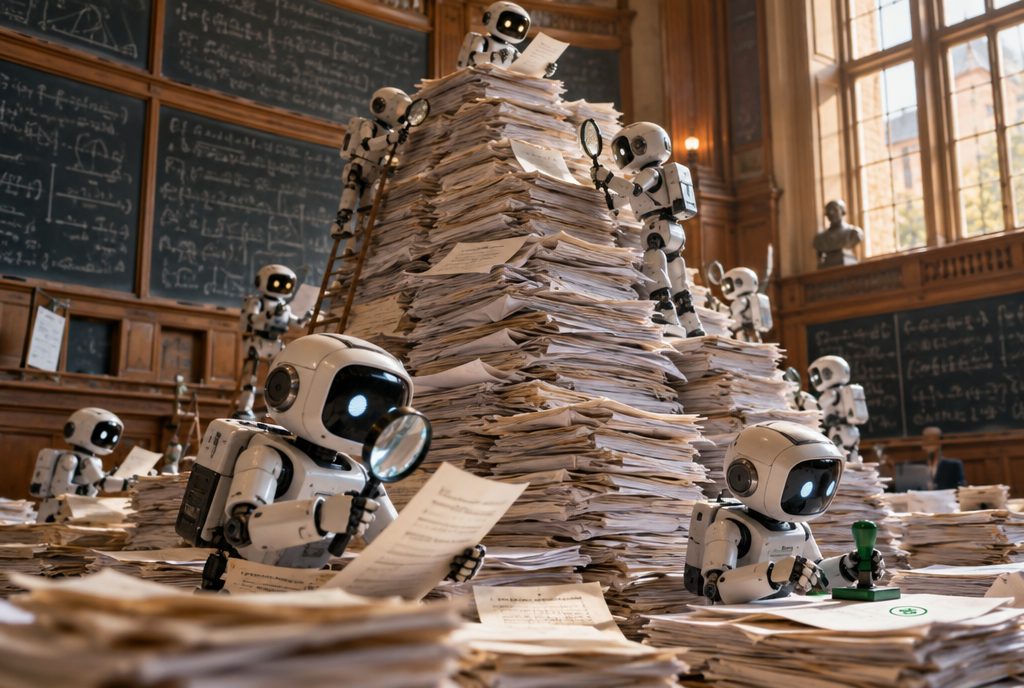
1.8 million lines, checked one by one
The Weil conjectures, in two words
The starting idea is actually quite simple. You know how calculation works on a clock: if it is 11 o'clock and you add 3 hours, it is 2 o'clock, not 14. Mathematicians call this calculating “modulo 12”, and they love doing equations in this kind of world where numbers go round in circles. In 1949, the Frenchman André Weil asked a series of questions about one precise thing: how many solutions do these equations have, in those worlds. It took twenty-five years and several of the greatest minds of the century to get to the end of it.
And this isn't just a game for eggheads. The encryption that protects your messages on WhatsApp or Signal, the little padlock in your browser or even bitcoin rely to a great extent on curves calculated exactly in this kind of “clock” world. And to know whether one of these curves is solid, you need to know how to count its points. The results of Weil and Deligne provide bounds for this counting. When you check your bank account online, there's a little bit of their work behind the padlock.

Behind your online bank's padlock, a bit of the mathematics of 1974
Lean, the checker that never accepts “it's obvious”
To understand the achievement, you have to talk about Lean. It's software that checks mathematical proofs line by line, like an ultra-fussy maths teacher who lets nothing slip through. In a research paper, a mathematician can write “it's easy to see”. Lean refuses. Every step has to be justified, right down to the basics. If the proof passes in Lean, it's correct, period.
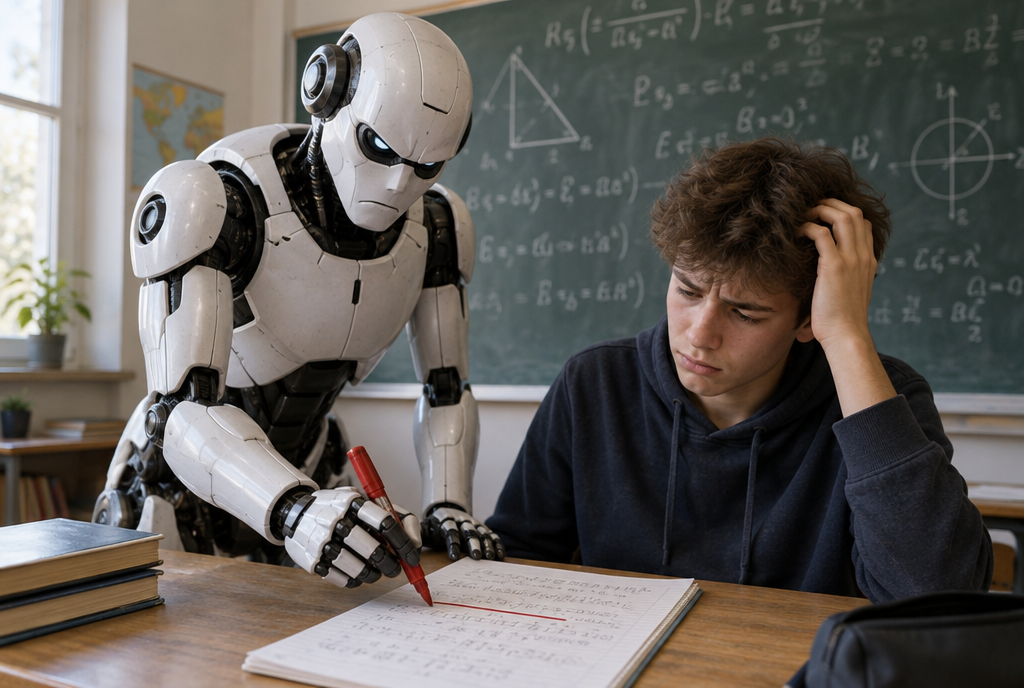
Lean, the teacher who crosses out every “it's obvious”
The problem is that translating a major proof into Lean is a colossal amount of work. That's why Deligne's had never been fully verified in this way. Google entrusted the job to /teamwork, a mode of its Antigravity programming tool in which several AI agents share the work. A coordinator breaks things down, each agent receives only the files it needs for its step, other agents act as critics and check everything again with fresh eyes, and Lean makes the final call. The whole thing ran on Gemini 4 Argon, Google's big model. Result: 28,800 calls to agents to get to the end, almost thirty thousand little missions assigned one after another.
And Google insists on one point: for this work, and only this one among all those in the announcement, there was no human in the loop to help. The humans only checked that the statement written in Lean really did correspond to the original problem.
On paper, it's huge. But let's take a closer look
What I like is the difference from what OpenAI did a few weeks ago. I was telling you that its AI had solved 372 problems with proofs that nobody understood. Here, it's the opposite: nobody needs to understand the 1.8 million lines, since Lean checked them. We no longer trust the AI, we trust the checker. And that's much more reassuring.
Well, two caveats all the same. First, these are figures « made in Google »: as I write this, several observers note that Google has published neither the code nor a detailed paper that would allow others to repeat the verification. Then, Lean checks the proof of what was written. If the original statement was copied incorrectly, we've proved... something else perfectly. That's why the human step at the beginning matters so much.
Okay, and what will it be useful for for you?
This is where it gets really interesting. A machine that proves that a line of reasoning is correct, without a single exception, isn't only useful for maths. It's also useful for proving that software does exactly what we expect it to do, in every case, even those nobody thought of.
It already exists, but it costs a fortune. The automatic metro on line 14 in Paris has been running since 1998 with mathematically proven control software, precisely so there can never be any nasty surprise without a driver. In contrast, in 1996, the first Ariane 5 rocket exploded 37 seconds after takeoff because of a simple number that was too large for the space provided in its software. We have known how to prove software for a long time. We just reserve it for metros and planes, because it takes years of specialists.
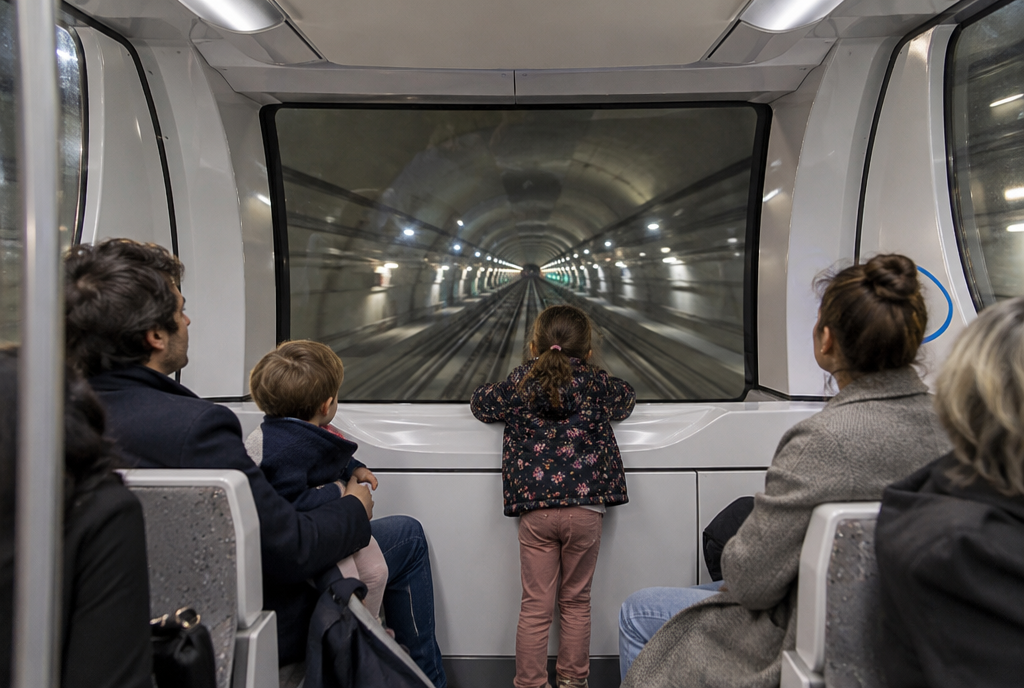
No driver, but proven software: the metro on line 14 has been running like this since 1998
If AI agents can produce this kind of proof one after another, we can imagine having the same guarantee one day in the software of your car, your bank or your grandmother's pacemaker. Google also shows another example in the same announcement: its agents rewrote libgav1, its decoder for videos in the AV1 format (the compression format used in particular by YouTube and Netflix), in Rust, a language that by construction prevents a good part of the memory errors exploited by hackers. 170,000 lines, an identical image down to the pixel across the whole test series, and between one fifth and one third faster than the original. Google hasn't said when or where this version will be used.
Let's be honest about the timeline: proving a theory from 1974 isn't the same as proving the software in your internet box. It could take five years, twenty years, or it might never become common. In the meantime, Google is offering six months of free access to 10,000 university researchers to test the tool. We'll see what they get out of it.
What makes me smile is imagining Pierre Deligne finding out that machines have gone over his proof with a fine-tooth comb, 28,800 agent calls later, fifty years afterward. Hats off, Monsieur Deligne! Even the world's most nitpicky checker ended up proving you right.
Sources
- Google Research, November 13, 2026: Advancing science and engineering with Antigravity's /teamwork feature (in English)
- Interesting Engineering: Antigravity's agents formalize major mathematical proofs (in English)
- DEV Community: what Google published, and what is still missing for verification (in English)
- Wikipedia: Pierre Deligne (in English)
Article written with the help of Claude Code, reread and corrected by me.
Join the conversation
You need an account to comment on this article. Creating one is free and takes under a minute.
No comments yet.