AI: at Anthropic, AI is making research move twice as fast, should we be happy about it?
Twice as fast. That's the speed at which Anthropic, the company that makes Claude, is improving its AIs today, compared with last year. And Anthropic isn't the one saying it: it's METR, an independent watchdog that spent eleven weeks digging through its internal data and published its report on Thursday, November 5. The craziest part is why. According to their report, around four-fifths of this acceleration comes from the AI itself. In plain English, Claude helps build the next Claude, and it's going twice as fast! As someone who has three Claude Code sessions open all day, I read that with a big smile. Then I came across the page explaining what Anthropic had blacked out in the report, and the smile froze a little.
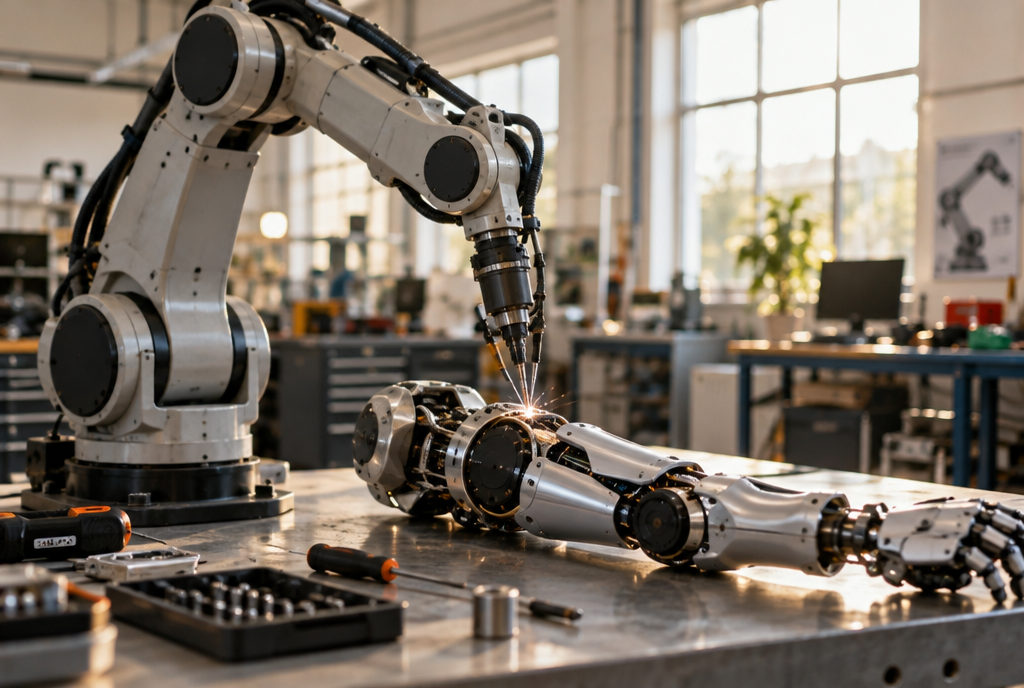
At Anthropic, AI is already helping build the next one
Who is METR, and what did they measure?
METR (pronounced "meter", like the tape measure) is an American nonprofit organization. Its job: testing the most advanced AIs to find out whether their creators might one day lose control of them. They weren't paid by Anthropic for this work. They received laptops and credits to use Claude, that's all. From August 12 to October 29, a small team, the equivalent of two and a half full-time people (yes, and a half), went through the models' internal results, interviewed researchers and read their surveys.
To measure progress, they took a kind of overall average. Anthropic puts its models through around fifteen exams, coding, math, reasoning, and combines all the scores into a single number, like a student's report card. METR looked at how fast this average was rising. Between March 2024 and October 2025, it was climbing at a certain rate. Since October 2025, according to METR's calculations, it has been climbing around 1.9 times faster. The report puts it this way: "roughly two years of historical progress over the course of the last year."
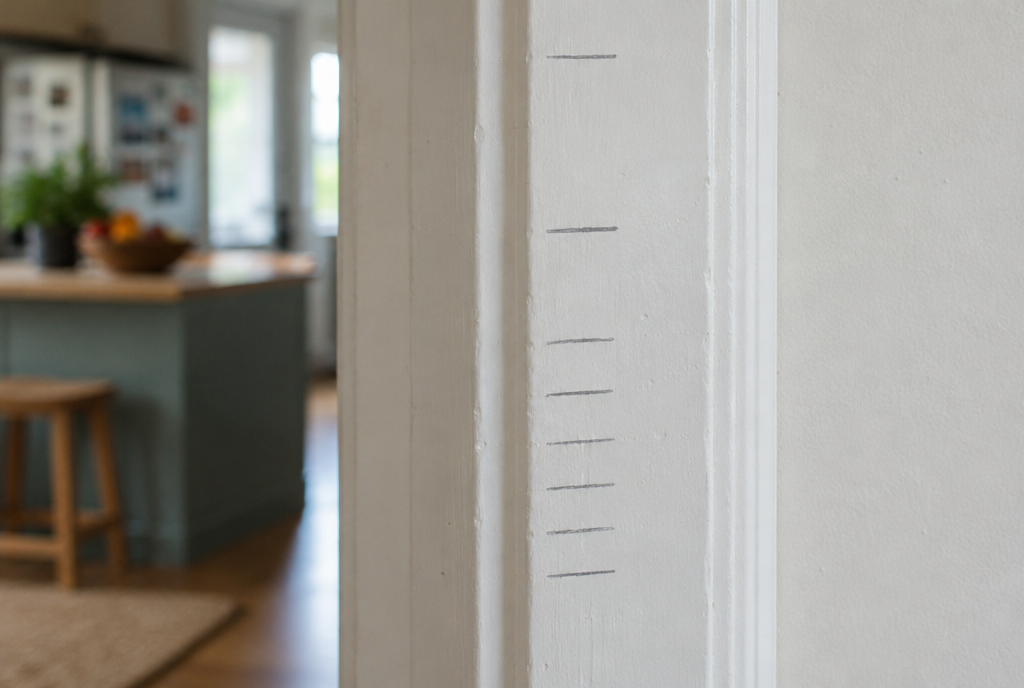
Like height marks on a door: over the past year, the gap between two marks has doubled
They remain cautious. The real figure could be 1.3 or 3, they write, and that wouldn't surprise them. But their best estimate is two. Anthropic had actually announced 1.7 itself in the Haiku 5.5 technical report. METR finds more, mainly because it had access to the internal models, the ones that haven't been released yet. And on one point, they say they are "confident": it isn't coming from computing power that has risen faster than usual. No new server farm appearing out of nowhere. What has changed is the way they work.
"No longer blocked by code, only by ideas"
What Anthropic's researchers are saying is that the tedious part of the work has almost disappeared. Before, testing an idea meant writing code, fixing it, running the experiment, waiting, starting over. Now Claude does all that. One researcher sums it up: "I'm only blocked by ideas and computing power now, not by code." Another: "The cost of an experiment is dropping to zero at incredible speed." The result is that they try many more ideas, and naturally, they find more good ones.
That fits with what I was saying a few weeks ago: according to an Anthropic post from October 13, its agents now integrate thirty thousand code changes per day, to the point that Git, the tool that keeps the history of the code, finally cracked.
One clarification, though. For now, it's AI HELPING humans, not AI working all by itself. METR has only heard about "signs of life" on the autonomous AI side, with contributions that could arrive "soon".
The "12 times more productive", voted on with emojis
There, I burst out laughing. The figure that's been going around everywhere since Thursday is that Anthropic employees say they are twelve times more productive with their best internal model. Where does it come from? The METR report spells it out: a survey on Slack, the company's internal messaging system, where people vote by clicking on little emojis! METR says so itself: it's “very weak” evidence, the people who respond may not be representative, and we all tend to inflate our own gains. I recognize myself in that. When Claude Code gives me a function that works on the first try, I feel ten times stronger too. Then I spend an hour rereading it.
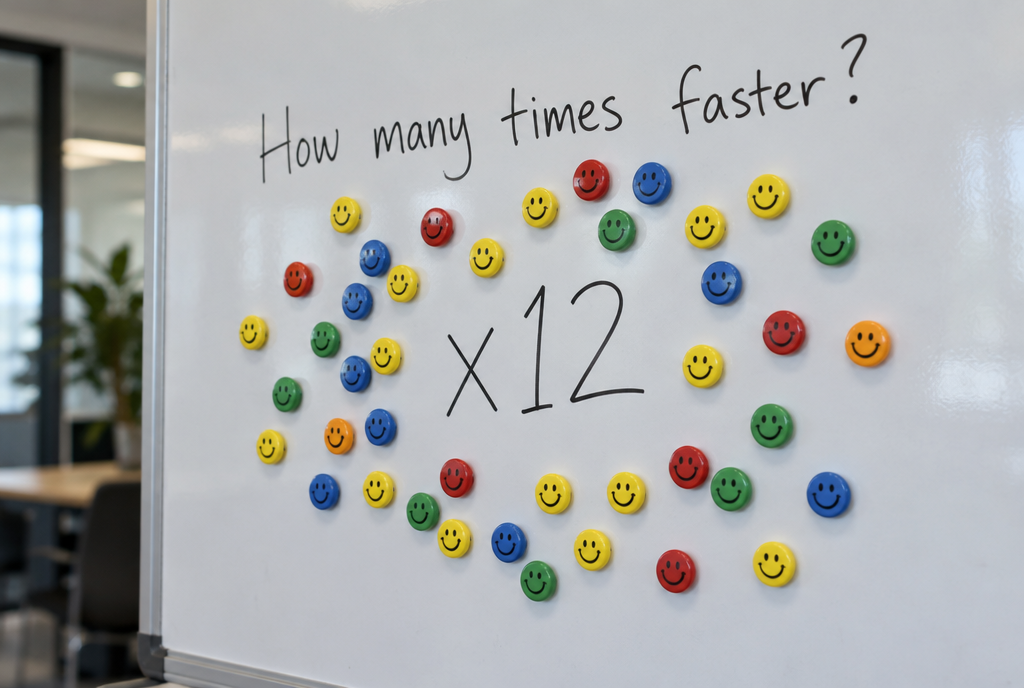
The famous 12 times comes from an internal survey where you answer with one click, not from a measurement
Okay, and you, what does it change?
You don't have an AI that makes AIs in your garage, I know. But you already use one without thinking about it, and that's where you'll see it.
First, in the tools you already have. Your phone's translation, the assistant that summarizes the school's long email, the spell checker that helps you write to your landlord: all of that relies on this kind of model. If making them goes twice as fast, the improvements we would have promised you in two years arrive in one. The translator that finally understands your mother-in-law's accent, that might be next year.

What we expected in two years could arrive in one year
Next, look closely at WHAT is speeding up. METR measures progress on “well-defined” tasks, the ones where there is a right answer that a machine can verify: a program that works or doesn't, a calculation that's right or wrong. For the kids' math homework or your budget spreadsheet, things will fly. For vague questions, like “what career to choose” or “should I sign this contract”, nothing says that progress will be just as fast. Keep your common sense warm.
Finally, your work. If your job consists of turning a clear idea into a result that can be checked, that's exactly what is speeding up. It's not a reason to panic. It's a reason to get started now, while it's still a tool that helps you.
And we've already seen this loop once. Around 1800, the English engineer Henry Maudslay built a lathe capable of making screws with unprecedented precision. With these screws, people made more precise machines, which made even better screws, and so on. It's one of the driving forces of the industrial revolution, and it's thanks to that that the parts of your car's engine fit together perfectly. A machine that helps build the next one, that's not a science fiction movie, it's an old story picking up speed again.
The timeline? It's not ten years from now, it's already underway, and has been for a year. METR has found no obvious brake for the next twelve months, while acknowledging that its view changed several times along the way. After that, nobody knows, including them.
What gets in the way: half the report is blacked out
Now, the part that made me stop and think. METR announced it itself on X: it gave Anthropic a complete report of around a hundred pages. For the public version, Anthropic blacked out, literally, “the majority of the elements we found most telling”. The detailed estimates, the share of computation, data and new methods, the forecasts for the next models: everything got covered with a black marker. The reason Anthropic gave is that this information could help its competitors. METR writes it plainly: the public has to rely on its judgment “much more than would be ideal”.

In the public version, most of the most telling evidence has been redacted
And that's not all. Along the way, Anthropic removed from the contract the part where METR was supposed to verify how computing power was allocated. A tasty detail to top it all off: to analyze all this data, METR made heavy use of... Claude. The AI therefore helped measure how fast AI is improving. METR still considers it “extremely unlikely” that Anthropic sought to deceive it.
Why is everyone so worried? Because the real fear is runaway acceleration. A better AI speeds up research, which produces an even better AI, which speeds things up even more. METR writes that this acceleration “could start to compound”, and cause extreme and risky capabilities to suddenly appear. A snowball, except we still don't know what it's made of on the inside.
My take? I'm glad the tools I work with every day are improving so fast, I'm not going to pretend otherwise. But an inspection with half its pieces hidden is half an inspection.
Sources
- METR, November 5, 2026: Independent Assessment of AI R&D Acceleration at Anthropic in October 2026 (in English)
- METR on X: most of the most telling evidence was redacted (in English)
- Technology.org, November 7, 2026: Anthropic's progress twice as fast (in English)
Article written with the help of Claude Code, proofread and corrected by me.
Join the conversation
You need an account to comment on this article. Creating one is free and takes under a minute.
No comments yet.