A year ago, a 64-gigabyte kit of DDR5, the RAM you put in a desktop computer, cost $191. Today, the same kit is going for $1,118. Not some exotic model: a consumer price check, in August 2025 versus August 2026.
Last month, I told you that the increase in foundry prices announced by Samsung amounted to fourteen dollars on a $1,199 phone, and that there was no need to panic. it was true for silicon. This time, it's a different story, and it needs to be said just as clearly: memory is the real issue, and you pay full whack for it.
What has gone up, and by how much
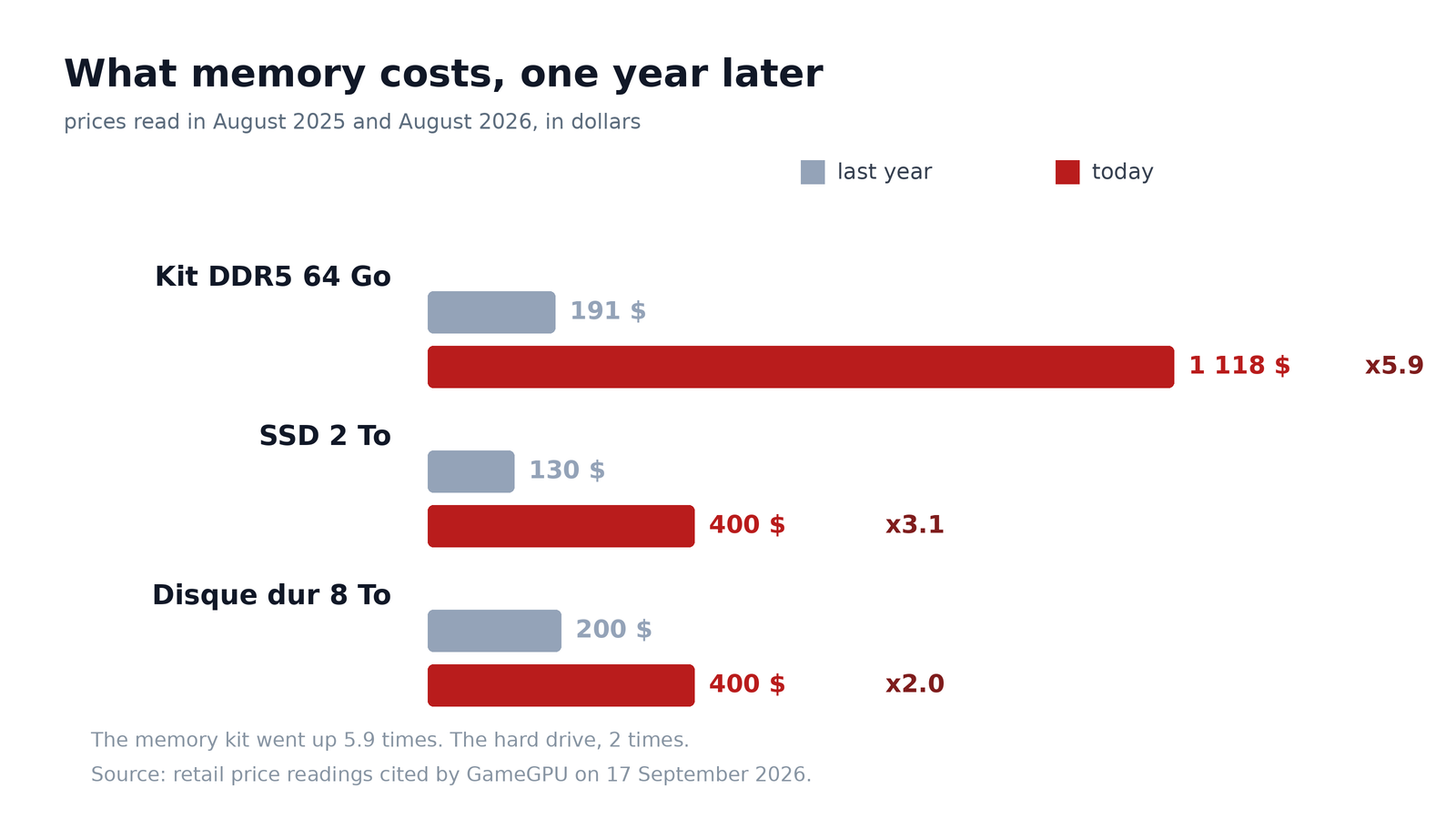
Three products, two price checks, one year apart. The gray bar is what you paid. The red one is what you're paying
The rest of the list makes your head spin. A 2-terabyte SSD, which you could easily find for $130 last year, is going for around $400. A 1-terabyte portable SSD has gone from $85 to $160. A 4-terabyte hard drive has doubled, from $120 to $240. An 8-terabyte drive has gone from $200 to $400. And to give you an idea of how crazy things are, the 32-gigabyte DDR5-6000 stick, which you could find for less than $90, is now going for between $370 and $530 depending on the moment.
In other words, a gigabyte of RAM now costs around $18, compared with $8 for the previous generation, DDR4. That's why you see people buying used DDR4 at prices that make no sense: even when it's expensive, it still costs half as much.
Why AI is eating memory
The mechanism is dumb, and it fits into one sentence: the factories that make memory have changed customers. A DDR5 stick and the memory in an artificial intelligence server come off the same production lines, using similar processes. When a data center builder orders the year's production to equip rows of machines, there's not much left for the computer aisle at the local store.
The figure that tells the story best is inventory. The sector has gone from around 31 weeks of reserves to 8. Nobody makes memory to order in a month: a new factory takes years and billions. So when the order book exceeds capacity, there's no quick way to catch up, only a queue where whoever pays the most moves to the front.
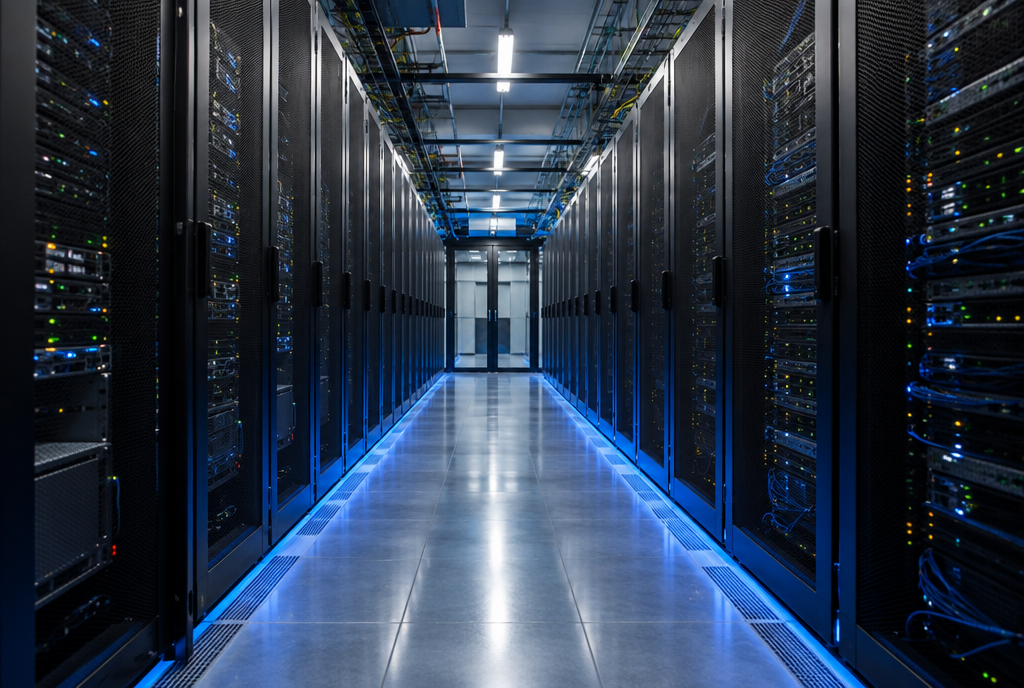
This is who's buying your memory. Those rows don't negotiate, they take the year's production
What Apple is willing to pay
When you want to know where the market is going, you look at what the world's biggest buyer is paying, because nobody gets a better price than it does. And the information circulating since September 15 is brutal: Apple is said to have accepted Samsung's offer for memory in the first quarter of 2027, with an increase of 30 to 40 percent compared with the previous quarter. These are contracts negotiated months in advance, for volumes you can't imagine.
The most telling detail isn't the price, it's the volume. Apple would only get 60 to 70 percent of the capacity it is asking for, because the rest is already locked up by long-term contracts tied to AI and the cloud. When the company that buys the most memory on the planet can't get what it needs, you can guess what happens to the guy who wants to build a PC in October.
Compared with 2024 prices, for the same family of components, we're talking about a factor of seven or eight for RAM and much worse for storage. Be careful though: these are industrial prices, not store prices. In Germany, where retail price checks are well maintained, DDR5 now costs about 5.4 times what it did before the crisis, and storage only 2.3 times as much. The gap between the two is the only good news in the whole mess.
What you do on your end
Three tips, and they're simple. One: if you have a computer or upgrade project in the next six months, do it now rather than in the spring. The contracts signed for early 2027 are already more expensive, it's not going back down tomorrow morning. Two: don't buy memory in advance to speculate or "just in case", you'd be storing a component that will be obsolete before it's used, and there are smarter things to do with that money.
Three, and this is the most useful one: look at what you already have. A three-year-old machine with 16 gigabytes of memory still does the job very well for office work, development and gaming. The real trap of this period is replacing hardware that works fine because you read that it was going to get expensive.
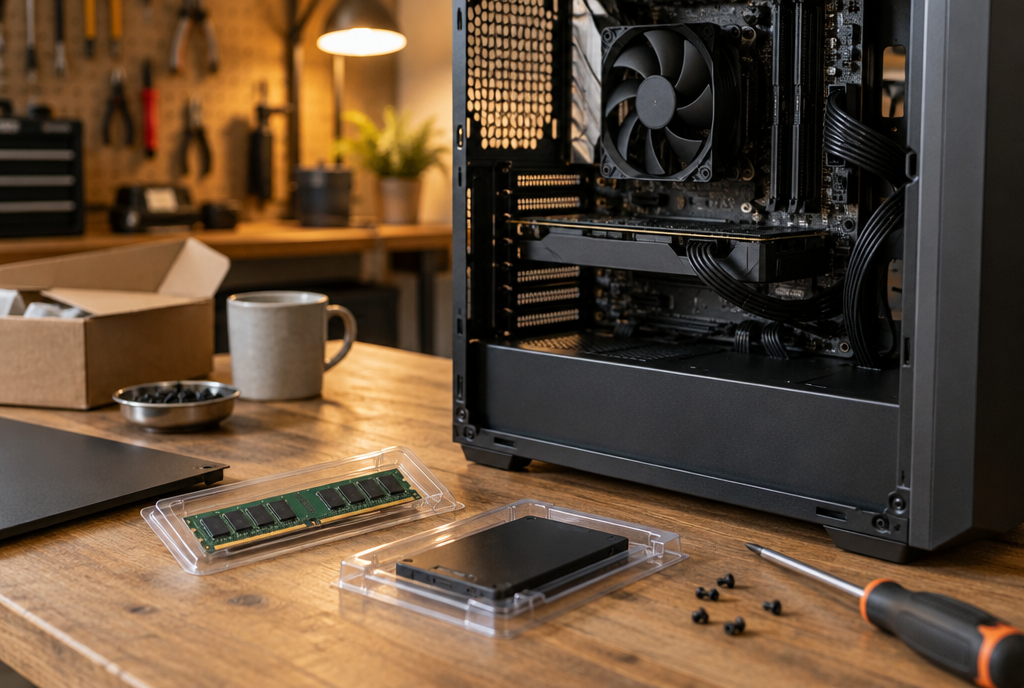
The right time to build this machine was last month. The second-best time is now
There's also one issue I can't leave unmentioned: a class action lawsuit has been filed in a Californian court against the three big memory manufacturers, Samsung, SK Hynix and Micron. It accuses them of restricting production. I have no way of saying what it's worth, these proceedings are long and most of them fizzle out along the way. But it exists, it's public, and if you're wondering why nobody is simply increasing production, the answer is that this is precisely the question the court is going to ask.
What this says about us
There's something dizzying about this story. The price of the memory in your computer is decided by servers you'll never see, in windowless buildings, to train models you may never use. You didn't ask for anything, and your bill has changed.
And it's far from over, because the same mechanism is starting to get going for the price of electricity, for that of transformers and for that of water in certain regions. For twenty years, we've been told over and over that software was going to eat the world. Nobody had expected it to eat the stock of RAM sticks at the local shop first.
One question to finish, and I don't have the answer: if memory costs five times more for another year, do you change computers, or do you keep yours until it gives up the ghost?
Join the conversation
You need an account to comment on this article. Creating one is free and takes under a minute.
No comments yet.