OpenAI buys tens of thousands of Mac mini. What for?
OpenAI buys tens of thousands of Mac mini computers. What for?
The news broke last night, reported by The Information: OpenAI has bought tens of thousands of Mac mini and Mac Studio computers over the past few months. Not two or three for the developers. Tens of thousands.
My first reaction was to read the sentence twice. We are talking about the company that lines up billions of dollars' worth of Nvidia graphics cards and that is going shopping in the desktop computer aisle.
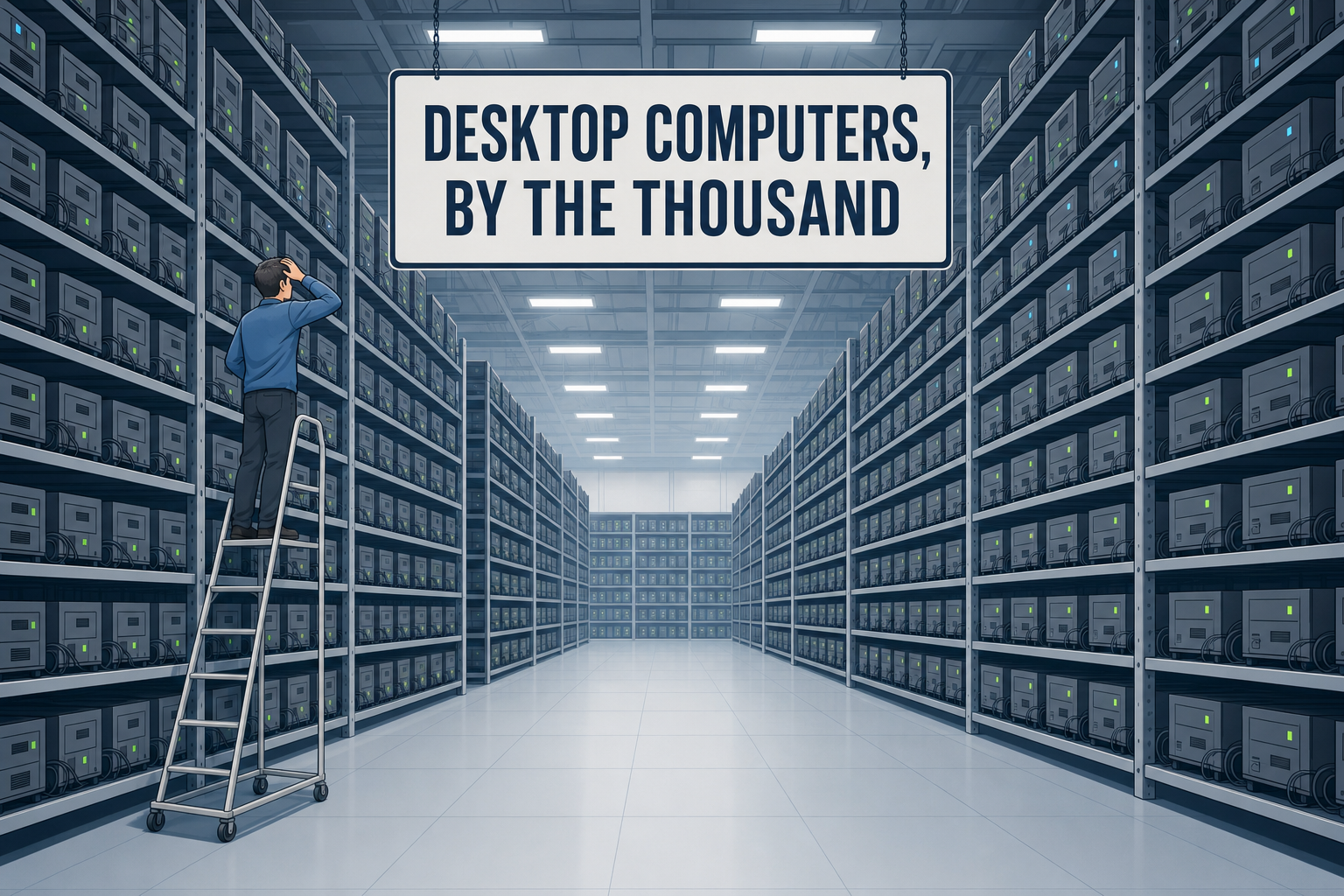
The computing farm of the future looks a lot like a computer store aisle.
It is not for training a model. It is for teaching it to click.
Here is the thing, and it is what makes the story interesting.
Training a conventional language model is done on graphics cards. Thousands of cards churning through text in parallel, in rooms you do not enter without earplugs. That does not change.
But for the past year, everyone has been chasing something else: agents. Not a model that answers a question, a model that does the work for you. It opens software, clicks through menus, fills in a form, modifies a file, runs the test, checks whether it worked, starts again. This is what OpenAI calls agents that use a computer.
And to learn that, you need a computer. A real one. With an operating system, a desktop, windows, applications that lag, dialogue boxes that open at the wrong time. A graphics card in a server will never teach you how to figure your way around a dropdown menu.
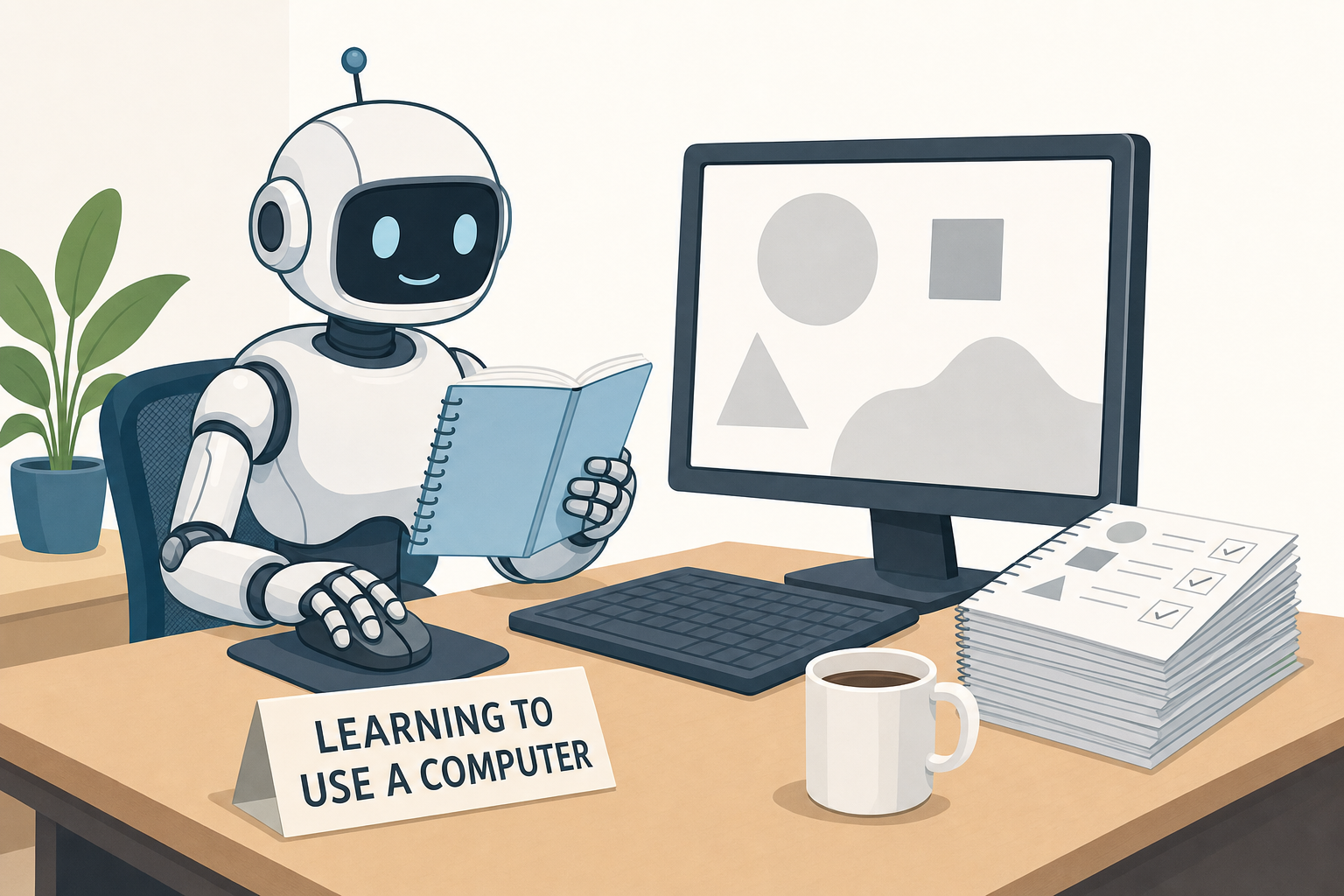
Thousands of exercises, thousands of times. The difference with an intern is that it does not complain.
The method is called reinforcement learning. In plain English: you let the model try, you tell it whether the result is good, it starts again. Millions of times. Except that here every attempt needs a machine switched on somewhere, with a real screen and a real system. So you need a lot of them, and you need them cheap.
Why Macs, then?
Two reasons, and the second one is the one nobody mentions.
The first is technical. Apple's chips share memory between the processor and the graphics part. On a conventional PC, they are two separate types of memory: when data has to move from one to the other, it has to be copied, and that takes time. On a Mac, everyone works on the same pile. Now an agent that uses a computer spends its time going back and forth between the model and the system. This is exactly the situation where shared memory saves time.
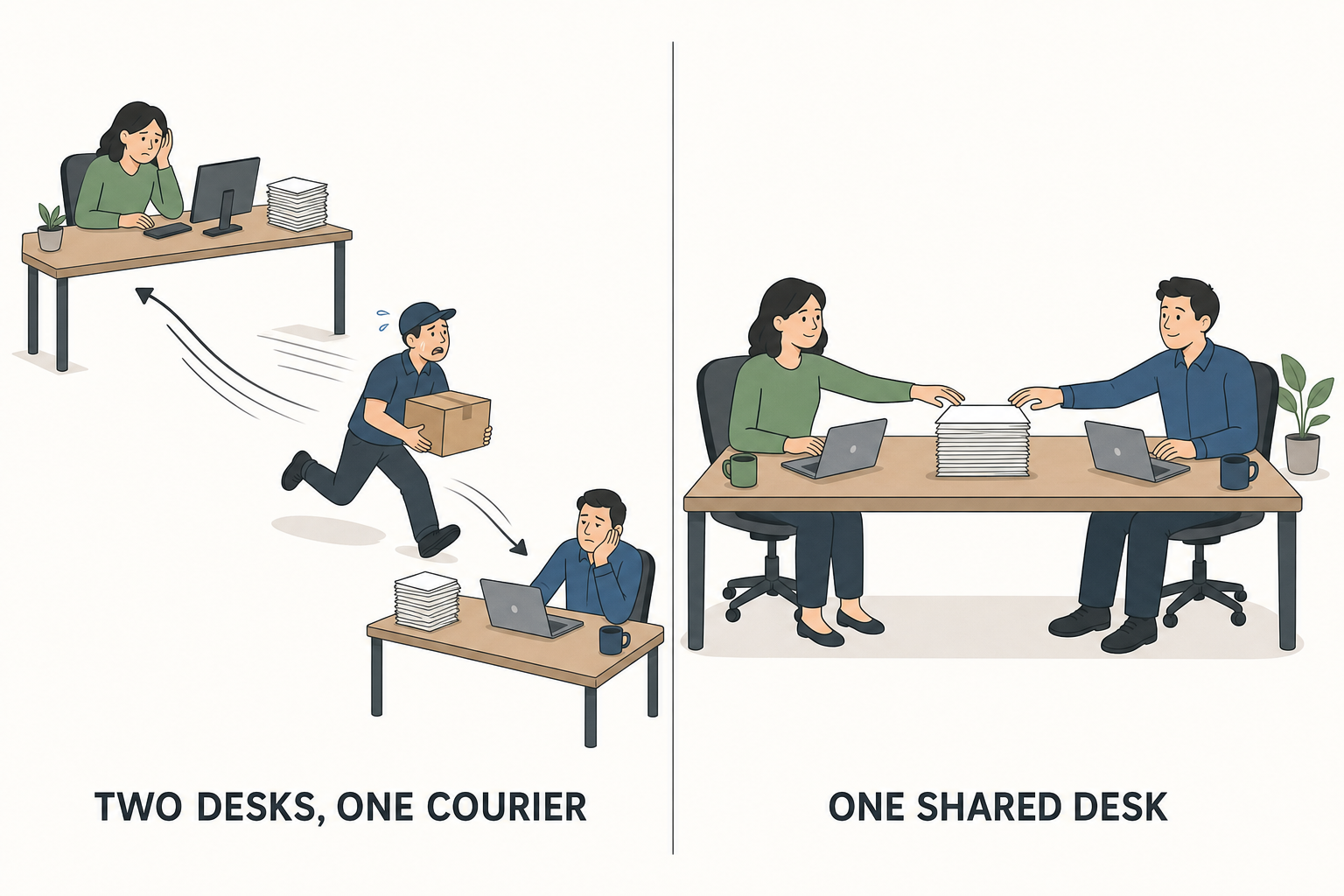
On the left, half the work consists of moving boxes. On the right, you just reach out your arm.
The second reason has nothing to do with technology: macOS legally runs only on Apple hardware. If you want to train an agent to find its way around a Mac, you cannot simulate a Mac on something else. You have to buy Macs. It is the only mainstream operating system that comes with its own purchasing requirement, and here, it is paid for in tens of thousands of units.
Apple becomes an AI supplier without having asked for anything
The most delicious part of the story is the timing.
On August 25, Apple released new Mac mini and Mac Studio models, several weeks ahead of its usual fall schedule. I talked about it six days ago, thinking that the price had gone up by 300 dollars in two years. We now have one more explanation: demand from companies and AI labs took off faster than expected, to the point of creating tensions around delivery times.
Anthropic is doing the same thing, with one variation: instead of buying the machines, the company is renting Mac minis from Amazon, which has been running entire farms of them for years.
Apple itself said nothing. Not a press release, not a line. The company that spent two years being criticized for falling behind on AI is selling its hardware by the pallet, and it is not even putting it forward. It happens to fall on the day it changes leaders, too: John Ternus officially takes over on September 1, and he is a hardware engineer. Coincidence has a sense of humor.
So what does that mean for you?
Two very concrete things.
If you were planning to buy a Mac mini this fall, check the delivery times before celebrating the price. When a customer orders tens of thousands of units of the same model, you are not the one who gets served first.
And if you are wondering what computing will look like in two years, you have a serious clue here. You do not build tens of thousands of workstations to make conversation. You build them to train programs to use the same software as you, with the same mouse, in the same menus. What you do by hand in ten minutes, someone is teaching a machine to do while you sleep.
It can scare you or make you want it, everyone sees it differently. I mainly think that this is the first time we are training an AI by buying it exactly the same computer as the one sitting on my desk!
Sources
- TechRepublic : OpenAI purchases tens of thousands of Mac minis and Mac Studios, August 31, 2026, based on information from The Information: the volumes, the use, the unified memory and the case of Anthropic
- Apple Newsroom : Tim Cook to become Apple Executive Chairman, John Ternus to become Apple CEO, the official press release and the effective date of September 1, 2026
- Implicator : Apple lacked an enterprise AI team as OpenAI bought Macs, August 31, 2026, the context of company demand and the earlier schedule for desktop Macs
Join the conversation
You need an account to comment on this article. Creating one is free and takes under a minute.
No comments yet.