YouTube: what exactly is a view? The answer changes today
YouTube: what exactly counts as a view? The answer changes today
Take a good look at the counters on your favorite channels this week. They're going to climb. Not because someone made better videos over the weekend, but because since this morning, YouTube no longer counts a view the same way.
Starting today, August 24, 2026, a view is recorded the second the video starts. First frame, it counts. No more threshold, no more waiting, nothing left to get past.
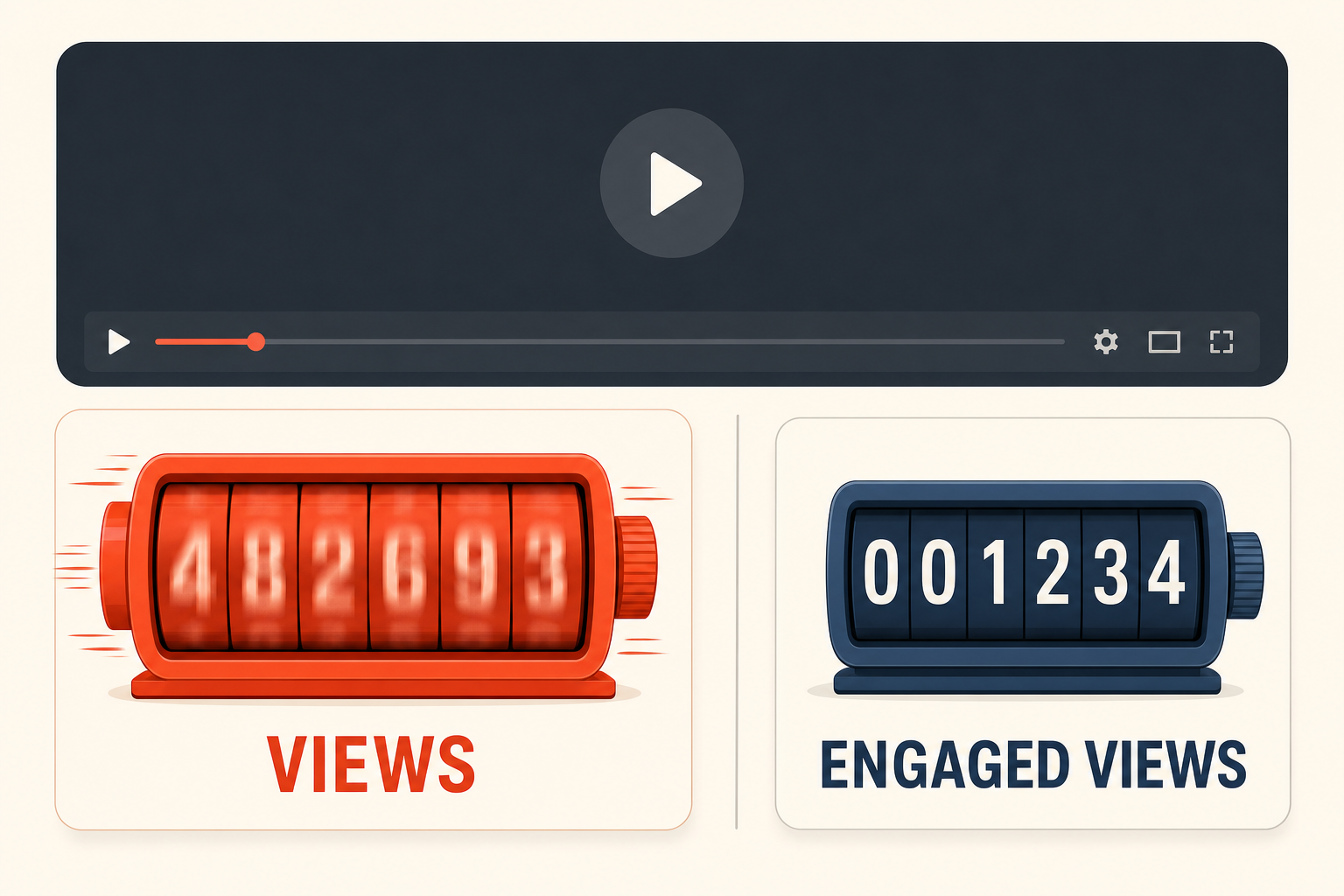
On the left, the number that's going to go crazy. On the right, the one that pays. They've officially gotten divorced.
What changes, in one sentence
Before, there were two worlds at YouTube. Shorts, the little vertical videos, already counted a view at startup, like TikTok and Instagram have done since a change in 2025. Classic videos, on the other hand, required the viewer to stay for a while.
How long exactly? Nobody has ever had the official figure. YouTube has never published its threshold, and that's intentional: the day you know the threshold, you know what to buy to get past it. The figure that's been circulating in the industry for years is around thirty seconds. Take it as an order of magnitude, not as data.
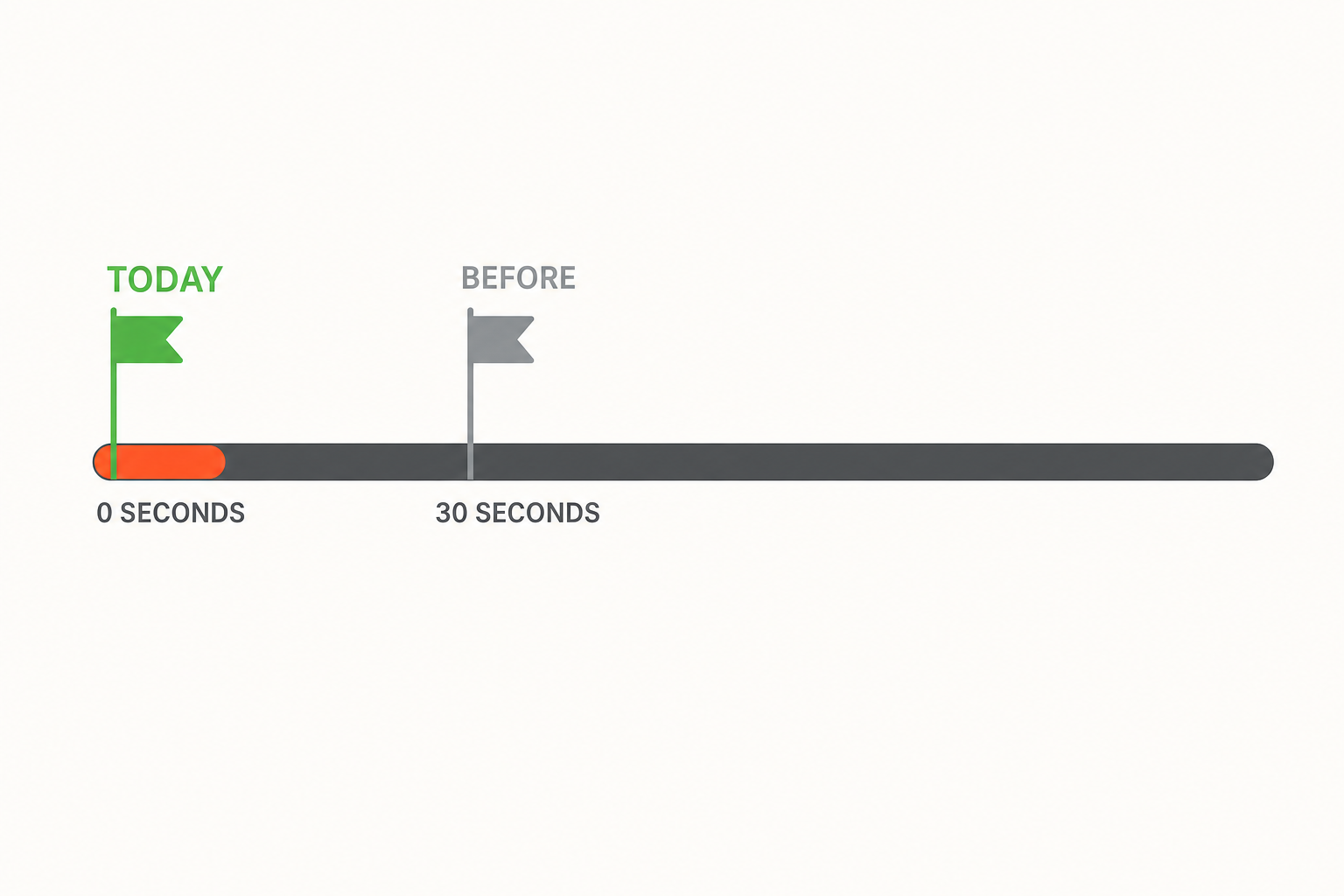
The little gray flag was the line to get past. There's no line anymore.
Since this morning, everything is aligned: long video, Short, livestream, same rule for everyone. The in-house justification is consistency. YouTube says it ran several counting systems in parallel for years and that it was confusing its own creators. It's not wrong. Comparing the views of a Short and the views of a twenty-minute video amounted to comparing kilometers and kilometers per hour.
One detail that matters: old videos aren't recalculated. The new rule only applies to upcoming views. So the curves aren't going to straighten out all at once, they're going to make a step.
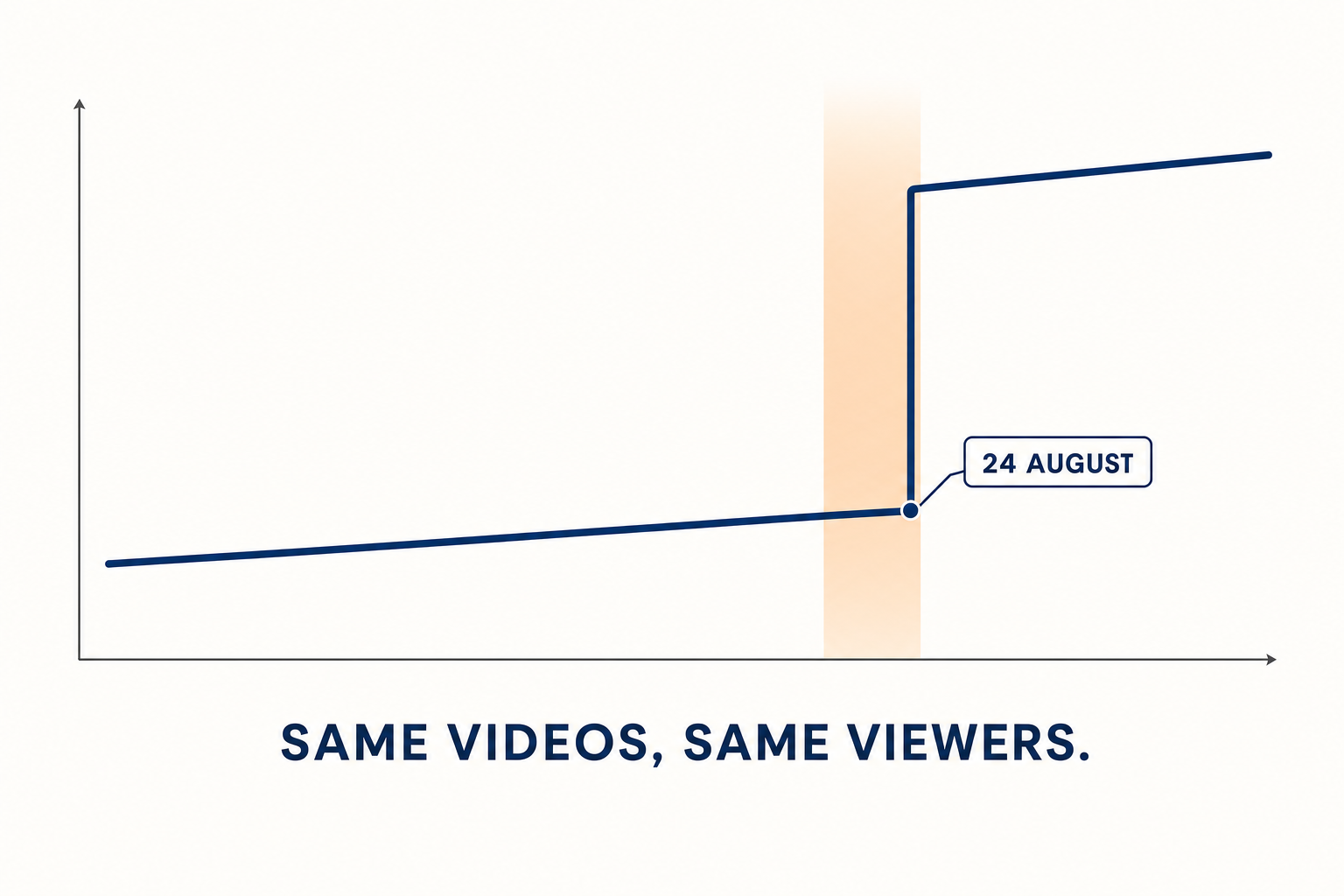
The shape quite a few graphs are going to take this week. No merit involved.
Two numbers instead of one, and frankly it's better
The easy reaction would be to cry manipulation. The counter swells, everyone looks more popular, big deal.
Except YouTube hasn't removed the old number. It moved it and gave it a name: the engaged view. An engaged view is someone who watched beyond the first few seconds, or who did something, a thumbs-up, a comment, a share. In other words, someone who was really there.
And it's that number, not the other one, that decides the money. YouTube wrote it in black and white: the change affects neither creators' revenue nor the conditions for entering its sharing program. Payment continues to be based on engaged views and engaged watch hours.
So we're moving from one single, vague number to two numbers that each say one precise thing. The first answers “how many times did this video start”. The second answers “how many people stayed”. These are two different questions and they deserved two numbers.
For a creator, it even becomes a free diagnostic tool. A big gap between the two means that your thumbnail and title are doing their job and your first twenty seconds aren't. A small gap is the opposite: the people who come in stay, but not enough of them come in. Before, you had one number and guessed.
Where to find it
The engaged view doesn't appear under the video. It's in YouTube Studio, in the statistics, in advanced mode. It's a little hidden away and that's no accident: the number on top is meant to be seen by everyone, the one underneath is meant for you.
If you publish videos, take ten minutes this week to go get it and write it down somewhere. From now on, your public view history is split in two: before August 24 and after. You will no longer be able to compare a June video and a September video on the public counter without talking nonsense. On engaged views, you can.
The storefront and the cash register
What I like about this story is that it makes visible something we forget all the time: a number displayed by a platform is not a measure of reality, it's a definition. Someone decided, in a meeting room, from what point it counts. And they can change their mind on a Monday morning.
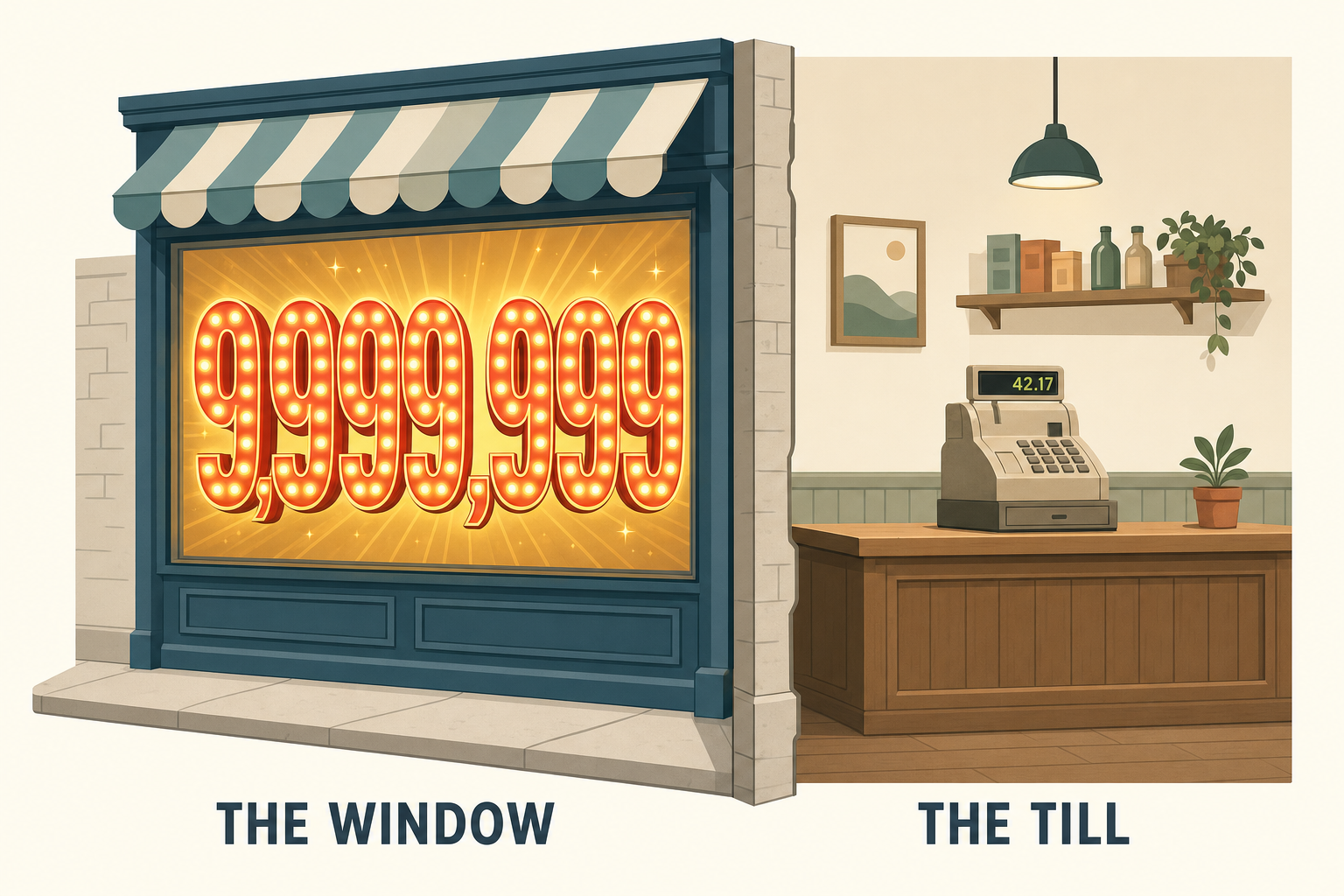
The big number in the storefront and the small one at the cash register. Guess which of the two you can take to the bank.
The public counter becomes more or less what advertising calls an impression, meaning one time the thing was displayed in front of someone. It says nothing about what the person did with it. An impression is counted in billions and it doesn't fill a fridge.
I know something about that. I had ditched Google advertising on this site a year and a half ago, and the trigger came down to one number: 32 euros earned over all of 2024. Tons of ugly banners on my pages, flattering statistics in the dashboard, and 32 euros. Since then, when I see a very large number on a screen, my first instinct is to ask who is counting it and according to what rule.
At least here, we have the answer. It's written down, it's dated, and both numbers are available. That's more honest than half the dashboards I open in a day.
What I think about it
I have a YouTube channel. Tonight I'm going to look at my counters, and I already know that the one at the top will have moved without me having anything to do with it. It's a weird feeling, a bit like finding money in a jacket pocket: it feels good for two seconds, then you remember that you didn't earn it.
The real effect will show up elsewhere. Over the next few months, you'll read articles explaining that this or that channel is exploding, that this or that format is taking off, that short video is crushing everything. With screenshots of counters to back it up. And each time, we'll have to ask ourselves whether the number has grown or whether the rule changed underneath it.
What bothers me most isn't even YouTube. It's that it works the same way everywhere. The number of active users of a network, the number of downloads of an app, the number of players of a game, the famous tokens of an AI: every time, someone chose the definition, and every time we read the result as if it were the temperature outside. We compare numbers over ten years without ever checking whether the unit of measurement has stayed the same. It almost never has.
Sources
- YouTube Help: how views are counted, updated for the August 24, 2026 change
- TechCrunch: YouTube will now count a view as soon as a video starts playing, August 17, 2026
- Social Media Today: YouTube is changing how it counts views
- TechCrunch: the same change for Shorts, March 2025
Join the conversation
You need an account to comment on this article. Creating one is free and takes under a minute.
No comments yet.