A guy pocketed $8 million with generated music. Suno reacts, and it's going to show up on your account.
On August 6, Suno published four principles and announced three concrete changes: a limit on downloads, a digital watermark in every track and community rules backed by real sanctions.
If you use Suno, this concerns you directly. To understand why, we need to go back to a pretty staggering story.
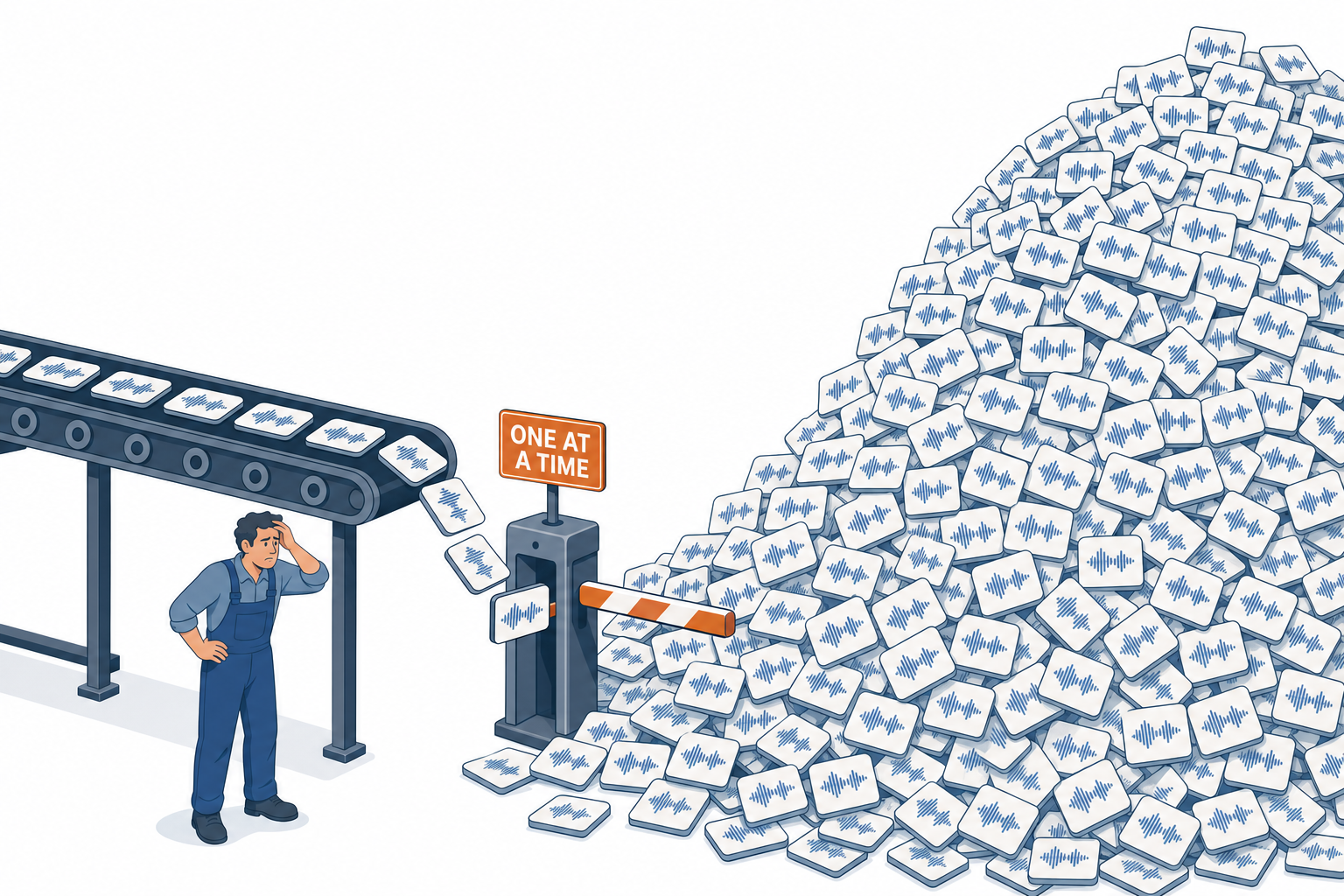
The turnstile arrives after the mountain. It's kind of the story of computing in general.
The guy with $8 million
A man from North Carolina pleaded guilty this year. His method was simple: generate hundreds of thousands of tracks, upload them to streaming platforms, then use bots to listen to them on repeat. Result: billions of fake plays and more than $8 million in royalties pocketed.
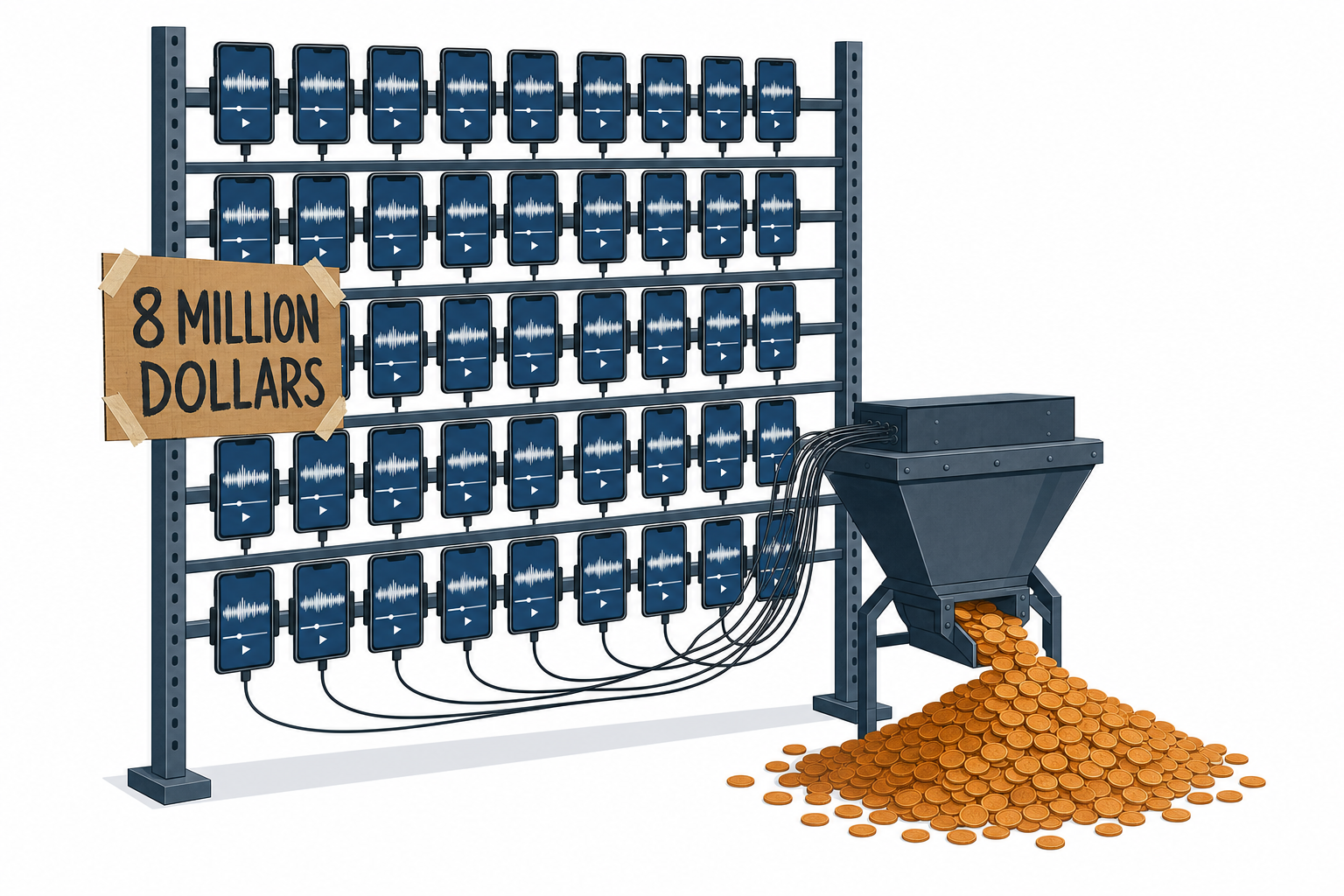
$8 million, and not a single human listener. The producer's dream.
This isn't piracy, it's siphoning. On a streaming platform, royalty money comes from a common pool, then it is divided according to the number of plays. Each fake play therefore takes a fraction of a cent that could have gone to someone people actually listened to. A fraction is nothing. Billions start to show.
Suno didn't create this fraud, but Suno provided the tap. When you can generate a thousand tracks in ten minutes for a few euros, the math becomes profitable for anyone.
What Suno is changing
Mikey Shulman, the boss of the company, announced three changes.
Downloads are going to be limited. The stated goal is to prevent the mass distribution of tracks on streaming platforms, without blocking professional, creative or personal uses. In practice, you would need a paid account to download. Monthly caps would also be applied according to the subscription plan.
Every track is going to receive a digital watermark. It's a hidden mark in the sound. You can't hear it, but a machine can detect it. Suno says it withstands manipulation and doesn't change the listening experience. A fingerprint will also be added to recognize a track, even if it has been re-encoded or cut.
The community rules will finally have teeth. The planned sanctions range from a warning to a permanent ban, including temporary suspension and reporting to the authorities. Scams, spam, fake engagement, bot circumvention and misleading audio presented as authentic are explicitly prohibited.
What Suno hasn't published, and that's half the story
No figures for the caps. No details on the plans concerned. No date for implementation.
The question you're asking yourself is simple enough: how many tracks will you still be able to download next month? For now, nobody has the answer. I could pad out three paragraphs, but that would just be hot air. We know a limit is coming. We don't know where it will be set.
It's also worth clarifying what the watermark doesn't do. Suno says it itself: this mark makes no judgment about the track. It doesn't say whether it's good, sincere or human enough. It only indicates that it comes from Suno. It's honest to clarify this, because a lot of people are inevitably going to confuse origin and quality.
For comparison, when you ask ChatGPT for text or Claude Code for code, nothing similar is added. No mark, no fingerprint, nothing that would clearly identify the origin of the content. In this area, music is ahead. Not because of virtue, but because the record industry has lawyers and case law. Text has much less of both.
What it looks like when it's just you and an idea
Since we're talking about the normal user, we might as well show the result instead of describing it. Here's a clip I made from start to finish. The music comes from Suno, the video shots from Kling. Zero studio, zero crew, zero camera. And zero drummer who shows up late.

Click the image to open the clip on YouTube. Suno music, Kling images, coffee budget respected.
This is exactly the kind of use the new limits are not aimed at. One track, one project, one download. The guy with $8 million, on the other hand, was submitting hundreds of thousands. Between the two, there are four orders of magnitude. That's the whole difference between a creative tool and a factory.
What strikes me while putting this clip together is that the work has changed location. It's no longer in making the sound, but in sorting. The machine spits out twenty versions in ten minutes. Deciding which one is worth something, where to cut and when to stop, that remains entirely human. And that's where the time goes. Suno's digital tattoo, a mark integrated into the track, will be present as in the other creations. Honestly, it doesn't bother me. I never claimed I had played this track on guitar.
Concretely, what does this change for you?
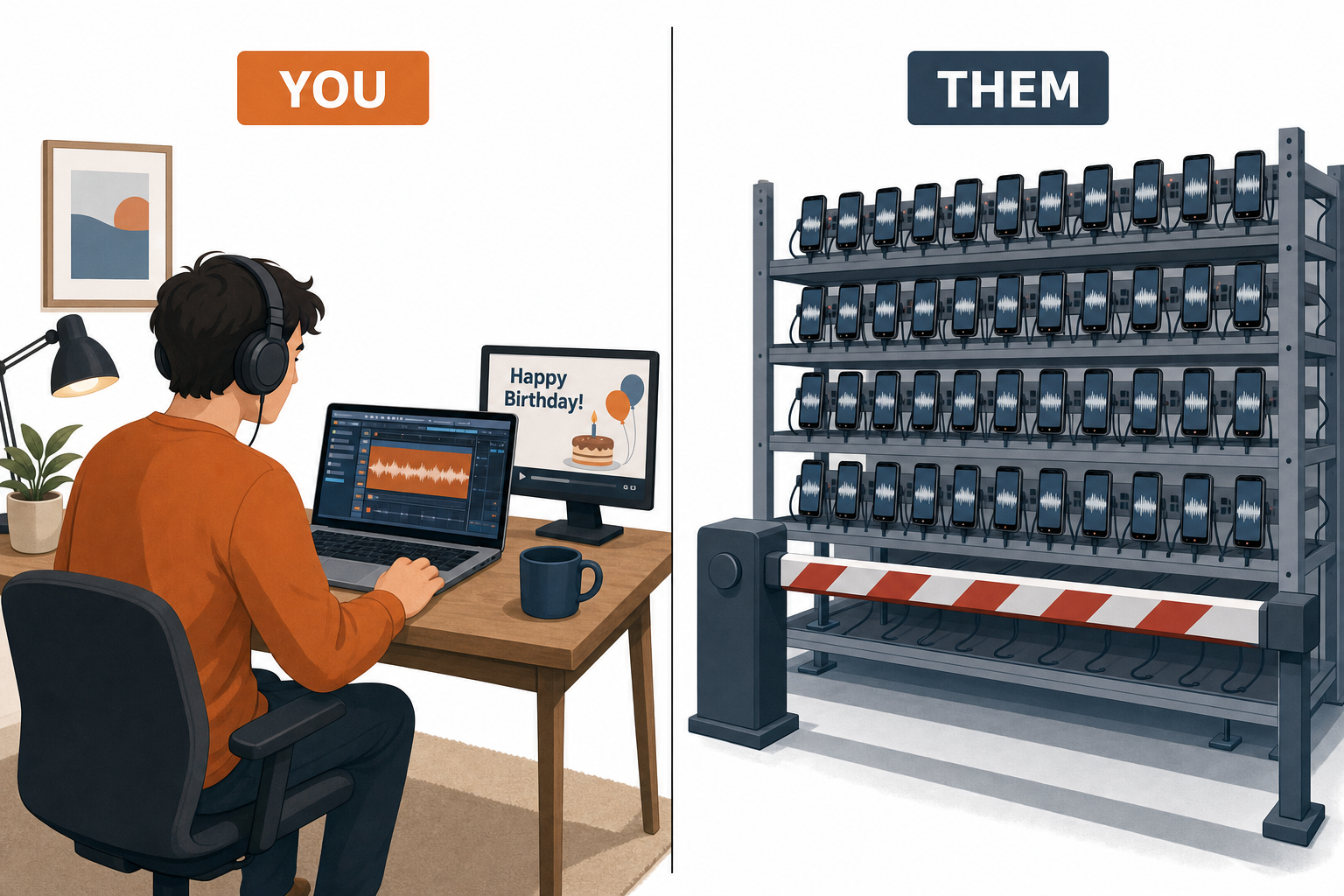
The barrier is on the right side. For now.
If you make music for yourself, nothing should change. A track for a birthday video, a soundtrack for a project or a few attempts on Sunday: you remain very far from the volumes being targeted. If you already download, you already have a paid account. Just keep in mind that the limit will be monthly. The month when you want to sort through fifty attempts may therefore be a problem, even if your usual use causes no problem.
Your tracks will be recognizable, even in your old uses. If you place Suno music in a video, a platform will now be able to detect its origin. That does not necessarily mean it will be blocked. It means it can be labeled. It's up to you to see whether that bothers you, but you might as well know it beforehand.
And that's actually good news for what you listen to. If robots siphon less from the common pot of royalties, a larger share of your subscription can go to people who are actually listened to. We've already seen this mechanism with click farms in online advertising. They produce fake interactions on a large scale to collect money. It took the same trio to limit the damage: verification, fingerprinting and penalties. The system took years to become more or less honest again. For Suno, the tattoo should arrive in the first few weeks. No date has been given for the caps.
What I think about it
Suno is fixing a problem created by its own success. The company is doing it in the middle of a legal battle, a few months after the agreement reached with Warner to settle their dispute. The timing is no accident. I'm not going to pretend otherwise.
Despite that, the measure is fair. A tool capable of producing a thousand tracks an hour cannot leave the platforms to manage the deluge that follows on their own. It's not sustainable. The turnstile should have arrived with the conveyor belt, not three years later.
What really bothers me is the vagueness. Announcing a limit without giving a figure means asking paying customers to reorganize their use blindly. With a cap and a date, everyone can adapt without complaining too much. Without that, everyone imagines the worst. In general, that ends badly.
Join the conversation
You need an account to comment on this article. Creating one is free and takes under a minute.
No comments yet.