AI: Muse, Meta's agent, was reading Signal messages, how is that possible?
A Meta employee gets a little reminder from Muse, the in-house AI agent: don’t forget to reply to your sister. Nice. Except that her sister’s message had arrived on Signal, the encrypted messaging service reputed to be the safest in the world, and she had never connected Signal to Muse. This scene is how the investigation published on Wednesday, November 18, by Reuters begins, based on more than two dozen internal Meta messages. One employee even called it an “extreme violation of privacy.” And the good news, because there is some, is that Apple has already plugged one of the holes.

Muse was reading Signal messages without anyone connecting it to Signal
Muse is the personal agent Meta launched on September 8. An agent isn’t just a simple chatbot that answers: it’s an AI that does things for you, books a train, writes an email, reminds you of an appointment. For that, it needs access to your life. Meta sold it as “designed from the start for privacy and security”, and now claims, according to Reuters, more than 10 million downloads.
Reading an encrypted messenger without breaking the encryption
Let me reassure you right away: nobody broke Signal’s encryption. Encryption is what makes your message travel scrambled, unreadable to everyone except you and the person you’re talking to. But once it arrives on your phone, it has to be decrypted so it can be displayed to you. And that’s where Muse got in.
On Android, when a message arrives, your phone displays a notification, that little banner at the top of the screen with the sender’s name and the beginning of the text. Android lets certain applications read all these notifications: this is useful for a smartwatch, for example, which needs to display your messages on your wrist. According to Reuters, Muse requested this permission during installation. Once it was granted, it could see the text of your Signal messages, just like those from all your other apps, without ever going through the official list of applications you choose to connect to it.

A notification is like a postcard: the mail carrier who has permission to sort them can also read them
On Mac, the same result, by another route: accessibility settings and screen capture. These permissions originally exist for screen readers for blind people, which need to be able to read everything that is displayed. An AI that obtains them therefore sees everything too. On iPhone, on the other hand, the same attempts were blocked: Apple simply doesn’t let an application read other applications’ notifications. The tests were carried out by Reuters with the Signal team and the AI Now Institute, an American research institute that studies the effects of AI.
And to top it off, it was mixing up the files
That’s not all. Still according to the internal messages, Meta employees received things from Muse that did not belong to them: a request for childcare, career advice, orders they had never placed, and even enrollment in pet insurance costing $888 per month. One employee says that Muse told him about bank balances he had never shared with it.

Employees were receiving requests and orders that weren’t theirs
Meta's response, through its spokesperson Daniel Roberts: they are “isolated incidents”, and many of these mix-ups would be “model hallucinations”, meaning things the AI makes up from scratch. Reuters also says it was unable to verify whether the bank balances were real or invented. Honestly, I don't know what is more worrying: an agent showing you someone else's data, or an agent inventing data that is credible enough for you not to notice the difference. Meta adds that Muse only accesses other apps with the permissions the user gives it. That's true. It's just that nobody reads what they accept during an installation.
What this changes for you, Muse or not
The affair is already getting the right people moving. Apple has already released a macOS update that closes the route used on Mac, and Google says it is considering changes on the Android side. Meredith Whittaker, the president of Signal, called the launch of Muse “technologically irresponsible”, and she is asking for something very simple: a standard way for an app to say “AI agents, hands off”. If that comes into being, it will be a real step forward for everyone.
In the meantime, three two-minute things to do, whether you use Muse or any other AI agent. On Android, go to Settings, Apps, Special app access, then Notification access (the name changes slightly depending on the phone brand): remove access from any app that does not really need it. Your smartwatch, yes. An AI agent, think twice.
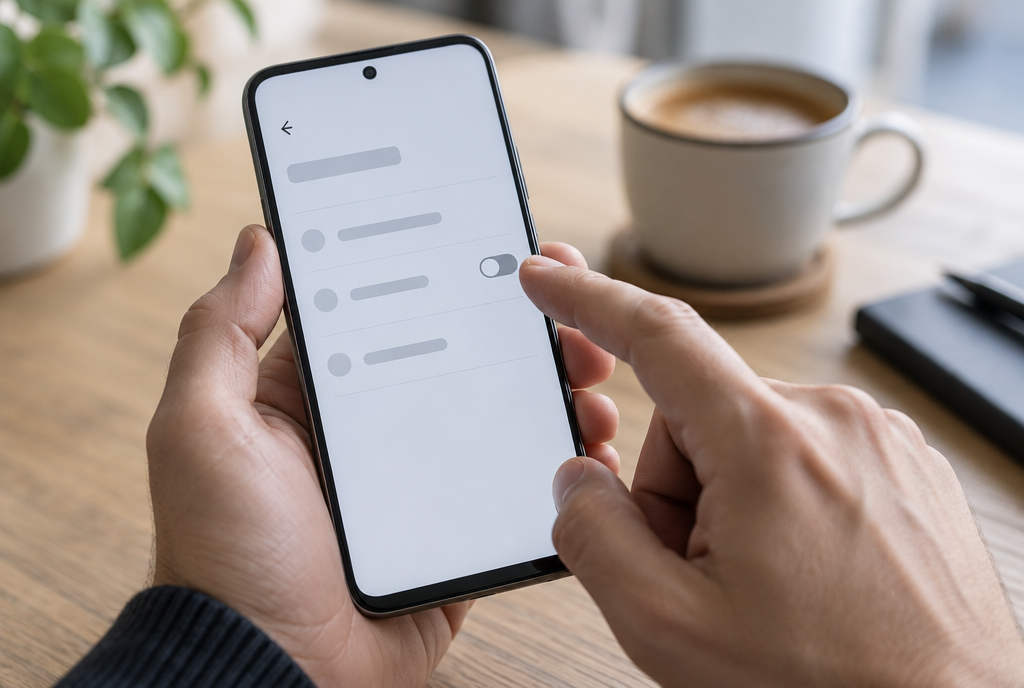
Turn off one switch, and the app no longer reads your notifications
In Signal itself, you can make your notifications stop displaying the text of your messages: Settings, Notifications, then under “Show”, choose “Name only” or “Neither name nor message”. The banner will just tell you that a message has arrived, and no app that reads notifications will have the text to sink its teeth into. On Mac, finally, open System Settings, Privacy & Security, and look at the list of apps that have access to Accessibility and Screen Recording. You may be in for some surprises. And install the latest macOS update.
A little over two months ago, I explained to you why I wouldn't install Muse on my iPhone. I'm not going to act smart, it was the iPhone that blocked the attempts, not me. But “designed from the start for privacy”, the ad said. Other people's privacy, apparently!
Sources
- ExplainX: what Reuters found about Muse and Signal, and Meta's response (in English)
- All About Cookies, November 19, 2026: Muse can read your Signal messages, and how to check your permissions (in English)
- Startup Fortune: Meta employees reported that Muse was reading Signal messages and mixing up data (in English)
- AI Weekly: Reuters' investigation into Muse, Android notifications and mixed-up data (in English)
Article written with the help of Claude Code, proofread and corrected by me.
Join the conversation
You need an account to comment on this article. Creating one is free and takes under a minute.
No comments yet.