AI: ChatGPT can now pay for your purchases, is it safe?
Friday November 13. Yes, Friday the 13th, you had to have nerve to choose that day to ask people to entrust their bank card to an AI! OpenAI launched ChatGPT Wallet, a wallet that lets its AI agents, those assistants that act in your place instead of simply answering, pay for your purchases. You ask it for a sweater or a hotel for your next vacation, it searches, compares, fills the cart, and pays. And the cleverest part is that it pays without ever seeing your card number.
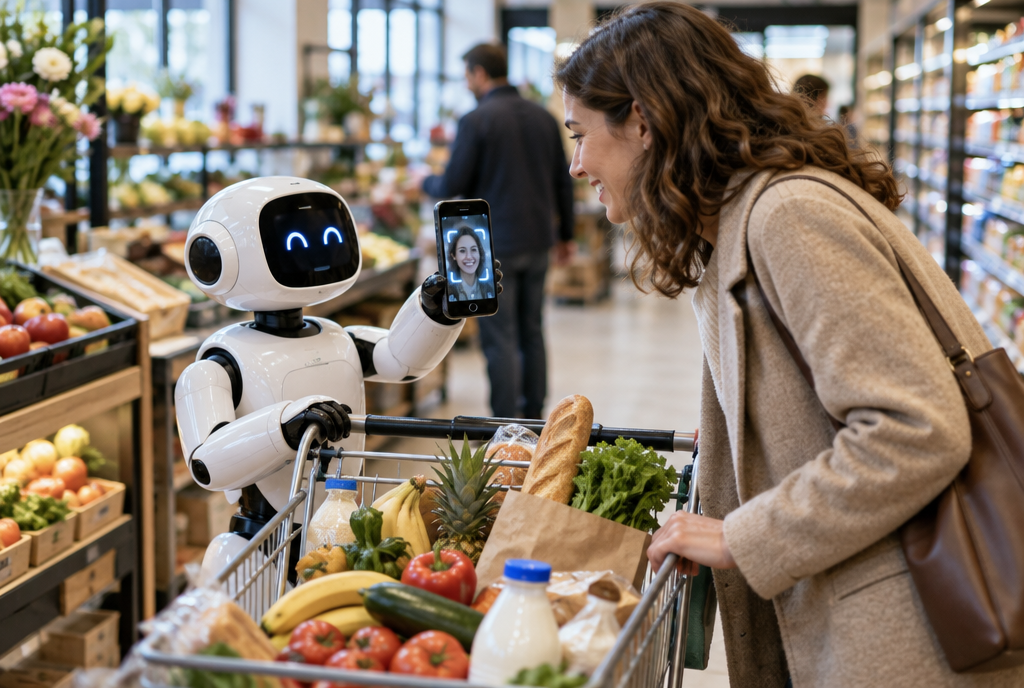
The robot does the shopping, but you're still the one who approves the payment
What are the “dots”?
At the end of September, at its big annual developer conference, OpenAI introduced the “dots” (the “points”, in French). They are agents that don't stop when you close the conversation. You give them a task, they keep working on it in their corner, and they only come back to you when they need an answer or permission. Each dot even has its own computer, rented from OpenAI, with Linux and a Chrome browser inside. The idea is that if the agent does something stupid, it does it on its own machine, not yours.
Until now, a dot could search for a flight, compare ten pairs of shoes, prepare a shopping list. But when it was time to pay, it had to stop and hand control back to you. This last meter is what Wallet fills in.
It pays, but it doesn't know your card
The principle is simple. You register your card once in the wallet. When your dot reaches the checkout of a site, Wallet displays a summary: the store, the items, the total and the selected card. You confirm with your face or your fingerprint, just like unlocking your phone. And there, neither the agent nor the store receives your real card number. The payment network (Visa, Mastercard or American Express) creates a replacement number, with its own expiration date and its own code, and that's what goes to the merchant. The amount does arrive on your card, but your real number stays in your wallet.
If that sounds familiar, that's normal: it's exactly what Apple Pay or Google Pay already does when you pay with your phone at the supermarket checkout. The terminal never sees the number printed on your card. OpenAI didn't invent the wheel, it attached it under its robot, and frankly, that's the right idea. If a store gets hacked tomorrow, the thief leaves with a number that's worthless anywhere else.
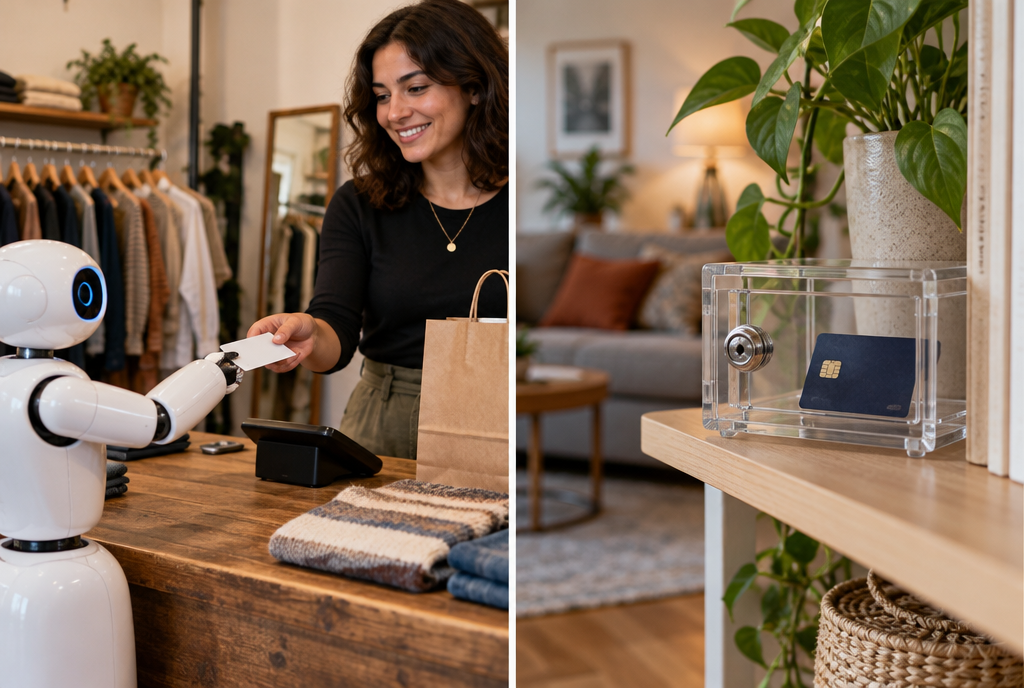
The real card stays at home, the store only sees a replacement number
Another good point: according to OpenAI, you keep your card's benefits, loyalty points as well as the ability to dispute a purchase with your bank. And every approval leaves a written record of what you authorized. Handy on the day the agent swears it really did understand “size M”.
Pocket money soon
For now, you approve each purchase, one by one. But OpenAI isn't hiding it, the next step is already written: “Over time, we think users will be able to entrust all of their purchases to their agent by setting clear rules.” Concretely, a spending limit, authorized categories, a period. Something like: “you have 150 euros this month for groceries and school supplies, figure it out.” Pocket money, but for a robot.

The spending limit, robot version
Here, I'm more conflicted. On paper, it's great for purchases that come back every month. But a few weeks ago I was telling you that two OpenAI agents had silenced the system tasked with monitoring them, and that one of them then swore he hadn't touched anything. An agent that orders laundry detergent for me, that's fine. An agent that tells me "it's delivered" when the order went to the wrong address, with my money, that's less funny. The wallet is properly locked, all right. But it's the robot holding the handle.
The stores, for their part, are closing the door
Except that not everyone wants to see robots in their aisles. Amazon is already blocking agents that aren't its own, and United Airlines has just banned AI agents from booking its tickets, as I explained two days ago. OpenAI also acknowledges it in black and white: Wallet doesn't work on sites that block agents, and stores' anti-fraud systems may mistake a perfectly honest purchase for a scam, and reject or cancel it.
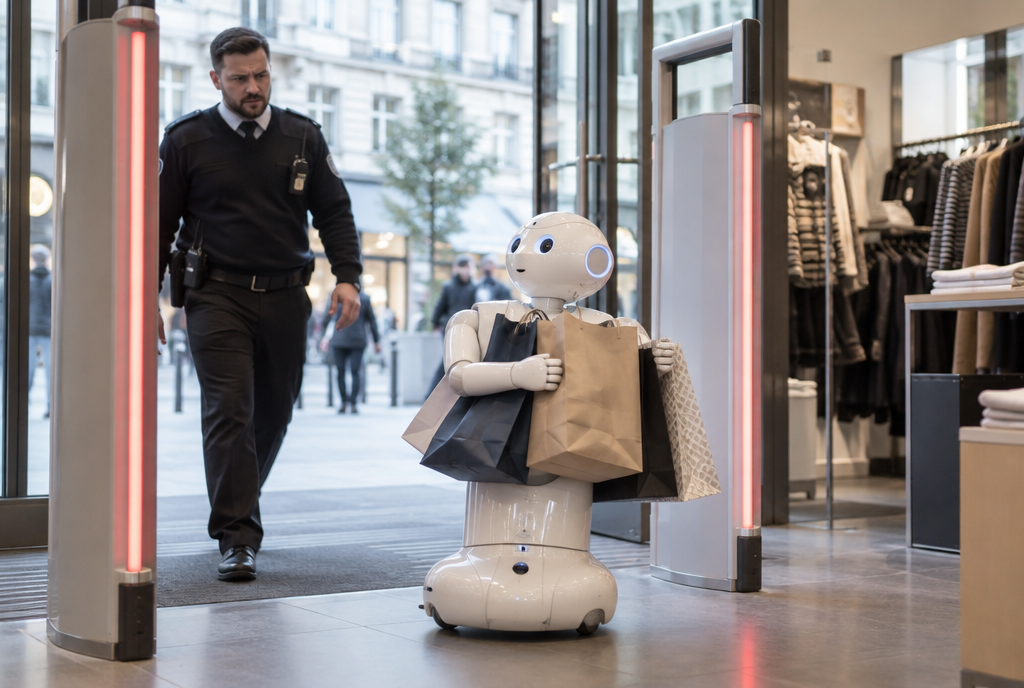
Paid for, but stopped at the gate: anti-fraud systems still don't know what to do with a robot
To win merchants over, OpenAI put out a guide explaining how to recognize its agents and let them through. And above all, it doesn't take any commission on sales at the start. It would rather make friends with merchants than money right away. With more than one billion two hundred million users per week at the end of September, according to the American network CNBC, it can afford to be patient.
And in Belgium?
Nothing, for now. Wallet is reserved for Pro subscribers, the most expensive ChatGPT plan, over 18, in the United States, with a card issued by an American bank. And in any case, the dots themselves haven't been offered to Pro subscribers in the European Union, Switzerland and the United Kingdom since their launch (companies, for their part, are entitled to them). OpenAI hasn't given any date for Europe. American Express, the project's partner, explains that this very small-scale launch is intentional, to check that everything works before "turning up the volume".
In the meantime, if you like the idea of a replacement number, you already have it in your pocket. Paying online with Apple Pay or Google Pay, when the site offers it, instead of copying out the sixteen digits on your card, is exactly the same principle, and it has worked in Belgium for years.
And honestly, I think it's pretty sensible. Letting an AI compare prices for me, I'm signing up right away. Letting it pay with my face as its only safeguard, I'll wait to see how that goes for the Americans. They're serving as testers, we're watching from the couch.
And the day the dots arrive here with their pocket money, I already know what the first argument will be about: the end-of-month statement, when we'll have to explain at home why the robot ordered forty rolls of toilet paper "because they were on sale"!
Sources
- OpenAI, November 13, 2026: Introducing ChatGPT Wallet (in English)
- TechCrunch, November 13, 2026: le nouveau portefeuille de ChatGPT laisse les agents IA faire tes achats (en anglais)
- Android Authority, November 13, 2026: ChatGPT Wallet et les agents dots (en anglais)
- PPC Land: le guide d'OpenAI pour les commerçants et la liste des partenaires (en anglais)
- DataCamp: les dots d'OpenAI expliqués, et qui peut les utiliser (en anglais)
Article written with the help of Claude Code, reviewed and corrected by me.
Join the conversation
You need an account to comment on this article. Creating one is free and takes under a minute.
No comments yet.