Security: Google's AI has found two vulnerabilities in old RSA encryption, are you affected?
Five months. That's how long a team of cryptographers needed this summer to carry out a record-breaking calculation against 1024-bit RSA encryption. The AI agents from Google DeepMind have just redone the same calculation in a little over three days, with all in all about twenty short messages from a human researcher to guide them. And they didn't stop there: in a few weeks, they found two new flaws in this old system. When I read that on Friday, I first thought about my bank. Then I took a breath: it has nothing to worry about. My old devices and my emails, that's another story.
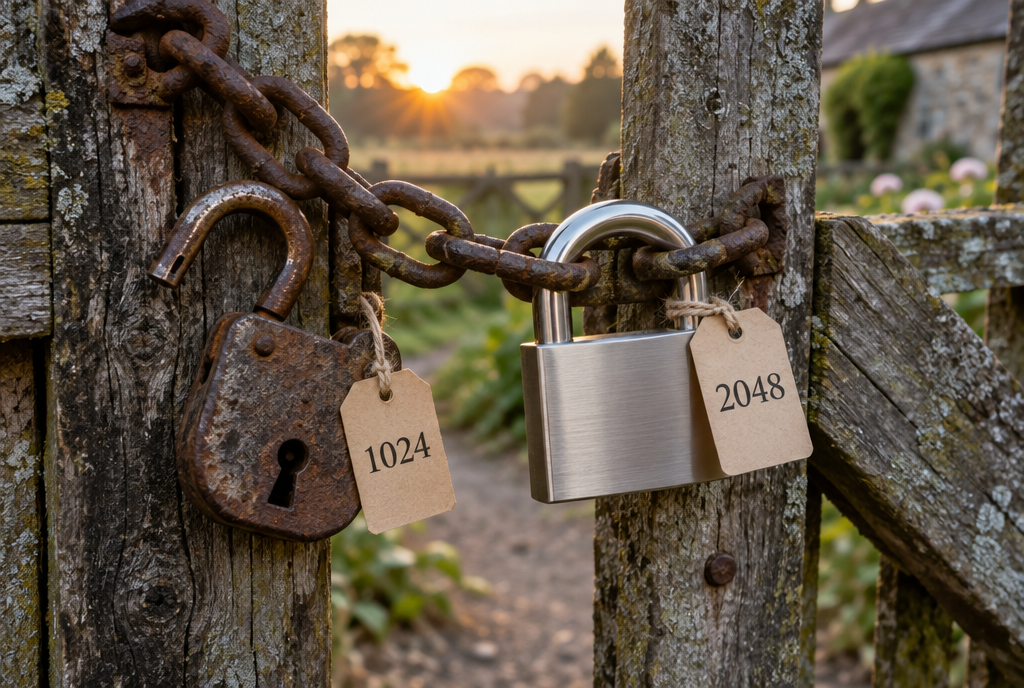
The flaws target old 1024-bit keys, 2048-bit ones are not affected
RSA, what's the padlock for?
RSA is an encryption system invented in 1977, and it's everywhere. It's what has allowed your browser for decades to check that it's really talking to your bank's real website, or your computer to know that an update really comes from Microsoft or Apple and not some little smartass.
Its principle comes down to one very simple idea: multiplying two very large prime numbers is easy, but finding those two numbers from the result takes horribly long. The “1024 bits” is the size of that result: a number of about 309 digits. With 2048 bits, you get to about 617 digits, and there, even all the machines on the planet put together couldn't get through it. That's the size used almost everywhere today, and the US authorities have no longer accepted 1024 bits for creating new signatures since 2013.
So 1024 bits is already considered tired. But tired doesn't mean dead: nobody has ever publicly managed to crack an RSA key of this size. The official record, set in 2020, concerns an 829-bit number. And the killer detail is that two of the researchers behind this record, Nadia Heninger and Frenchman Emmanuel Thomé, from Inria, are precisely the ones who worked with the DeepMind agents.
What the agents found
It's all recounted by Pushmeet Kohli, DeepMind's head of science, in a long post published on November 6, with two research papers to show for it.
First result: forged signatures. A digital signature is the wax seal of the digital world, proof that a document really comes from someone. Before signing, you “pad” the message with very precise padding, specifically to prevent tampering. The agents showed that when an attacker controls a good part of what is signed, this padding no longer protects much. And in the more difficult cases, they found a method about 1,600 times more effective than the best one known. On paper, anyway: this is a theoretical estimate by DeepMind, not a calculation we ran.
A digital signature serves as a seal: the agents found how to imitate some of them more easily
What they REALLY ran was the calculation from this summer. The team of cryptographers had pulled off a nice trick: getting a machine to sign a series of carefully chosen messages, then using them to forge the signature of ANOTHER message, one the machine had never signed. They needed 1,380 processor-core years of computation, spread over five months. The two DeepMind agents redid the same thing with 391 core-years, three and a half times less, in 3.2 days on up to 300,000 processor cores. To give you an idea, 391 core-years is roughly fifty years of nonstop computation for an eight-core desktop PC.
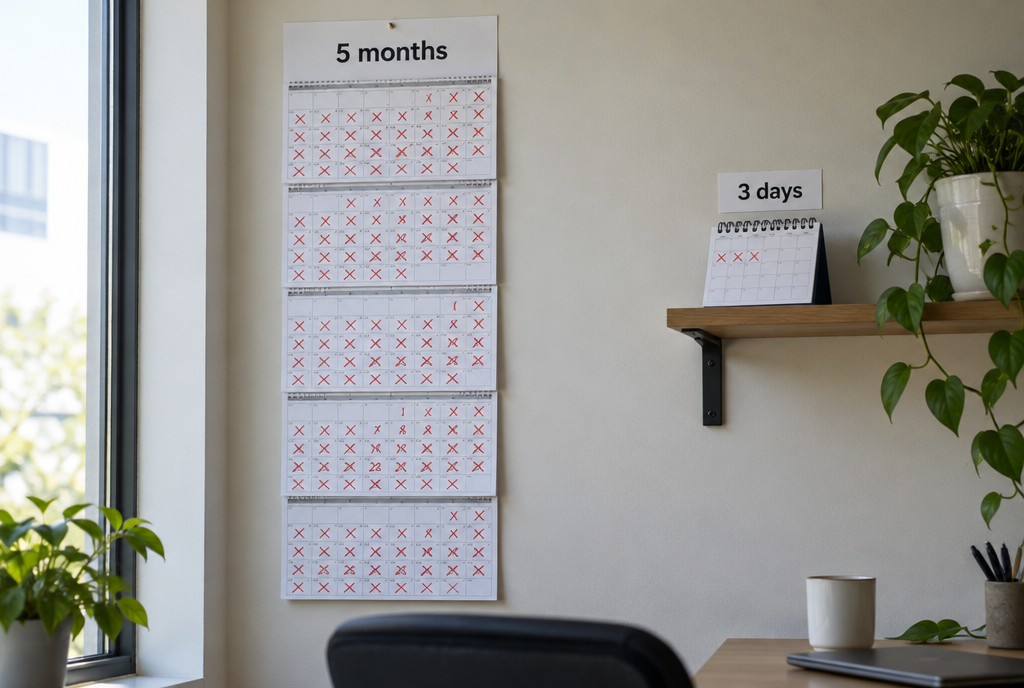
The same calculation: five months for the researchers this summer, a little over three days for the DeepMind agents
And since these agents are clever, one did the maths and the other checked it in Lean, software that checks reasoning line by line. Along the way, they found and corrected four problems on their own that were throwing off the algorithm or the result. I know flesh-and-blood developers who don't reread their code with that much care!
Second result: breaking keys at scale. When you want to break lots of keys of the same size, you can do a huge shared preparation, then process each key for much less, a bit like a factory that spreads the cost of its machines. The agents found a new way to set up this factory: once the preparation is done, each additional 1024-bit key would cost about 30 times less than with the best known method. Big caveat, written by the researchers themselves: this factory has never been built. It's a calculation on paper, not a machine that's running.
Are your data affected?
Your bank, the little padlock in your browser, WhatsApp, your online bank card: no. All of that uses keys of 2048 bits or more, or other systems. DeepMind says so in black and white, and its calculations were done in an isolated environment, without touching any real system.
But 1024 bits still turns up in corners we don't like looking at: old connected devices, old routers, surveillance cameras that have never been updated, forgotten internal company certificates from ten years ago. And above all, email signatures. To stop a scammer from sending an email in your bank's name, each domain name can sign its messages with a key that it publishes, this is called DKIM. And lots of domains still sign with a 1024-bit key.
This isn't theory. In 2012, an American mathematician, Zach Harris, noticed that Google was signing its emails with a key of just 512 bits. He broke it, and had fun sending Larry Page an email that appeared to come from Sergey Brin. Google changed its keys straight away. 1024 bits isn't there yet, but each new method brings the day closer when this kind of joke will become possible again.
If you manage a domain name, check your key
If you have your own domain for your emails, like me, you can check the size of your signing key in one line, on Mac or Linux. You first need its "selector": open an email sent from your domain, display the original (in Gmail, three-dot menu, "Show original"), and look in the DKIM-Signature header for the value after s=. Then replace google with this selector and example.com with your domain:
dig +short TXT google._domainkey.example.com | tr -d '" \n' | sed 's/.*p=//;s/;.*//' | base64 -d | openssl pkey -pubin -inform DER -noout -text | head -1The answer fits on one line, something like Public-Key: (2048 bit). If you see 1024 bit, go to your email host's interface and generate a new 2048-bit key, it takes five minutes. I ran the test this Sunday on a handful of very well-known domains: GitHub is on 2048, and several big names, including a major newsletter-sending service and a major French daily newspaper, still publish a 1024-bit key.
And for connected devices and the box, here's the usual advice, which makes perfect sense here: install the updates, and replace any device that hasn't received any for years.
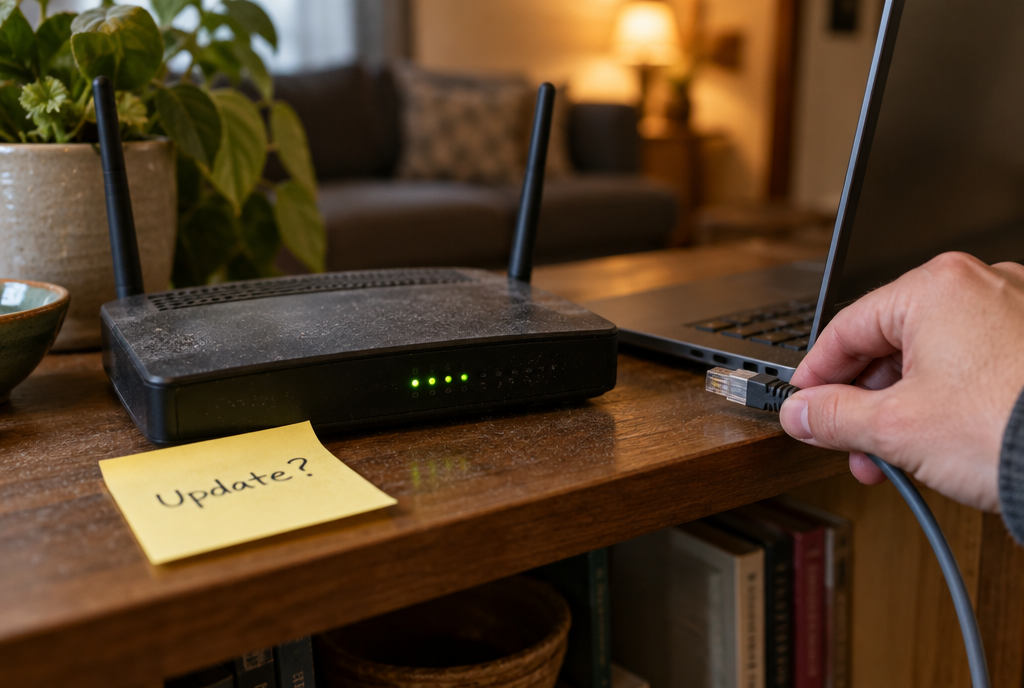
Old 1024-bit keys are mostly hiding in devices that no longer receive updates
The good news behind the bad news
You could read all this as “AI is going to break our secret codes”. I read it the other way around. This work was done by the defenders, with two of the best specialists in the world, in public, on a system already nearing the end of its life. Exactly like OpenAI's AI that found 948 vulnerabilities in Linux the day before yesterday: the same tools that find vulnerabilities make it possible to patch them before someone else finds them.
And Kohli's message is clear: the strength of an encryption “can no longer be considered a fixed assumption that slowly wears out”. Before, we told ourselves that a key would still hold for another ten years because mathematics was advancing slowly. With agents that do in three days what used to take five months, that timeline no longer holds. It will push everyone to abandon old keys faster, and frankly, that's a good thing.
A small reservation all the same: the two research papers have not yet been reviewed by other scientists, and the 1,600 times remains an estimate. But with Heninger and Thomé on the team, I wouldn't bet against it.
So to the admins who still have a 1024-bit key lying around somewhere: you've received the message. And make sure you check who signed it!
Sources
- Pushmeet Kohli, Google DeepMind, November 6, 2026: Advancing the frontier of cryptanalysis (in English)
- Shea, Haller, Suhl, Heninger and Thomé, September 2026: forging 1024-bit RSA signatures (the reference computation)
- Data Studios: the two vulnerabilities found by DeepMind's agents, in detail
Article written with the help of Claude Code, reviewed and corrected by me.
Join the conversation
You need an account to comment on this article. Creating one is free and takes under a minute.
No comments yet.