Bitcoin: how to trap a thief equipped with a quantum computer?
You know the coin-operated supermarket cart: you slide in your euro, take the cart, and get your coin back when you return it. Now imagine a thief who would have to put in HIS coin to leave with your cart full of gold, and you who could keep it if you catch him within the month. That's basically the idea Cory Fields, one of the developers of Bitcoin Core (the software that runs most of the bitcoin network), launched on Wednesday, November 4 to trap future thieves equipped with a quantum computer. He calls them “quantum mines”. And frankly, it's the first idea on this subject that has made me laugh and think at the same time.
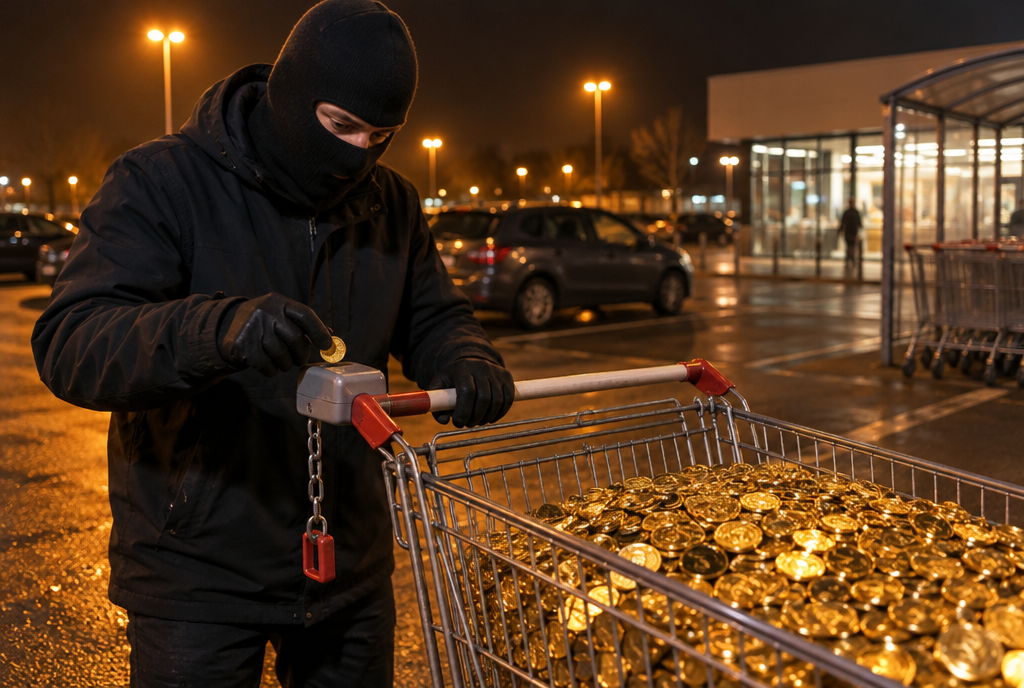
To leave with the cart, you first have to put in your own coin
Why does a quantum computer threaten your bitcoins?
I explained it three weeks ago: the day a quantum computer can find a private key from the public key, all the bitcoins whose public key is already lying around on the blockchain (the big public ledger of all transactions) will be able to be emptied. That's about one bitcoin in three, according to the count published in April by Coinbase's quantum council.
Experts call that day “Q-day”. Nobody knows when it will arrive, no current machine is capable of it, but everyone is preparing for it. And until now, the community has been hesitating between two options that are equally unpleasant: freeze the exposed old bitcoins, risking blocking the money of perfectly living people, or do nothing and let the first person to show up with a quantum machine help themselves as if it were an all-you-can-eat buffet.
The trap, how does it work?
Cory Fields, who also works at MIT's Digital Currency Initiative, posted his idea on the Bitcoin developers' mailing list, where all the network's changes are debated. The principle takes three steps.
One, before Q-day, you, the owner, quietly prepare a small proof that you have known your key for a long time, and hide it in a tiny quantum-resistant safe. Nobody can see what's inside, or know which bitcoins it corresponds to.
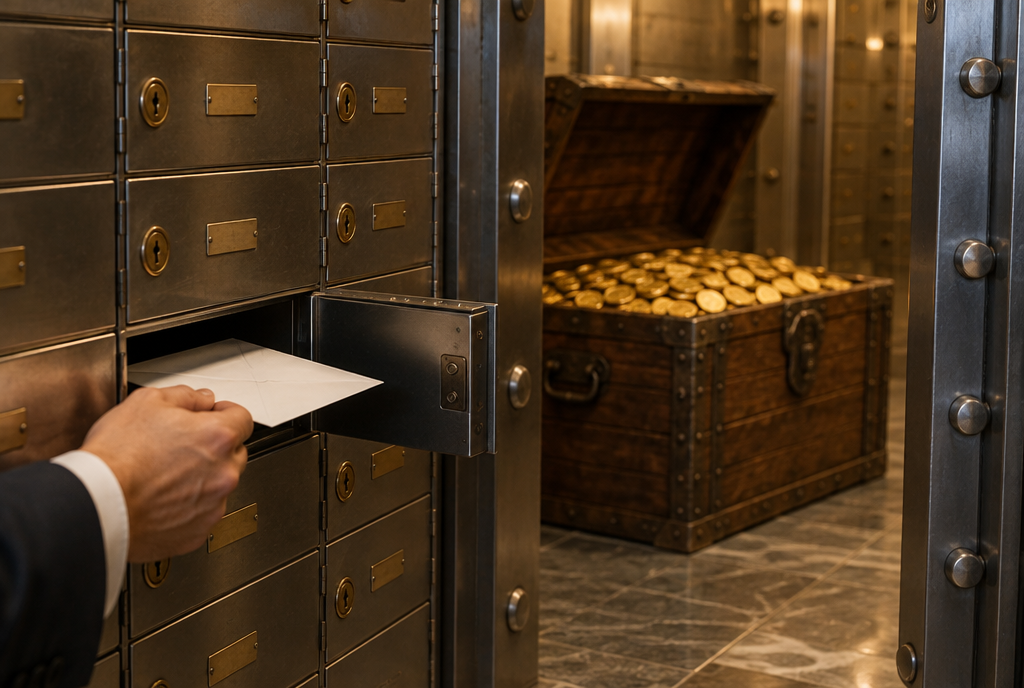
The proof is prepared in advance and hidden, next to the bitcoins it protects
Two, the day someone wants to move an exposed old bitcoin, the network forces them to put down a deposit of equal value, taken from a quantum-resistant wallet. In Fields's example, to take 1 bitcoin, you have to put 1 more on the table. And both remain locked for a certain amount of time, he gives 30 days as an example.
Three, if it's a thief, the real owner has those 30 days to bring out his hidden proof. He then gets his bitcoins AND the thief's deposit back. The thief leaves with nothing, and has lost his stake!
And the genius of the whole thing is that the thief doesn't know which accounts are booby-trapped. Every theft becomes a bet where he risks his own money. No need to freeze anything belonging to honest people: we just make burglary very, very risky.
And Satoshi's bitcoins?
That's where it gets stuck, and Fields says so himself. The trap only works if the owner still has his key to prepare his proof. The lost bitcoins, the wallets of dead people, and above all Satoshi Nakamoto's stash, the inventor of bitcoin, more than a million coins attributed to him that have never moved, nobody can protect them this way. And a clever thief will target those precisely, since he knows no mine is waiting for him there.
For those orphaned coins, Fields proposes auctions. In the first version, holders lock up bitcoins in advance to bid on the vulnerable coins, and when someone tries to move them, an auction opens. In the second, nastier version, every attempt to move an exposed coin triggers an auction where the second-highest bidder pays too, without winning anything.
That mechanism has a name, the dollar auction, and it's a great classic of economics courses: a simple one-dollar bill is auctioned off, but the second-highest bidder also pays their bid. The result is that nobody wants to give up, and people end up paying well over one dollar for a dollar. The idea was suggested to him by Neha Narula, who runs the MIT initiative. Applied to bitcoin, it could push a quantum thief to commit more bitcoins than what they're trying to steal. Nice, right?
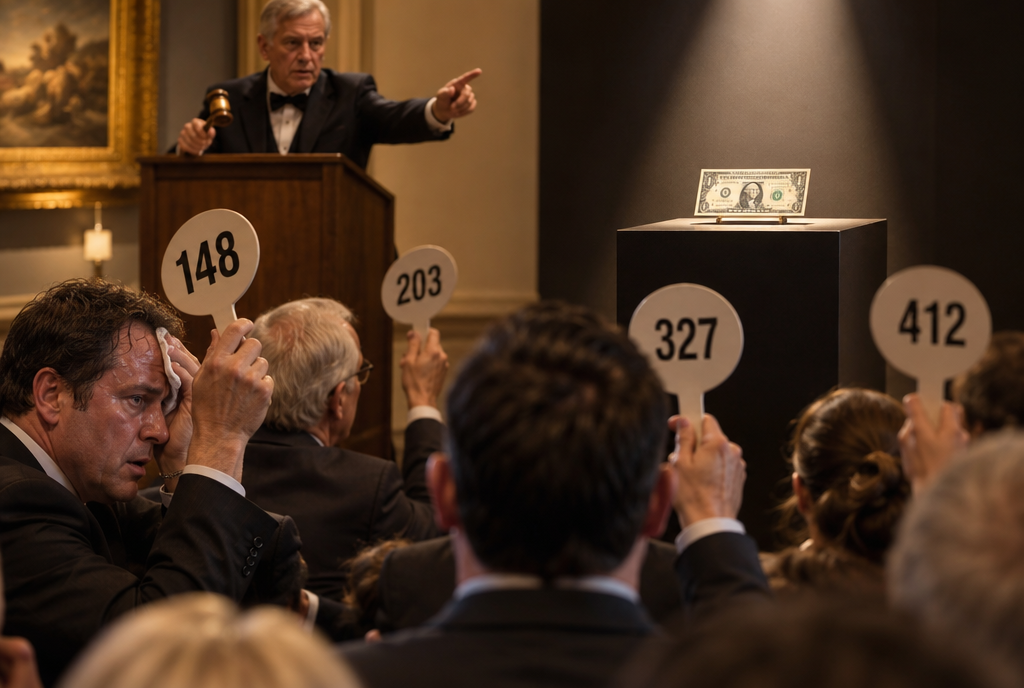
The dollar auction: the second-highest bidder also pays, so nobody wants to give up
The catch: the real owner also pays the collateral
Okay, let's not get ahead of ourselves. The network can't tell the difference between a thief and you. If you ever want to move your exposed old bitcoins, you'll also have to put up the collateral, with bitcoins that you have already put somewhere safe. With the one-for-one setup in his example, if you have ten bitcoins at an old address, you'll need ten more to get them out. For a lot of people, that looks an awful lot like a tax on their own money.
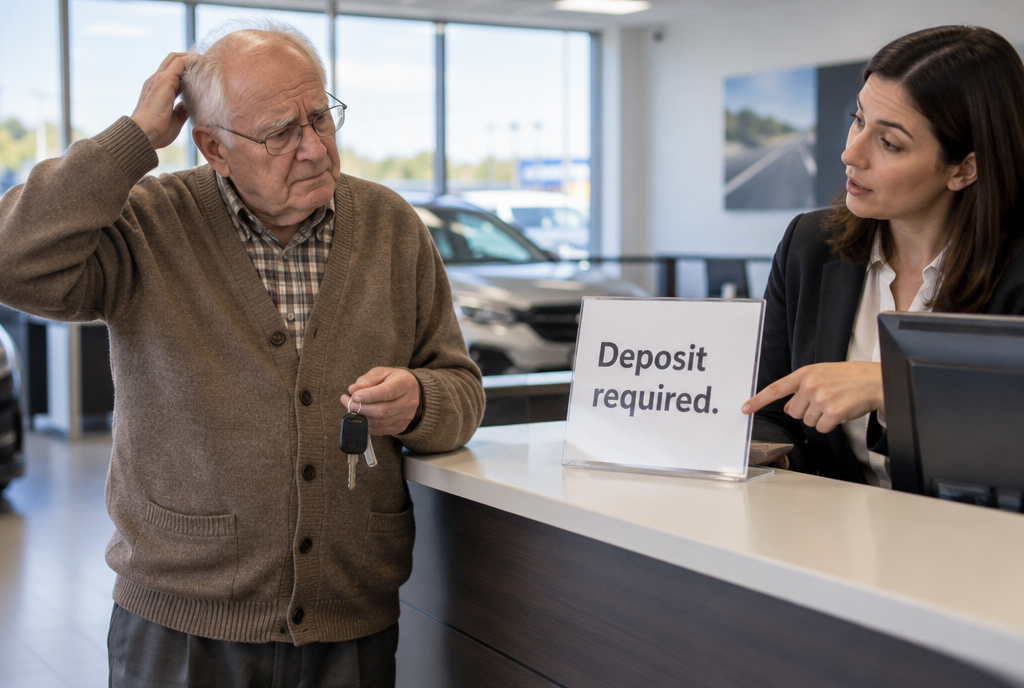
The network doesn't distinguish the thief from the owner: both have to put up the collateral
And above all, none of this exists. Not one line of code, not one numbered official proposal. Fields writes it in black and white: "The purpose of this message is simply to present these ideas as thought experiments." He admits that he doesn't know what the best setting would be, and he even throws the question back to the community: do we want to prevent every attempt at theft, accept that a thief will sometimes win, or distribute orphaned coins at random, like a lottery? To put all this in place, bitcoin would first have to adopt quantum-resistant wallets, then the whole network would have to agree to change its rules. That would take years.
And you, do you need to do anything?
Today, no. If your bitcoins are sleeping on a platform like Coinbase or Binance, it's up to them to move their vaults when the day comes. If you keep them yourself, the useful reflex remains the one I mentioned three weeks ago: don't reuse an address that has already been used to send money, because it's the one that leaves your public key lying around.
For me, it's the best idea we've seen on the subject: it makes the thief pay instead of punishing the distracted owner, using what bitcoin does best, money rules that apply by themselves without a judge or a bank in the middle.
And to any future quantum burglars who might be reading these lines: plan for the collateral. And make sure there isn't a hidden envelope next to the safe!
Sources
- Cory Fields, bitcoindev mailing list, November 4, 2026: Quantum Landmines and Vulnerable Coin Auctions (in English)
- CoinDesk, November 5, 2026: a developer proposes landmines to make quantum thieves lose their bitcoins
- TFTC: Cory Fields' collateral trap, step by step
Article written with the help of Claude Code, proofread and corrected by me.
Join the conversation
You need an account to comment on this article. Creating one is free and takes under a minute.
No comments yet.