Bitcoin: can a quantum computer steal your bitcoins?
Coinbase, which keeps around 5% of all the bitcoins in the world in its vaults, published a text on October 13 that looks like a polite honk. In short: we need to start changing bitcoin's locks right away, because the project will take years and nobody knows when the quantum computer will be ready. No panic on the agenda, but one figure that gives you pause: about one bitcoin in three has already left enough lying around to make its key.

There are more than a million bitcoins in vaults like this one. Nobody has opened them since 2010
Why a public key can turn against you
When you own bitcoins, you have two keys. A private key, which you keep to yourself and which is used to spend. And a public key, which is used to check that it's really you. The two are linked by a mathematical calculation: the public one can be derived from the private one, and the reverse takes so long to calculate that no normal computer will manage it before the end of the world.
The important word is "normal". A quantum computer, on the other hand, uses a completely different method and would know how to do this calculation backwards. Not today: current machines max out below a thousand qubits, the basic unit of these contraptions, and hundreds of thousands of very high-quality ones would be needed. But the bar is dropping fast, and I wrote yesterday about how Google has just divided the errors of the most expensive component in these machines by 40. This is exactly the kind of progress that shortens the timeline.
The mailbox with the key taped to it
Normally, your public key stays hidden as long as you haven't spent anything. The network sees only a fingerprint, a sort of unreadable summary. The day you send bitcoins, the public key appears in plain sight on the blockchain, the big public ledger of transactions, and it stays there forever.
Hence two families of problematic accounts. The very old accounts, those from 2009 and 2010, where the public key was written in plain sight from the start because that was how things were done at the time. And all the accounts that were used to send money and then continued receiving it at the same address.
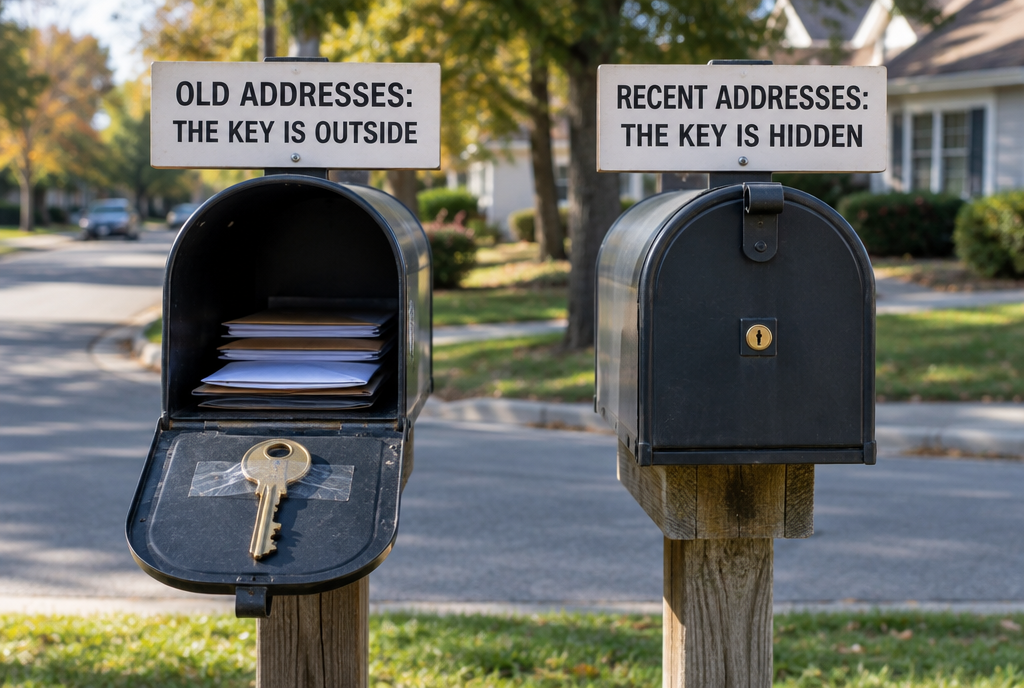
The mailbox on the left dates from 2010. Its owner didn't know that one day we'd be able to read keys from a distance
Coinbase's advisory council on quantum computing did the math in April: around 6.9 million bitcoins are in this situation, or roughly one bitcoin in three among those in circulation. The count comes from Project Eleven, a team that combed through the fourteen million addresses containing something.
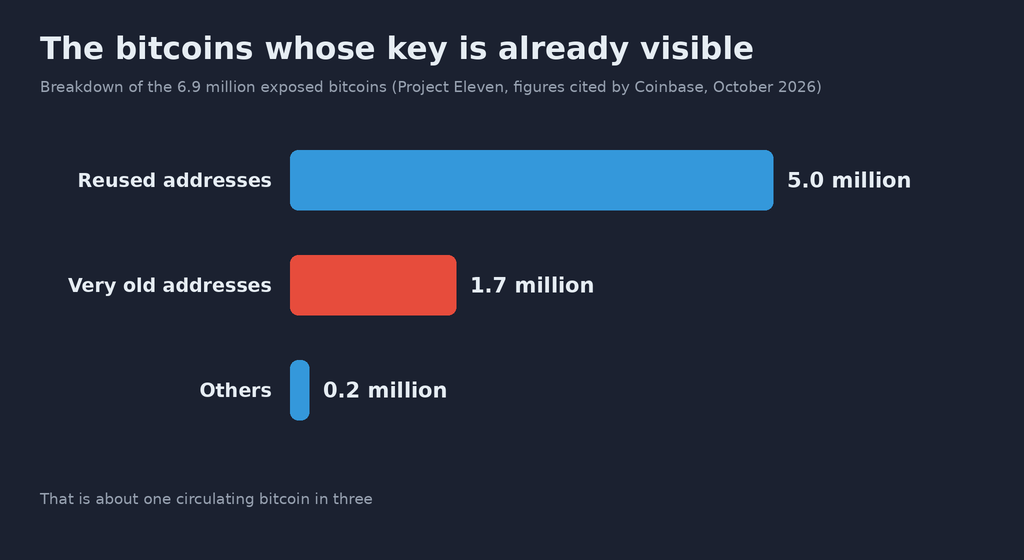
The big bar at the top isn't forgotten treasure: these are accounts that are very much alive
And watch out for the misunderstanding, because this is where everyone gets it wrong. The biggest share, five million bitcoins, doesn't come from lost wallets. These are reused addresses, which most often belong to people who are very active, and even to exchanges that keep their clients' money there. Not ghosts. Neighbors.
The Satoshi case, and the question nobody wants to settle
In the small pile of 1.7 million bitcoins on old addresses, more than 1.1 million are attributed to Satoshi Nakamoto, the inventor of bitcoin, who disappeared in 2011 without ever touching them. These public keys are etched into blocks from 2009 and 2010. No software update can erase them, and nobody can move these coins without the original private key.
So here’s the problem, and it’s a beautiful one. The day a quantum machine knows how to crack these keys, those vaults will open, and bitcoin has no way to protect them. Except by banning the old type of signature from working, which would amount to permanently freezing money that may still belong to someone. There is a proposal on the table for that, called BIP-361 and filed in April by a developer well known in the community, Jameson Lopp. It set things ablaze for weeks, because “freezing coins” and “not touching anyone’s money” are two promises bitcoin has been making at the same time for fifteen years.
Coinbase’s position is clever: handle this debate on the side, in parallel, so that it doesn’t block the rest. In other words, we change the locks on the inhabited houses first, and we’ll discuss what to do with the abandoned houses afterward. Frankly, it’s the only way to move forward, because the discussion about Satoshi’s coins could last ten years without a conclusion.
Seven years of work, on a bridge that can’t be closed
How long will the project take? Coinbase’s post cautiously says “several years”. Its research arm puts forward a figure: up to seven years to change bitcoin’s signature system. Seven years for software that has no boss, no management, and whose every change has to convince developers, wallet manufacturers, platforms and miners spread across the entire planet.
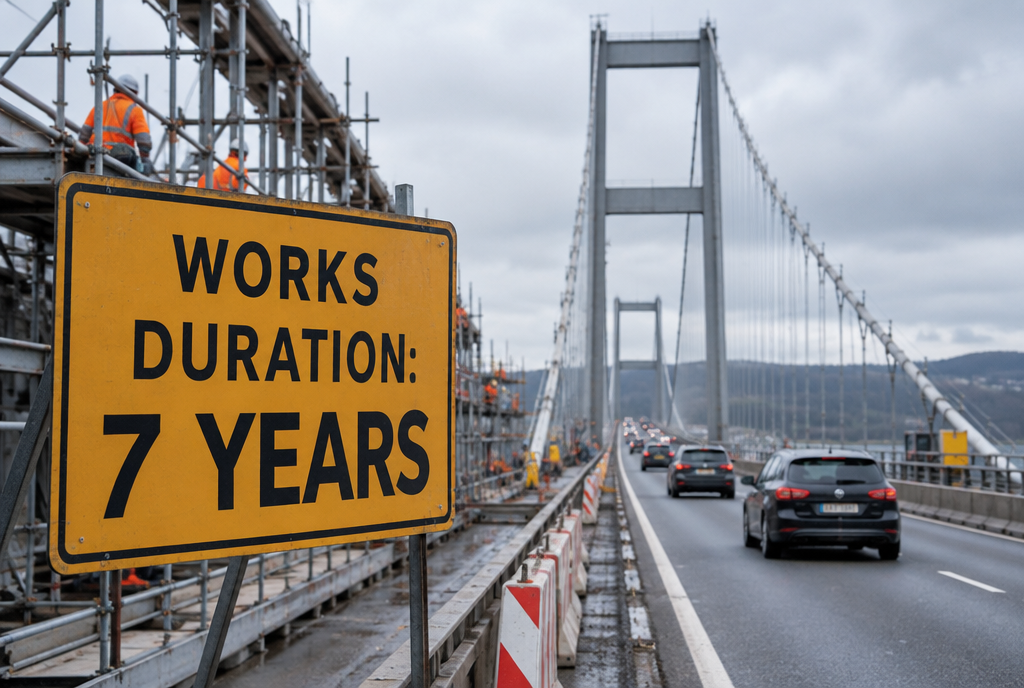
We’re rebuilding the deck while the trucks go past. That’s exactly what a bitcoin update is
The technical detail that matters, and it’s a good one: Coinbase is asking for the container and the lock to be separated. We should build a slot capable of accommodating any new signature, instead of pouring into concrete the one we think is best today. Because new quantum-resistant signatures are young, and one of them could very well be cracked in five years. Two proposals are heading in that direction, including BIP-360, which is still waiting for its implementation in the main software.
Coinbase also proposes a period during which the same account would accept both types of keys, the old and the new, while everyone moves house. It’s the temporary access ramp during the bridge work.
And me, what do I do?
Nothing urgently, and above all no panicked moves. No quantum computer is threatening your bitcoins this year, or next year. A 2026 study puts the odds at one in six that a machine capable of cracking this cryptography will exist by 2035, and at about six in ten by 2050. That’s anything but imminent, but it’s not science fiction anymore either.
What this changes for you, in order of useful things:
First, basic hygiene, which has nothing quantum about it: a receiving address should never be reused. All modern wallets create a new one every time, automatically, and that’s precisely so your public key doesn’t remain exposed. If your wallet always gives you the same address, it’s a 2015 wallet, and it’s time to change. I went into the rest of the good practices in detail three days ago when talking about the booby-trapped Ledgers.
Then, when the day comes, there will be an update for your wallet and a move to make to a new address. It will look like a transfer to yourself. That day, beware like the plague of messages urging you to “secure your funds before it’s too late”: scammers love migrations, and a real update is never done by clicking on a link received by email.
And if your bitcoins are on a platform, it’s the one that will do the work. Which means that, at that point, it will have to have done it. One more question to ask its customer service, and it costs nothing to ask it early.
My opinion
What I like about this move is that it’s selling nothing. Coinbase isn’t launching a product, isn’t promising to save the world, and even says that its text isn’t a final position but a contribution to the discussion. Coming from a publicly traded company, that’s a pleasant change.
What amuses me less is the mismatch. On one side, laboratories publishing progress every two weeks on machines that don’t exist yet. On the other, a fifteen-year-old network, with millions of keys etched in stone, that has to reach unanimous agreement to change a lock. Guess which one will go faster!
Sources
- The Block, October 13, 2026: Coinbase's technical priorities for bitcoin's post-quantum migration
- The Quantum Insider, October 13, 2026: Coinbase calls for work to begin now
- Project Eleven: the count of addresses whose public key is visible
- BIP-360: the proposal for a location capable of hosting quantum-resistant signatures
Article written with the help of Claude Code, proofread and corrected by me.
Join the conversation
You need an account to comment on this article. Creating one is free and takes under a minute.
No comments yet.