Quantum: Google cuts its errors by a factor of 40, what is a "magic state"?
Yesterday, in the journal Science, Google's quantum team published a result with an improbable name: “magic-state cultivation”. Yes, it sounds like a role-playing game spell. In reality, it's the most expensive part of a quantum computer, the one that can swallow up to 95% of the machine, and Google has just made it 40 times cleaner than before. On real hardware, not in a simulation.
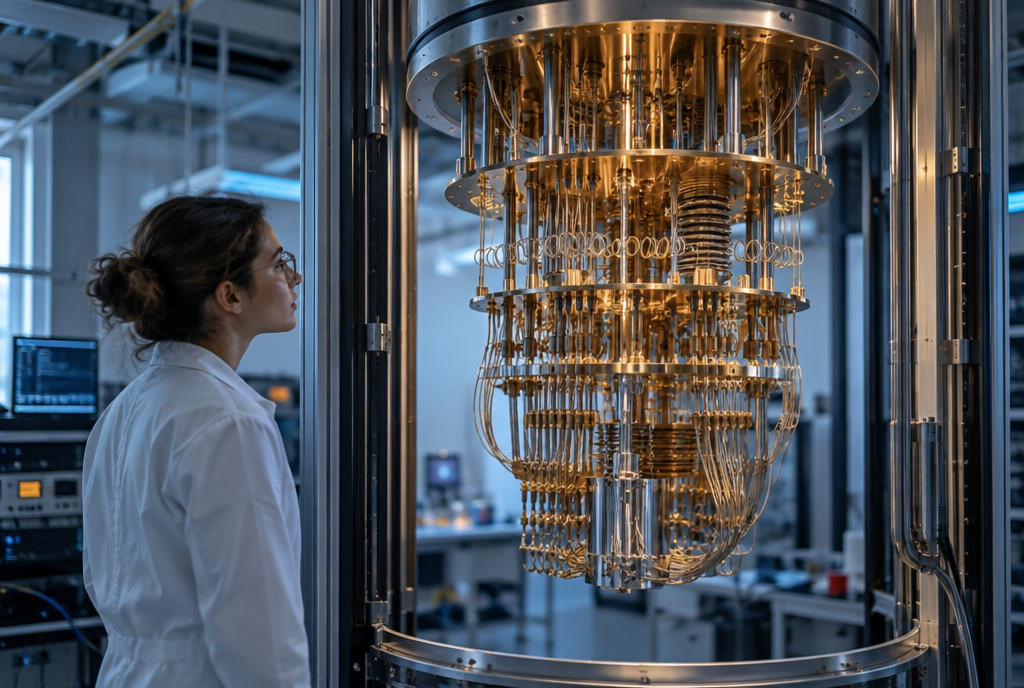
The famous golden chandelier. Underneath, a chip that spends its days cleaning up its own errors
The expensive computation isn't the one you think
A quick basic reminder. A normal computer manipulates bits, 0s and 1s. A quantum computer manipulates qubits, which can carry a mixture of both as long as we haven't read them. It's this mixture that lets it explore lots of paths at once, and it's also what makes it as fragile as a house of cards in a draft.
To stay upright, these machines already spend most of their time correcting their own mistakes. I talked about it this summer when Google taught its chip to recalibrate itself while it was computing. But there's still a snag, and it's a big one.
Some operations are easy to protect, others aren't. To perform the second kind, the ones that make quantum computers truly interesting, it has to be supplied with an ingredient prepared separately. This ingredient is called a “magic state”. It gets consumed: one operation, one dose. And it comes off the production line full of defects.
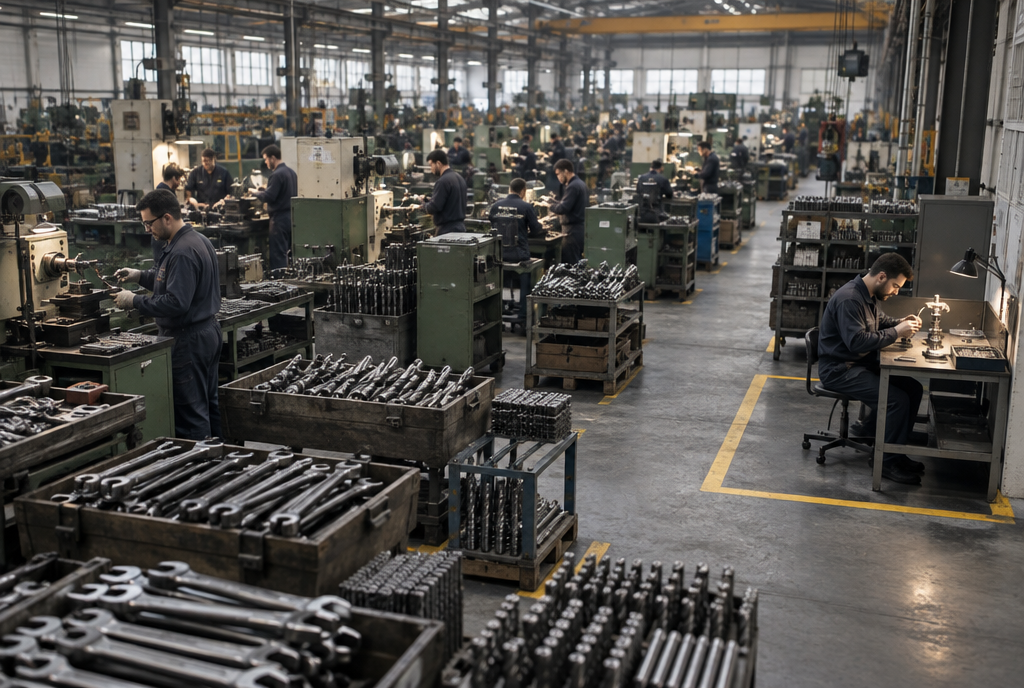
The quantum factory today: almost everyone makes the tools, and one guy in the corner does the work
That's where the painful figure comes from, the one Google puts at the top of its announcement: up to nineteen twentieths of the capacity of a future large machine would go into the sole production of these doses. A factory where nineteen workers out of twenty spend the day making the tools for the twentieth. The real problem with quantum computers isn't computing, it's producing what is needed to compute.
Distilling, or growing
The traditional method is called distillation, and it dates back to 2004. The principle can be summed up in one sentence: you make a big batch of mediocre doses, run them through a grinder that combines their defects, and get one decent dose out. It works, it's been proven for twenty years, but it's voracious. It takes an entire factory of qubits dedicated to it, next to the machine doing the computing.
Cultivation turns the problem around. Instead of mixing thousands of dubious seeds to get one good one, you plant a single one, in a small corner of the chip, and watch it while it grows. At the slightest sign that things are going wrong, you pull it out and start again. Whatever survives to the end is clean by construction.
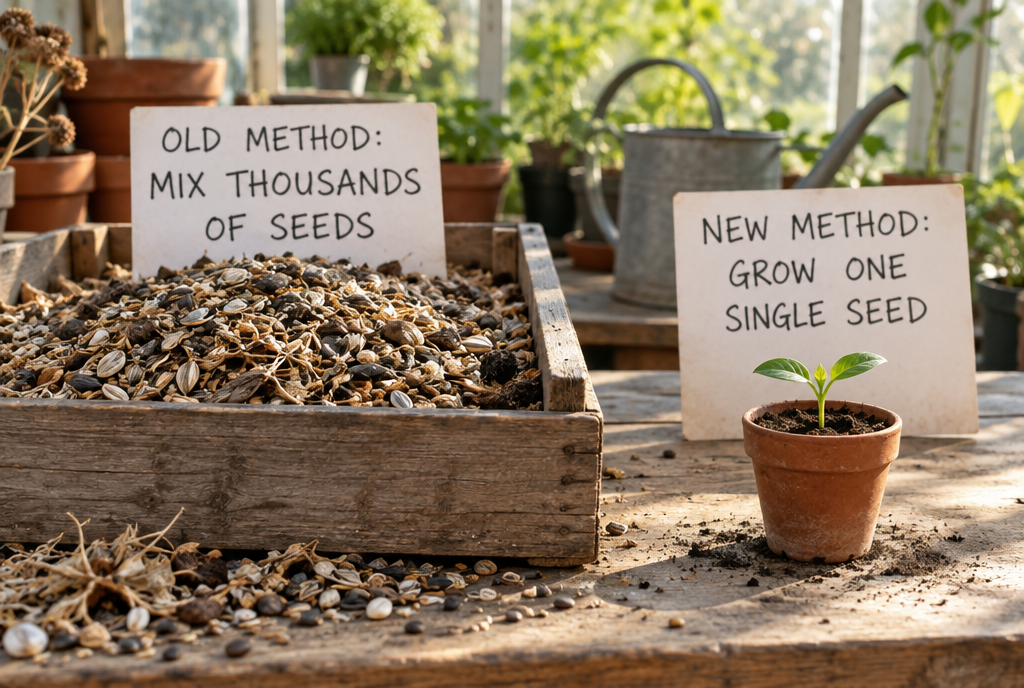
Twenty years of distillation on the left, Google's method on the right.
The idea isn't new: it was put on paper in 2024 by three Google researchers, Craig Gidney, Noah Shutty and Cody Jones. The title of their article promised to grow these doses “as cheaply” as the machine's ordinary operations, the ones that cost almost nothing. Until then, it only existed in theory and simulation. What changed yesterday is that it runs for real on a chip.
What they measured
The chip is Willow, 105 qubits, the one Google has been highlighting for the past two years. The experiment only used 54 at most, barely half. Result: batches whose defect rate is divided by 40 compared with non-cultivated batches, and a quality measured at 99.99%. For this family of machines, it's a record.
Now, the line you mustn't skip, and Google gives it itself: this score is reached by keeping only 8% of the attempts. More than nine seeds out of ten end up in the trash.
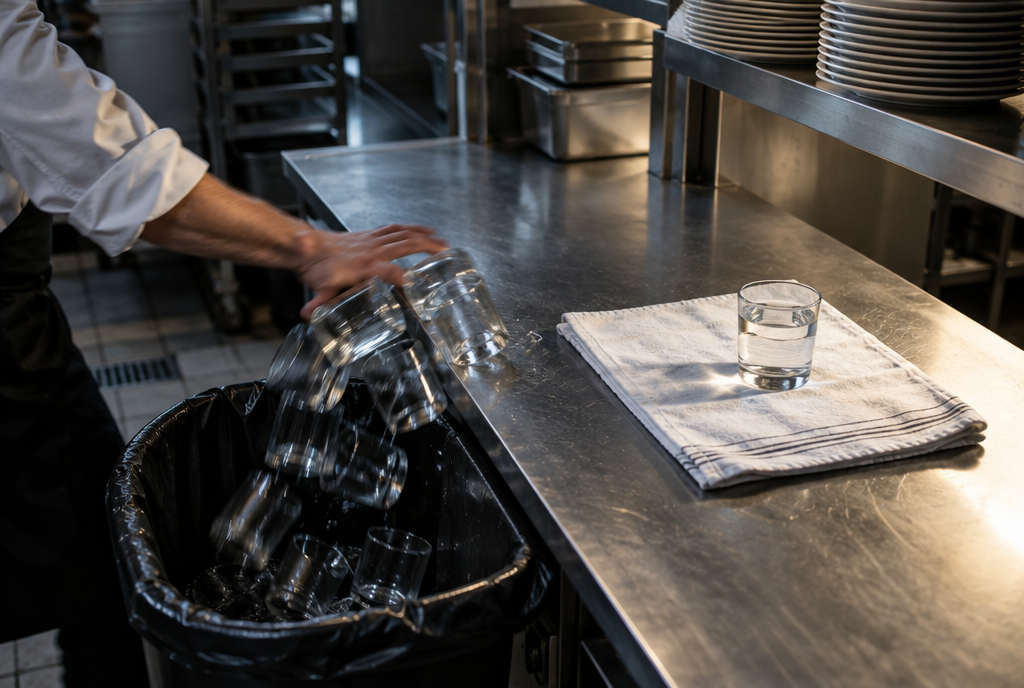
Eight percent success. In cooking, that's called a bad service, in quantum computing, a world record
It looks catastrophic, and it isn't at all, because throwing away a seed costs much less than running a distillation plant. It's a filter, not an assembly line. And a filter that lets eight percent of flawless product through beats a line that slowly produces mediocre stuff.
A little story within the story, and I like it quite a bit: a researcher on the team, Emma Rosenfeld, realized that their measurements were being distorted by the drift of the equipment and by the room temperature. Nothing quantum there, just a lab that moves around. So they invented a new way of measuring, which uses the cultivation itself as an instrument. Even with ten-million-euro machines, there is always someone who eventually wonders whether there might be a badly adjusted radiator.
Okay, so what does that change for us?
Nothing in your living room, and probably nothing in ten years either. There isn't a quantum computer coming to your office, there never will be one: these machines live in refrigerated basements closer to absolute zero than to your freezer, and we'll use them remotely, the way we use a server on the other side of the world today.
What this result changes is the size of the machine that will have to be built. And there is a number that says something. In 2019, it was estimated that 20 million qubits would be needed to force the digital lock that protects your connection to your bank and the signature of your phone's updates today, the one called RSA. In May 2025, thanks in particular to this cultivation technique, the same Craig Gidney recalculated it and came down below one million, for a machine that would take less than a week. Twenty times fewer qubits in six years. Be careful, nobody knows how to build this machine, and this is a researcher's calculation, not a manufacturer's quote. But the target is moving back much less quickly than we thought.
That's why banks, governments and browser makers are already replacing their locks with models that resist quantum computing. Not out of fear of tomorrow morning, but because what a hacker copies today, they will be able to decrypt in fifteen years if they have the patience to keep the file. And for the rest, chemistry, batteries, fertilizers, it's the same movement: fewer qubits for a useful calculation means a useful machine arriving sooner. DARPA has also launched a competition to find out which of these machines will be profitable before 2033, and nobody knows the answer.
My opinion
What strikes me about this announcement is that it doesn't break any speed record. No “we did in five minutes what a supercomputer would take ten thousand years to do”, the kind of sentence we're served every six months and that doesn't mean much anymore.
No, this is plumbing. Someone looked at where the machine's budget was going, saw that 95% was spent on making the tools, and went after that line item. That's what a good engineer does, and that's why I believe in it more than in spectacular demonstrations. It still has to fit on a large chip, and Google is the first to say we're not there yet.
So no, you won't have a quantum computer under the tree, not this year and not in ten years. But the next time your browser talks to you about “quantum-resistant” encryption in a menu you never open, you'll know it's not marketing: it's because of people growing seeds in a fridge at minus 273 degrees!
Sources
- Science, October 15, 2026: the demonstration of magic-state cultivation on the Willow processor
- Craig Gidney, Noah Shutty, Cody Jones, 2024: the paper proposing magic-state cultivation, “growing T states as cheap as CNOT gates”
- Quantum Zeitgeist: the details of the measurements, 40 times fewer errors and 8% of attempts retained
- Craig Gidney, May 2025: factoring a 2048-bit RSA key with fewer than one million imperfect qubits
Article written with the help of Claude Code, proofread and corrected by me.
Join the conversation
You need an account to comment on this article. Creating one is free and takes under a minute.
No comments yet.