Google sends its AI chips into space: what use would a data center in orbit be?
Google sent a fridge into space. Well, not quite a fridge, but a satellite the size of a fridge, with four of Google's AI chips inside. It left California on October 1, on a SpaceX Falcon 9 rocket, among some 130 small satellites carried on the same flight. And Google confirmed right afterward that it had established contact: the beast is responding, and everything is working as planned.
The project is called Project Suncatcher, “the sun catcher”. And the idea behind it is completely crazy: one day, running AI in computing centers in orbit rather than on Earth. I think it's brilliant. And a little nuts. Both at once.
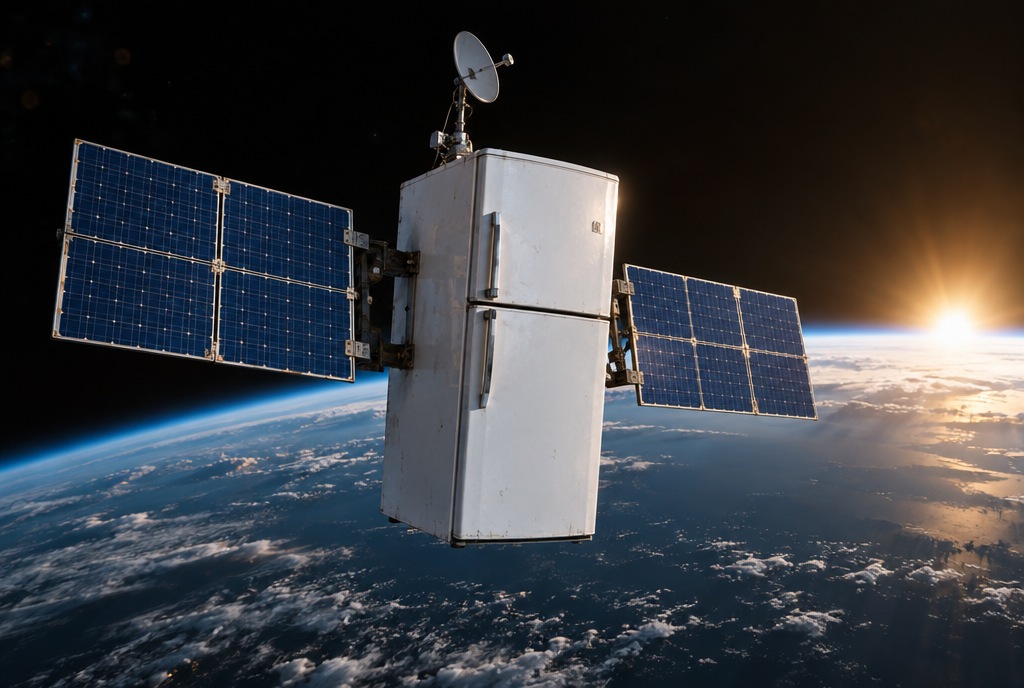
The most expensive fridge in history, and it doesn't even keep the beers cold
What's inside this satellite?
Four “TPUs”, the chips Google makes specially for AI, the homegrown equivalent of Nvidia's graphics cards. These are chips from the Trillium generation, the same one we rent on Google's online servers. Solar panels provide about one kilowatt, roughly the consumption of a small hair dryer.
And what is that for, up there? To run Gemma, a small AI model from Google, which will answer simple questions. In sessions of no more than 15 minutes. Not one more. We'll see why, and this is the funniest part of the story.
Travis Beals, the project's boss, makes no secret of it: it's “a very minimal test”, just to check that the chips survive the vibration of takeoff (up to 50 to 100 times gravity according to Google), radiation and temperature variations. The satellite must operate for one year, and it will fall back down and disintegrate in the atmosphere no later than six years after its launch.
Why do computing in space?
Because of the sun. On Earth, a solar panel spends half its time in the dark, and the rest under the clouds. In orbit, on the right trajectory, the one that constantly follows the boundary between day and night, the satellite sees the sun almost all the time. Google says a panel produces up to eight times more electricity than the same one placed on the ground. No need for big batteries to get through the night, since there is practically no night.
And AI is hungry for electricity. Very hungry. A data center, those immense hangars filled with servers, draws from the same electrical grid as your house and often uses water to cool itself. Google's idea is to go and get the energy where it's free and unlimited.
The big problem: cooling in a vacuum
This part, I love. You think that space is cold, so perfect for cooling chips that heat up. Wrong! A vacuum is the best insulator there is. That's exactly why your thermos keeps coffee hot all day: between its two walls, there is a vacuum.
On Earth, servers are cooled by blowing air over them or circulating water. In space, there is no air to blow. Heat can only leave by radiating, slowly, through radiators. Hence those 15 minutes of computing: beyond that, the chips would get too hot. The satellite is specifically testing a new cooling system, with heat pipes, those tubes that carry heat to the radiators. Travis Beals calls it “a crucial research challenge”. Translation: we don't know how to do it very well yet.
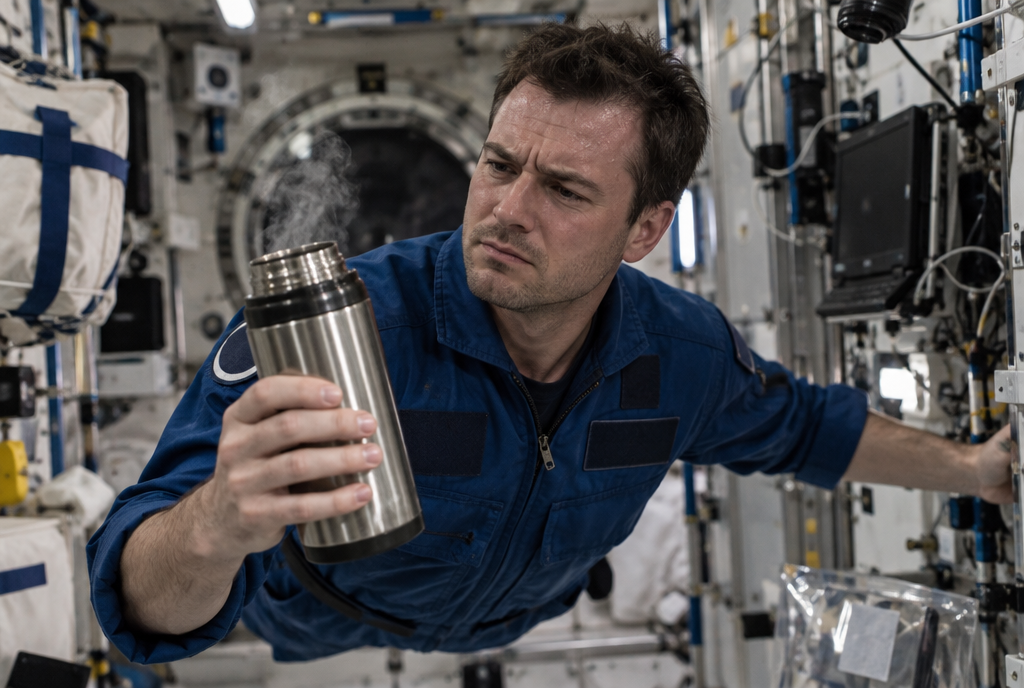
Space is freezing cold, and yet it's impossible to cool anything in it. Thank you, thermos
How much does it cost to send a kilo up there?
This is THE question that decides everything. In its study published in November 2025, Google starts from a price of about $3,600 to send one kilogram into low orbit with a reusable Falcon 9. For computing in space to become as cost-effective as on Earth, it would have to drop below $200 per kilo. Eighteen times cheaper. Google hopes to get there around the middle of the 2030s, if launch prices continue to fall, and that depends largely on SpaceX's future giant rocket, Starship.
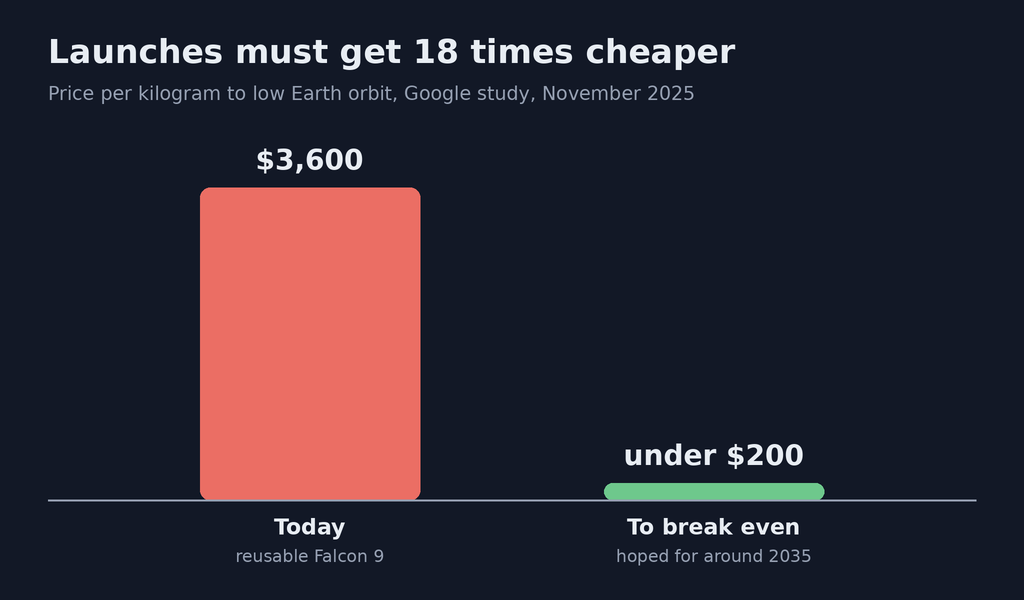
All that's left is to divide the price by eighteen. A mere trifle
And Google isn't alone in this. According to NPR, the start-up Starcloud has already sent an Nvidia chip into orbit in November 2025, and SpaceX is talking about its own computing satellites for 2028. Google's next step: two satellites in 2027, which will talk to each other by laser. And in the long term, the study imagines clusters of 81 satellites flying in tight formation, at an altitude of 650 kilometers.
Concretely, what does it change for you?
Today, nothing. And let's be honest, in my opinion nothing for ten or fifteen years. Travis Beals says it himself: "It's going to take a lot of time", and terrestrial and space data centers will "coexist for a long time".
But if it works, three things concern you. First, the AI you use every day, when you ask Gemini for a recipe or Gmail suggests a reply to you, would consume electricity that doesn't come from the same grid as your heating. Less competition on the cables. Then, a data center in orbit doesn't drink the water of the region where it's built. And finally, it's a race that pushes launch prices down, which also benefits the satellites that give you the weather, your car's GPS or internet in the middle of the countryside.
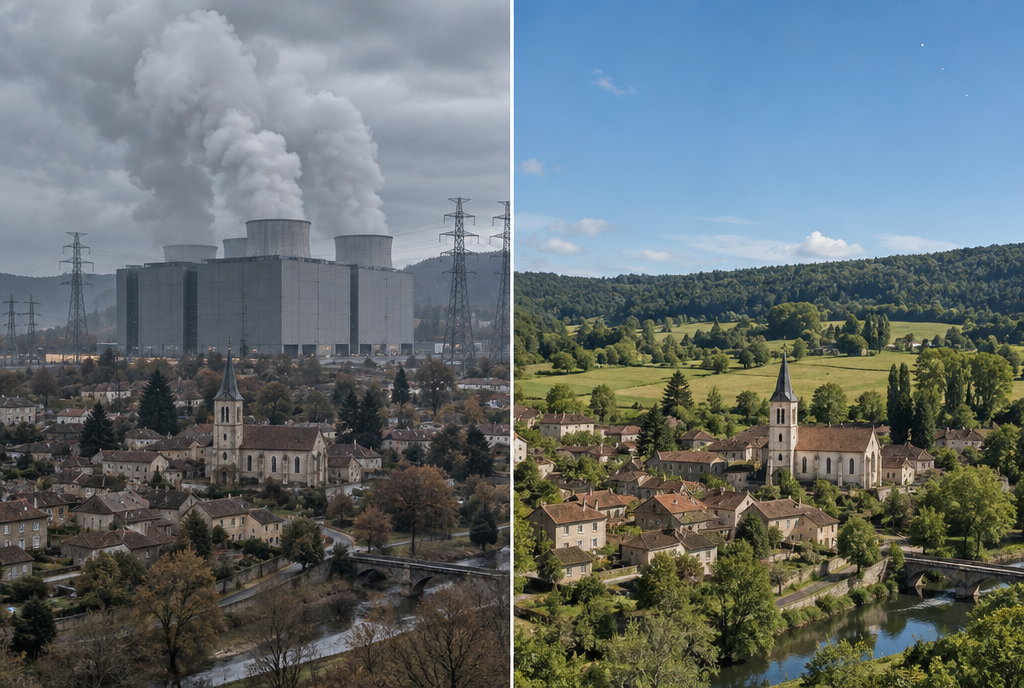
The data center next door, or 650 kilometers above its head: the neighbor made his choice quickly
And for those who find all this far-fetched, a little reminder from history. In 1958, Vanguard 1 became the first satellite powered by solar panels. At the time, a solar cell cost a fortune and was only used for that. Today, there are some on millions of roofs, and maybe on yours.
My opinion
I'm not going to sell you a dream: four chips computing for fifteen minutes, that's not a data center, it's a demonstration. The obstacles are enormous, the heat, breakdowns that can't be repaired (no technician with his toolbox 650 kilometers away), the price of launches. And launching rockets isn't exactly free for the planet either.
But I like this way of tackling the problem. Rather than building power plants next to data centers, we take the data centers where the sun never sets. If in fifteen years my AI queries are being computed above my head while I sleep, I'll find that fabulous. And to the Google team waiting for its first results: remember to put a little ice in the next one, it can't hurt!
Sources
- Google, September 24, 2026: what you need to know about Project Suncatcher
- NPR, October 1, 2026: Google launches Project Suncatcher, a step towards AI data centers in space
- DCD: Google's envisioned clusters of 81 satellites
- The Decoder: the November 2025 project and the $200 per kilo threshold
- Science Times, October 2, 2026: the first prototype satellite is launched
Article written with the help of Claude Code, proofread and corrected by me.
Join the conversation
You need an account to comment on this article. Creating one is free and takes under a minute.
No comments yet.