You decide this morning to open an account on the world's biggest crypto exchange platform. You download the app, photograph your ID card, wait twenty minutes, and that's it. Nothing in the process warns you that this platform does not have the European authorization allowing it to serve you. This is not an administrative detail: it's the difference between having some avenue of recourse and having none.
The text governing all this is called MiCA, a European regulation passed in 2023 and applied in stages since then. Its central rule can be summed up in one sentence: a platform that wants to serve European customers must obtain authorization in one Union country, and that authorization then applies across all twenty-seven. The profession has a name, crypto-asset service provider, and the approval is obtained from the regulator of a single country, like a European driving licence.
A transitional regime allowed platforms that were already established to continue without this authorization. That regime ended on June 30, 2026. Since then, serving European customers without authorization is no longer a transitional tolerance, it is a violation.
Where Binance stands
Binance had filed an application in Greece in January 2026 to cover all twenty-seven countries. The company withdrew that application at the end of June, without obtaining authorization. It still leads the global market, with more than forty-five percent of spot trading, even if the share of volumes denominated in euros remains modest, at around three to four percent.
What makes the case interesting is what happened after the deadline. The platform did ask users in six countries, France, Italy, Spain, Poland, Belgium and Sweden, to migrate to another entity. Then tests conducted in mid-August by the company Sandmark showed that an account could still be created and verified from Europe, with money deposited, and without the slightest warning about the lack of authorization. One of the tests even made it through registration with an address in Belgium.
The company, for its part, says it has aligned its products with the applicable legal frameworks and repeats that it wants to obtain authorization. The European Securities and Markets Authority wrote to ask how the orderly exit was progressing. No sanction has been imposed on Binance to date.
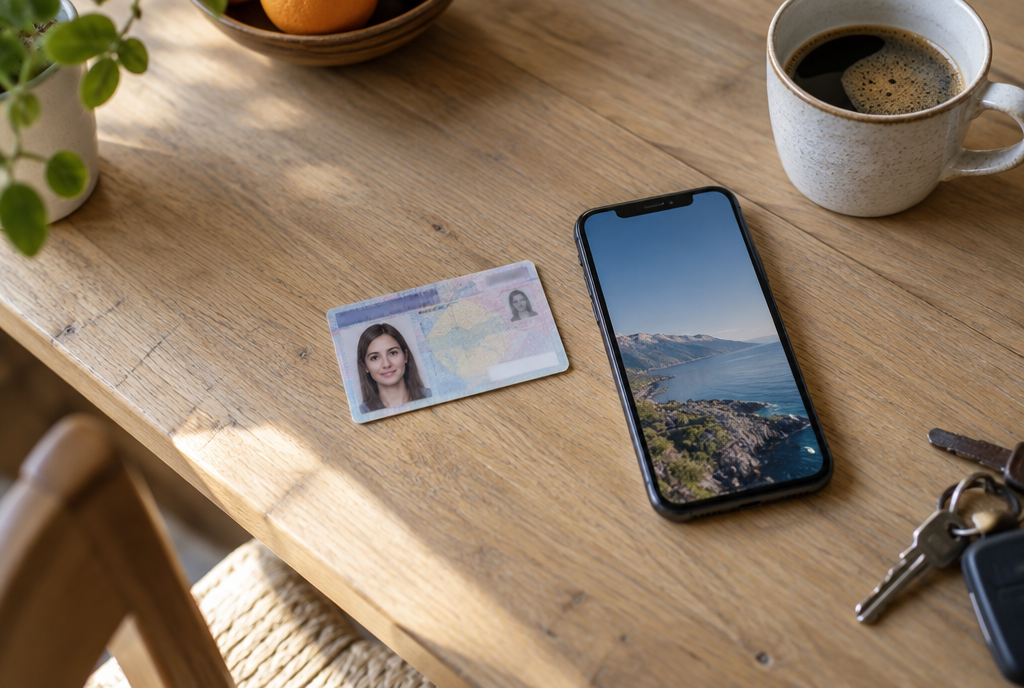
Twenty minutes between your ID card and an account. Zero minutes spent telling you who authorizes you
What this changes in your terms
This is the part nobody ever reads and that matters most. In the terms for some Belgian users, the contract is signed with a Polish entity, payments go through affiliated companies based in Bahrain, and settlement is handled by a Georgian bank. Three countries, three legal systems, for a single app on your phone.
So why does it matter? Because the day something goes wrong, a transfer that doesn't arrive, an account that's blocked, a dispute over fees, you don't complain to Europe. You complain to the company that signed your contract, in the country where it is established, according to that country's rules. The recourse MiCA offers, an identifiable national regulator, a mediator, an obligation to keep your assets separate from the company's money, all of that assumes that the platform is within the framework. When it isn't, you deal directly with the provider, and the conversation takes place wherever it wants it to take place.

The country of the contract is not the country of the app. Nor the one where you live
How to check in three minutes
The Union maintains a public register of all authorized providers, and it is open to everyone. I talked about it a few days ago: Belgium has two out of a total exceeding three hundred. Binance and its entities do not appear there, and they do not appear on the list of players flagged for unauthorized activity either.
So the useful reflex is simple: before depositing money somewhere, look for the company's name in the register. If it isn't there, you know what you're doing, and you do it knowingly rather than believing you're protected.
Concretely, what does this change for you
Two things, and neither is dramatic, which is also information.
The first: your crypto doesn't disappear because an authorization is missing. A platform doesn't vanish overnight, and a withdrawal to a wallet you control or to an approved platform remains possible in this kind of situation. The risk isn't disappearance, it's recourse. The day you have a problem, you don't have a European regulator behind you to back you up.
The second concerns what comes next, and it's broader than Binance. There are now a little over three hundred licensed companies in the Union, and national authorities are beginning to issue penalties. The Austrian authority issued the first MiCA-related fine against a platform, for procedural and communication shortcomings. The framework exists, it's starting to bite, and that's actually good news for everyone, including the platforms that paid for their license.
The deadline, honestly, nobody knows it. The discussions between the platform and the regulators aren't public, and an authorization application filed elsewhere takes at least three to four months to review. It could be settled in six months or in two years.

The day you look for someone to answer you, there may be nobody at the desk
The point I find most troubling
It's not that Binance is trying to remain in the European market, that's its business and it's defensible. What bothers me is that a user who opens an account today can't know which framework they're operating under. You'd have to look up a register, cross-check the name of the Polish entity with that of the group, understand that the payment goes through a Georgian bank. Nobody does that before clicking on "create an account". Me first.
And there's one detail I find revealing: the users concerned didn't learn about it from the platform, but from journalists and researchers who tested signing up from different countries. That's exactly the role these tests can play, and it's worth more than any press release.
There's one question I don't have the answer to: how long can a European framework remain in force when the biggest player in the market stays out of it without being challenged? The three hundred companies that paid for their licenses must ask themselves that every morning.
Join the conversation
You need an account to comment on this article. Creating one is free and takes under a minute.
No comments yet.