Amazon acquires the creators of DuckDB. What changes for those who use it?
Amazon buys the creators of DuckDB. What changes for those who use it?
On August 26, Amazon announced its acquisition of DuckLabs, the small Amsterdam company behind DuckDB. And in an instant, the same sentence appeared everywhere: "There you go, it's over, they're going to kill it".
Except that when you read the agreement line by line, that is not at all what is written. So let's really take a look, because the devil is in the legal structure, not in the press release.

The workshop is still there, the door is still open. It's the hangar around it that has changed size.
What is DuckDB for those who have never heard of it
Imagine a three-gigabyte file. An accounting export, a sensor reading, a product catalog. You double-click it, your spreadsheet thinks, the wheel spins, and after four minutes it gives up the ghost or proudly announces that it has loaded the first million rows. A classic.
DuckDB is the thing that gulps down this file in a few seconds and lets you ask it questions. With no server to install, no database to administer, without starting anything at all. It's a small engine that lives directly in your program or in your terminal. You install it in one line and use it right away.
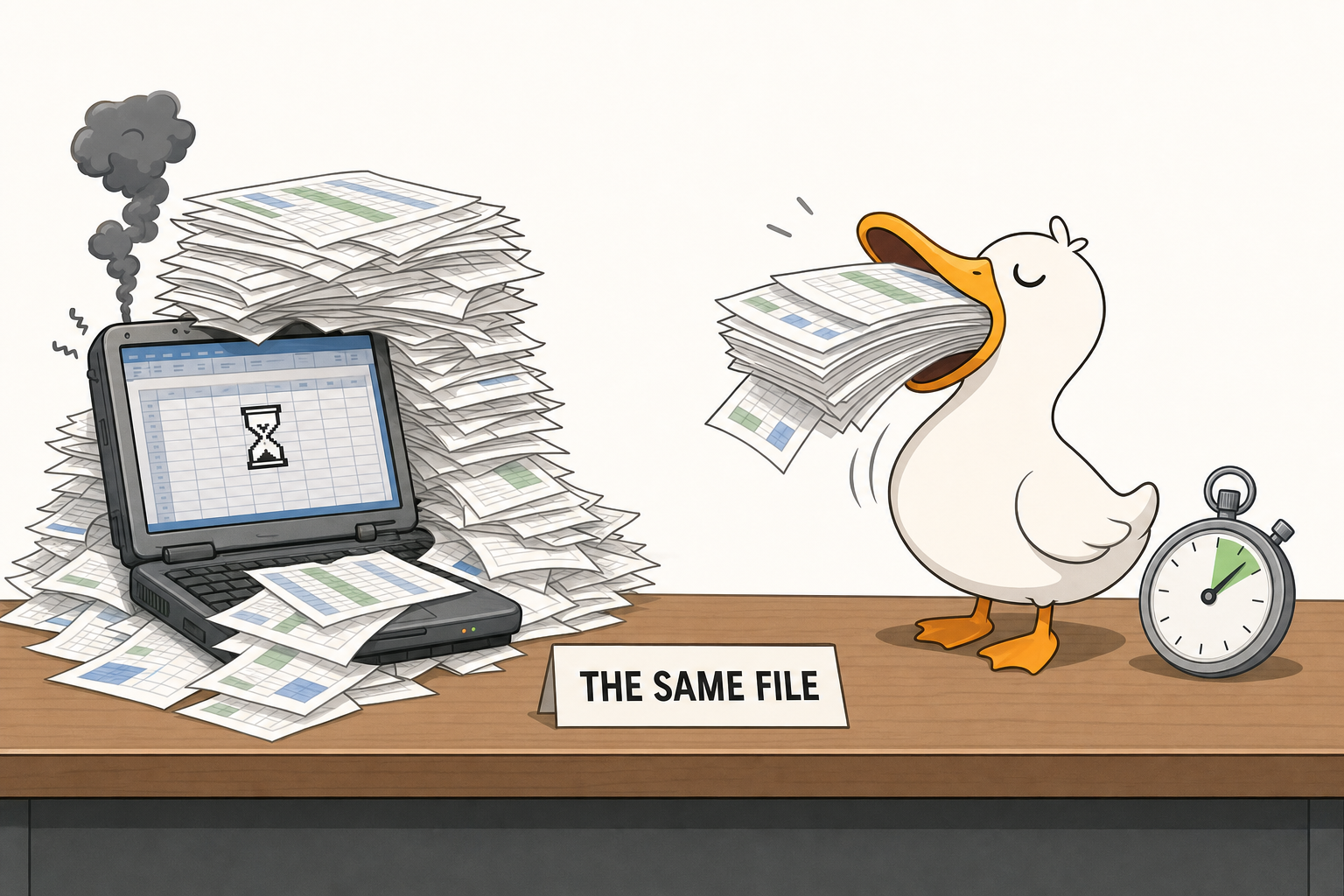
Same file, same desk. The duck makes no noise and it doesn't ask for a system administrator.
It looks like a specialist detail. In reality, it has become one of the most used tools in the data world: more than 50 million downloads per month on the Python side alone, and 40,000 stars on GitHub, passed on August 5. Entire teams have replaced server clusters that cost fortunes to rent with this little thing.
And it's free. And it's open source. Hence the panic.
What is NOT being sold
There you go, this is the point almost everyone skipped, and it's the most important one.
Amazon is buying the company, DuckLabs. Amazon is not buying the DuckDB software. This is not a communication trick, it's a legal reality: the project belongs to a nonprofit foundation, the DuckDB Foundation, created specifically for this years ago, and that foundation is not part of the deal. The code remains under the MIT license, the most permissive one there is, the one that allows anyone to take the code, modify it and do whatever they want with it, including commercially.
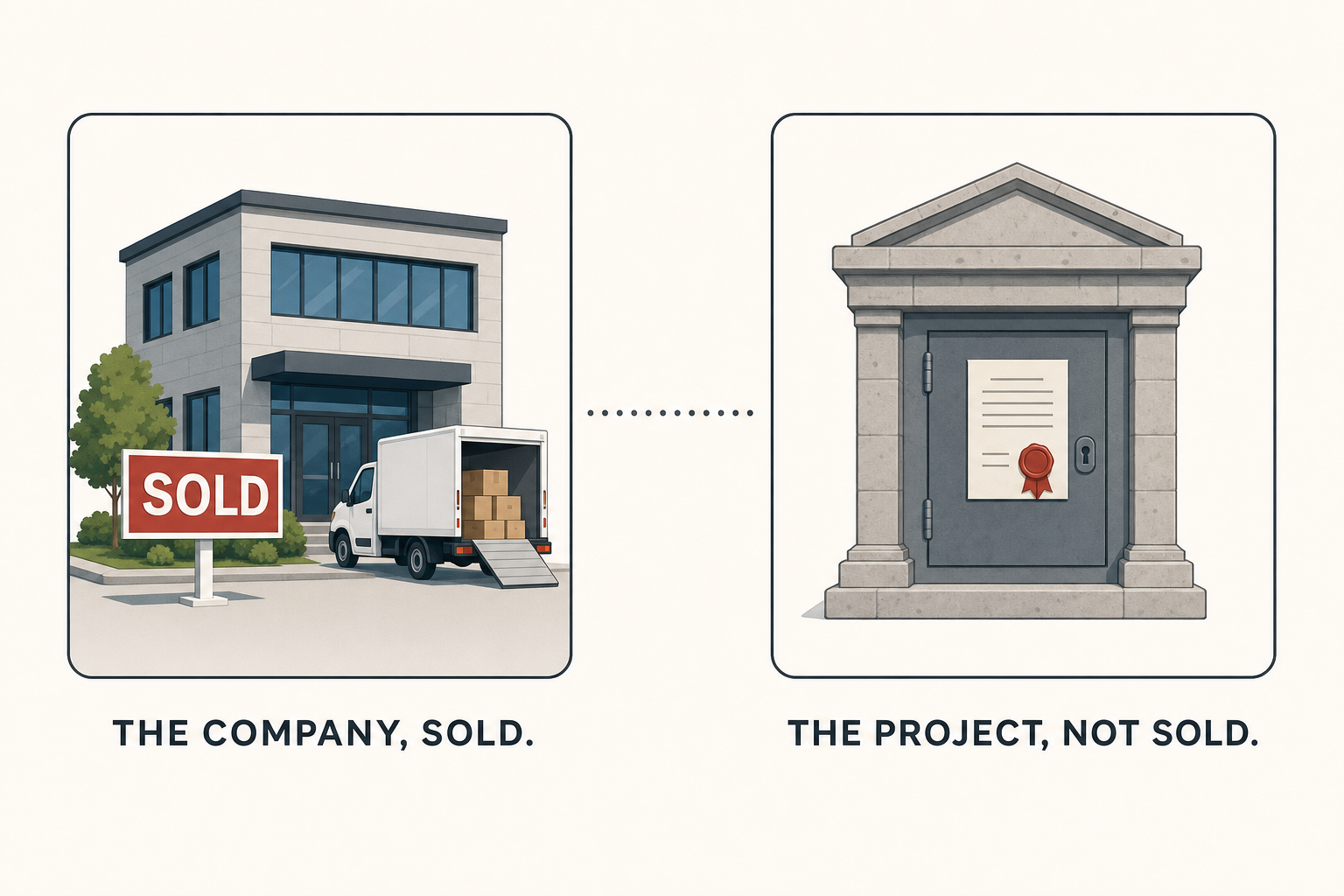
On the left what was sold, on the right what wasn't. That's the whole difference between this story and the previous ones.
The two creators, Hannes Mühleisen and Mark Raasveldt, remain at the head of the team and keep technical leadership of the project. The team remains in Amsterdam. None of this is an oral promise in an interview: it's written in AWS's official announcement.
The ghost that trails behind every acquisition of this kind
If everyone instinctively starts shouting, it's because of a story developers have been telling themselves for fifteen years.
In 2008, Sun bought MySQL, the database that powered pretty much the entire web at the time, for one billion dollars. Two years later, Oracle bought Sun. Oracle, that is, MySQL's main commercial competitor. The creator of MySQL slammed the door, took the code, and launched MariaDB. Today, when you install a database on a Linux server, there's a good chance it's MariaDB and not MySQL.
Moral of the story: when the owner changes, the community doesn't fight, it moves out. And it can move out because the license allows it.
That is exactly the protection that exists here. If one day AWS decided to twist the project in a direction that only suited its own paid services, anyone could take the code from that day and set off with it. This isn't a theoretical scenario, it has already happened a good ten times.
And this isn't an isolated case right now. Three days ago, I was writing the same concern about Nvidia and Hugging Face. The giants are shopping in the open source aisle right now, and it's not going to stop.
What still changes, and let's not kid ourselves
A team paid by the biggest cloud vendor on the planet doesn't work exactly like a team paid by its own customers.
AWS actually says it plainly: the goal is for DuckDB applications to run as well as possible on AWS and for the engine to integrate with its other services. That's perfectly legitimate, it's even the reason for the check. But that means that when choosing between two equally good improvements, the one that serves the in-house cloud may get moved to the front of the line.
This isn't theft, it's a direction. And that's what we'll have to watch in the coming months: not the license, which is solid, but the list of things that come out first.
So, what do you do tomorrow morning?
Nothing. Absolutely nothing.
Your installation keeps working, your scripts too, the version you have on your disk can't be taken away from you, that's legally impossible with this license. There's no urgency, no migration to prepare, no Plan B to pull out of the drawer.
If you didn't know DuckDB and you sometimes work with large files, this is actually the right time to try it. The acquisition changes nothing about what it does, and what it does is genuinely stunning the first time.
And if things go badly in two years, we'll know what to do: we'll take the code and go somewhere else. We're used to it!
Sources
- AWS : AWS and DuckLabs, building the future of analytics together, August 26, 2026, the official announcement: the scope of the acquisition, the MIT license, the foundation, the team and the integration plans
- Amazon : AWS to acquire DuckLabs, the Amsterdam-based company behind DuckDB, August 26, 2026, the group's press release and the closing schedule
- DuckDB : Thank You for 40 000 Stars on GitHub, August 5, 2026, the adoption figure cited here
Join the conversation
You need an account to comment on this article. Creating one is free and takes under a minute.
No comments yet.