Nvidia would spend $12.9 billion on Hugging Face. What is Hugging Face, and why is it raising eyebrows?
Nvidia would put $12.9 billion into Hugging Face. What is Hugging Face, and why does it raise eyebrows?
Let's start with the precaution, because it's important and half the headlines you're going to come across today forget it: nobody has confirmed anything.
What we know is that Business Insider reported this weekend that Hugging Face was receiving takeover offers, and that The Information wrote yesterday that a deal had been reached with Nvidia for $12.9 billion. Since then, everyone has been repeating the figure. But neither Nvidia nor Hugging Face has said a word, nothing has been publicly signed, and discussions at this level regularly collapse three days before the end.
So read what follows like this: here's what's being said, and here's above all why it matters, whether it happens or not.
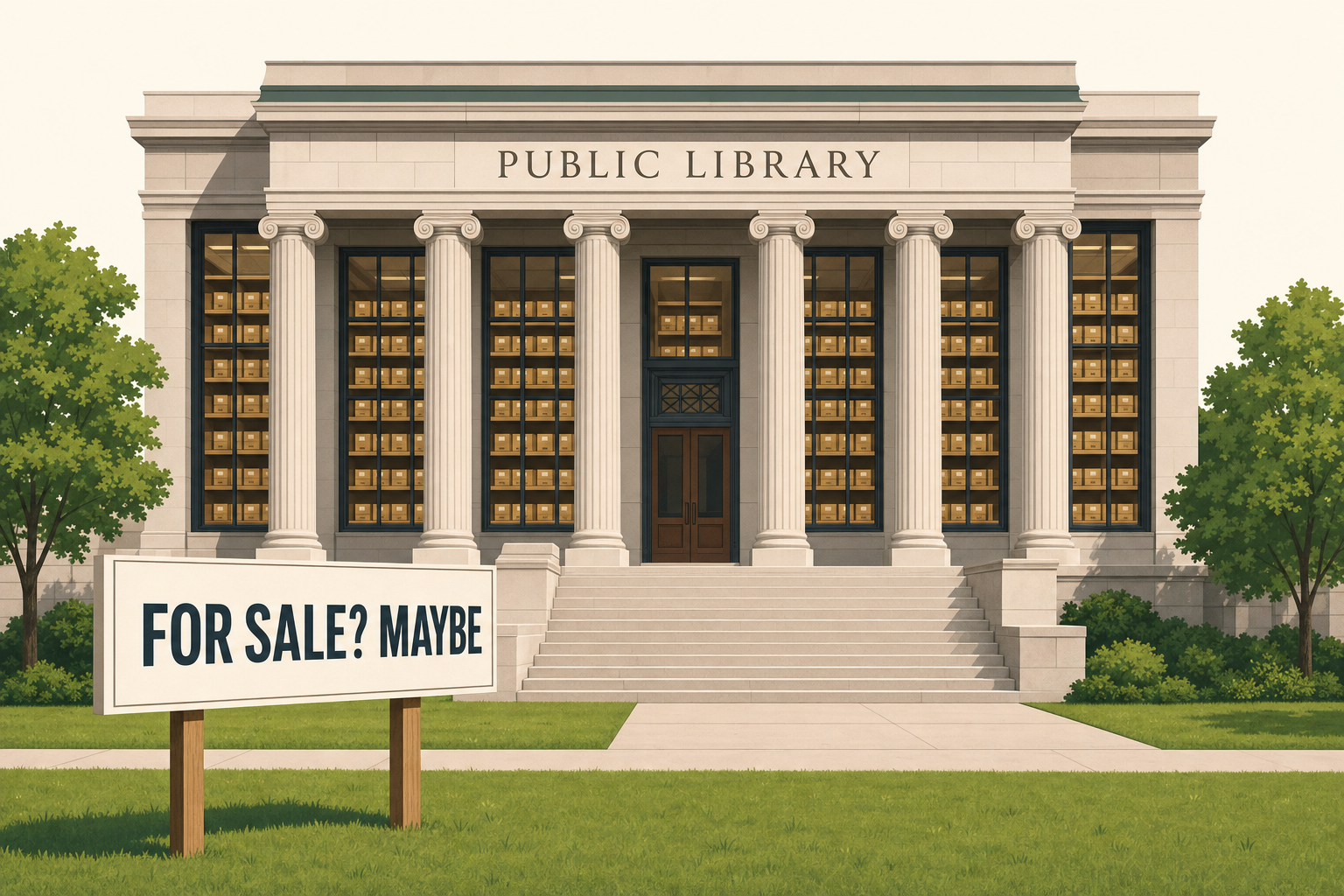
The sign wasn't planted by the owner. It was planted by the press.
First, what is this thing with the ridiculous name?
Hugging Face, literally "face that gives a hug", was born ten years ago, and today it's the place where open artificial intelligence keeps its stuff.
Imagine a huge public library. Anyone can put a book there, anyone can borrow one, for free, without a membership card. Except that here the books are artificial intelligence models: files that you download and run on your own machine, without going through anyone's paid service.
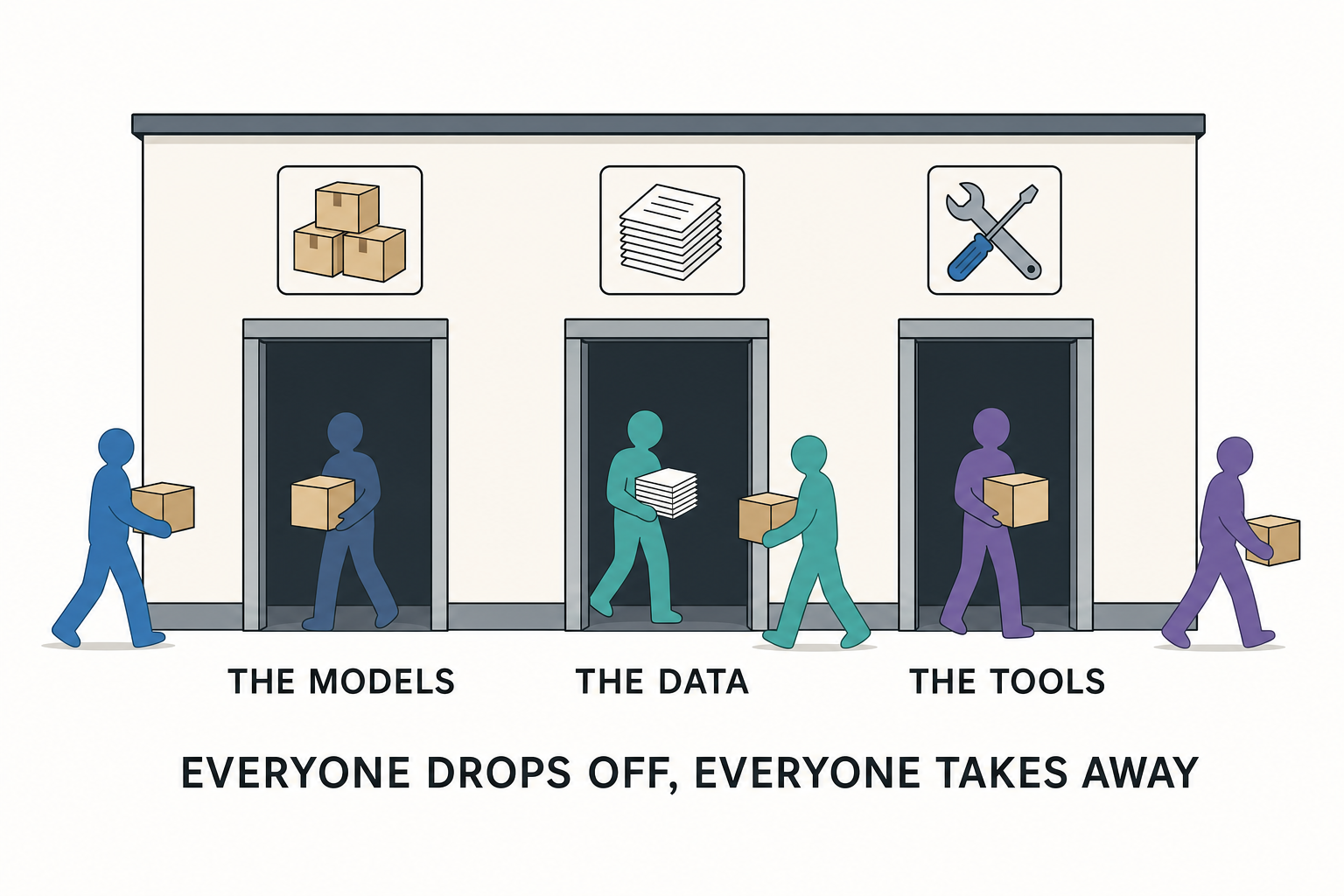
Three doors, no checkout counter on the way out. That's what makes the place special.
The numbers make your head spin. Almost three million models uploaded, one million datasets, and around one and a half million little applications that people tinker with to show what their model can do. Between January and August of this year alone, the number of models went from 2.4 to nearly 3 million.
Concretely: when a laboratory publishes a model for free download, that's where it puts it. When Meta put a model back in free access in mid-August, one that fits on a gamer's graphics card, that's where it landed. There is nowhere else. It's the only place, and that's exactly the problem.
Why would Nvidia put $12.9 billion into this?
Here, you have to remember what Nvidia sells: the graphics cards that run more or less all of the world's artificial intelligence. An ultra-dominant position, superb margins, and a growing worry.
Because its biggest customers are starting to make their own chips. Just yesterday, I was telling you that OpenAI was publishing the figures for its own while announcing that it did better than Nvidia at equal electricity consumption. When your best customer starts working at the workbench, you start thinking.
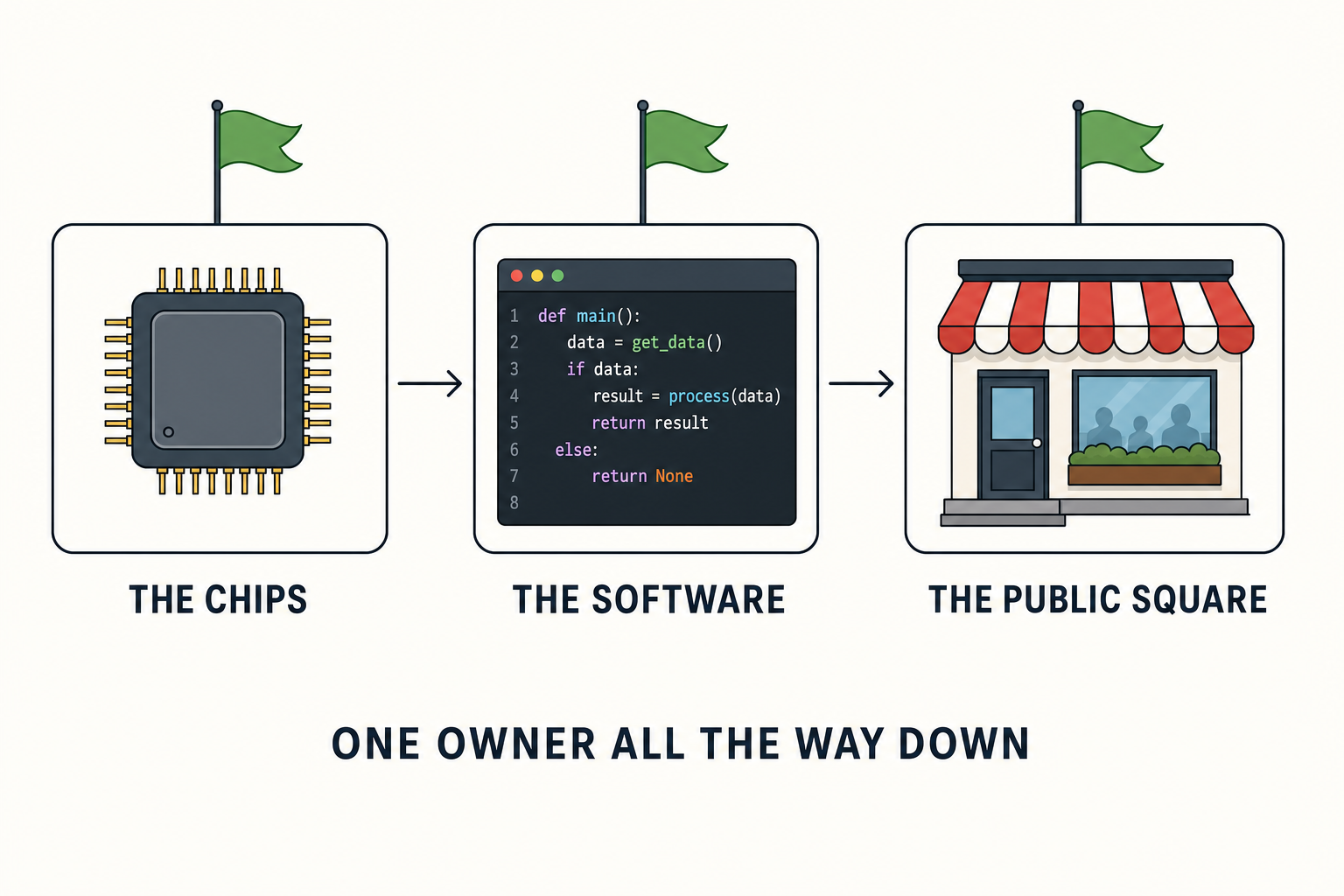
Three links, one flag. That's the question, and it fits into a single image.
It so happens that almost all the people who download a model from this library then need an Nvidia card to run it. Owning the library means positioning yourself right where the decision is made, before the customer has even chosen their hardware.
A small detail that's worth its weight in peanuts: last year, Nvidia offered to invest 500 million in Hugging Face at a valuation of 7 billion. Refused. Twelve months later, people are talking about buying the whole house for almost twice that. Some refusals pay off.
What it would bring, because there are good sides
I'm starting with that, because the story is more interesting than the knee-jerk reaction.
Running this library costs a fortune. Storing and serving millions of huge files for free, to people who pay nothing, comes to tens of millions a year. Hugging Face makes around 150 million dollars a year and is only just approaching break-even, ten years after its birth. It's not a cash machine, it's a public service funded by patient investors.
Backed by someone worth thousands of billions on the stock market, the place isn't closing. It won't start charging for downloads overnight either, because that would be absurd for the buyer: what interests it is precisely that everyone keeps coming.
And Nvidia has already bought tool companies without gutting them. It's not a gravedigger, it's an industrial company locking down its chain.
What makes you hesitate, then
One word: neutrality.
A public square works because everyone believes it's impartial. The day it belongs to a hardware manufacturer, a question settles in and never leaves. Will a model that runs well on Nvidia hardware be promoted? Will in-house tools be offered first? Will a competing format remain just as easy to publish?
Nobody is accusing anyone, and there's nothing to reproach today. But the question wasn't there before, and it will be there every day afterward.
There's a second thing, less discussed and which bothers me more. This library has no serious competitor. If a decision displeases you tomorrow, where do you go? Nowhere. We've let all of open artificial intelligence rest on a single address, and we discover on Monday morning that this address is for sale.
We've seen this movie before
In 2018, Microsoft bought GitHub for 7.5 billion dollars. GitHub is where the whole world stores its code, and Microsoft, at the time, had a reputation as an enemy of free software that was as long as your arm.
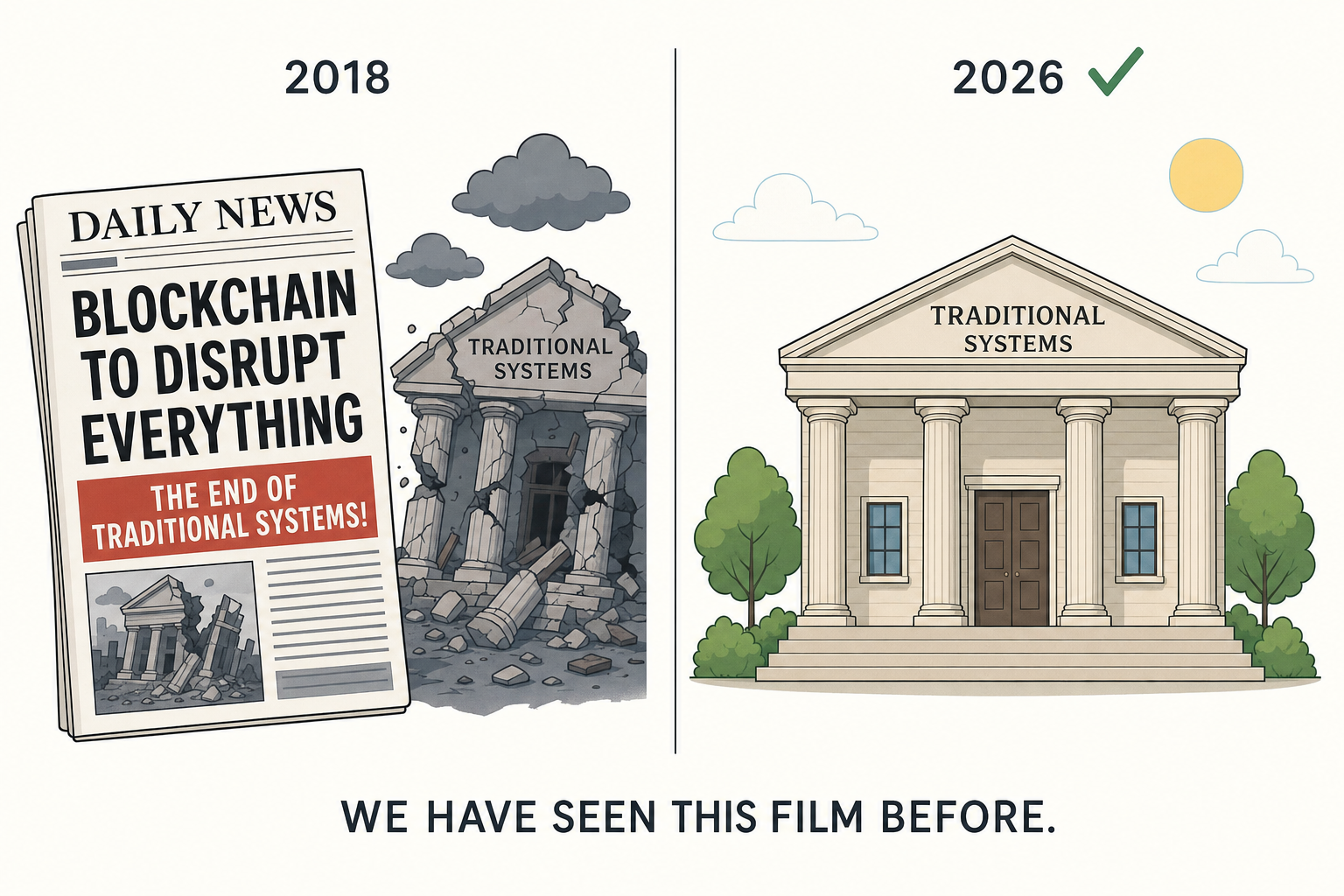
On the left, the 2018 headlines. On the right, the same place today, still standing.
People screamed everywhere. Developers moved their projects elsewhere on principle. Eight years later, GitHub is still there, bigger than before, and most of those who had left came back without saying a word.
That proves nothing this time. But when everyone is shouting catastrophe, it's worth remembering the last time everyone was shouting catastrophe.
Concretely, what does it change for you?
If you've never downloaded a model in your life, nothing. Absolutely nothing, not this week and not next month either.
But there's an indirect effect that concerns you, and it can be summed up in one sentence: the free tools that work without the internet often come from there. The transcription that makes subtitles for you, the offline translation on your phone, the editing tool that cuts a person out of a photo, the little piece of software that sorts your files by itself. Many of these things rely on freely downloadable models at this address, downloaded by the developer who wrote the tool. An open library is a pile of free software that exists because the raw material cost nothing.
And over the longer term, there's the question of price. When the same company controls the chips, the software that goes with them and the store where everyone gets their supplies, it sets the conditions in three places instead of one. You never see that on one bill, you see it ten years later on all the bills.
What I think about it
Personally, I'm not sure this is bad news, and I distrust my own reflex, which was to cry wolf before even reading the figures.
What stays with me is something else. In ten years, we built an absolutely critical global infrastructure, open, free, used by every lab and every tinkerer on the planet, and it belongs to a company that makes $150 million in revenue. That is to say, next to nothing. It was fragile from the start, except that as long as nobody touched it, nobody thought about it.
Whether it happens or not, the question will remain: who should own the place where everyone stores their tools?
In the meantime, I recommend something very silly. The open model you use every day, the one your little homemade script runs on, download it and keep it on a disk at home. It takes five minutes and it doesn't depend on anyone. A library can close for renovations!
Sources
- CNBC : Nvidia agrees to buy Hugging Face for $12.9 billion, report says, 27 August 2026
- Fortune : Nvidia nears $12.9 billion deal to buy open source AI platform Hugging Face, 27 August 2026, revenue, 2023 valuation and offer turned down last year
- TechCrunch : Nvidia closes in on Hugging Face acquisition, 26 August 2026, no contract signed at this stage
- Hugging Face : State of Open Models, Summer 2026, number of hosted models, datasets and applications
Join the conversation
You need an account to comment on this article. Creating one is free and takes under a minute.
No comments yet.