Crypto: BNB Chain patched two holes this morning at 4:30 a.m. Here's what they allowed.
Crypto: BNB Chain closed two holes this morning at 4:30 a.m. Here's what they allowed.
This morning at 4:30 a.m., Brussels time, while everyone was sleeping, the BNB Chain network changed its rules. It's called Pasteur, and it's the kind of thing people usually talk about the day after a disaster, when it's too late and everyone is counting the damage. Not this time. Nothing had exploded.
We might as well take advantage of it, because the two holes patched this morning can be explained to anyone, and because they're stupid enough to make you cry.

Two patches put on before opening, not after the fire. It's much rarer than you think.
First, imagine a building without a property manager
Two minutes to set the scene, and I promise there isn't a single complicated word in it.
Something like BNB Chain is a condominium building where nobody owns the building. There are hundreds of apartments, each apartment is a computer operated by someone somewhere in the world, and no decision can be made by a single person. For anything at all to happen, a large number of residents have to sign a paper that says “I agree”, and when there are enough signatures in the ballot box, it's adopted. There you go, that's the whole principle. It's also the building's only protection: since nobody is in charge, nobody can betray everyone on their own.
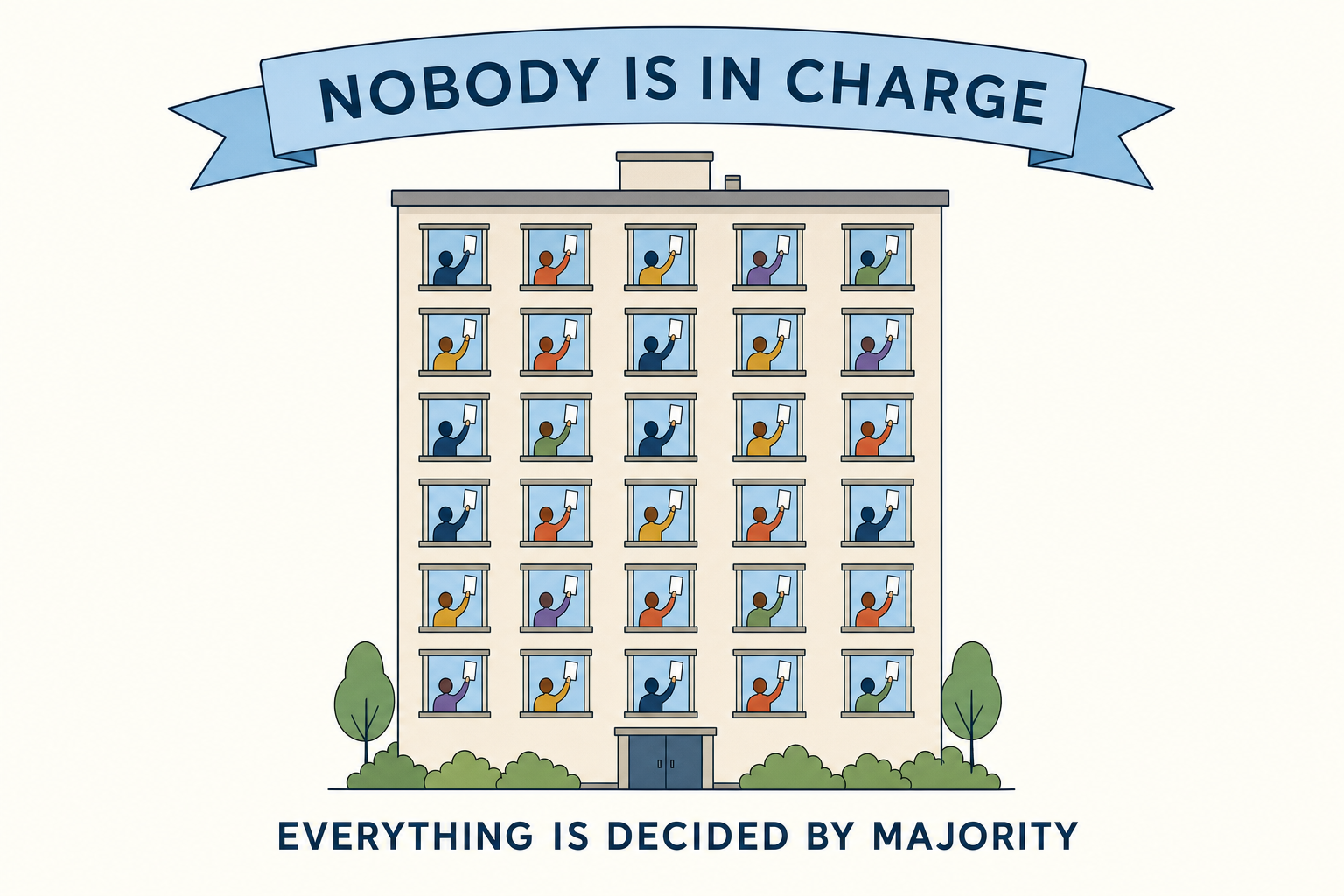
No boss, no manager, no red button somewhere. Just people signing.
The caretaker who counts the signatures, on the other hand, isn't a person. It's a program. And a program counts exactly what it was told to count, no more, no less, without ever raising an eyebrow.
First hole: the photocopier
First bug, and it's my favorite of the whole affair.
The program that counted the signatures didn't check that they came from different people.
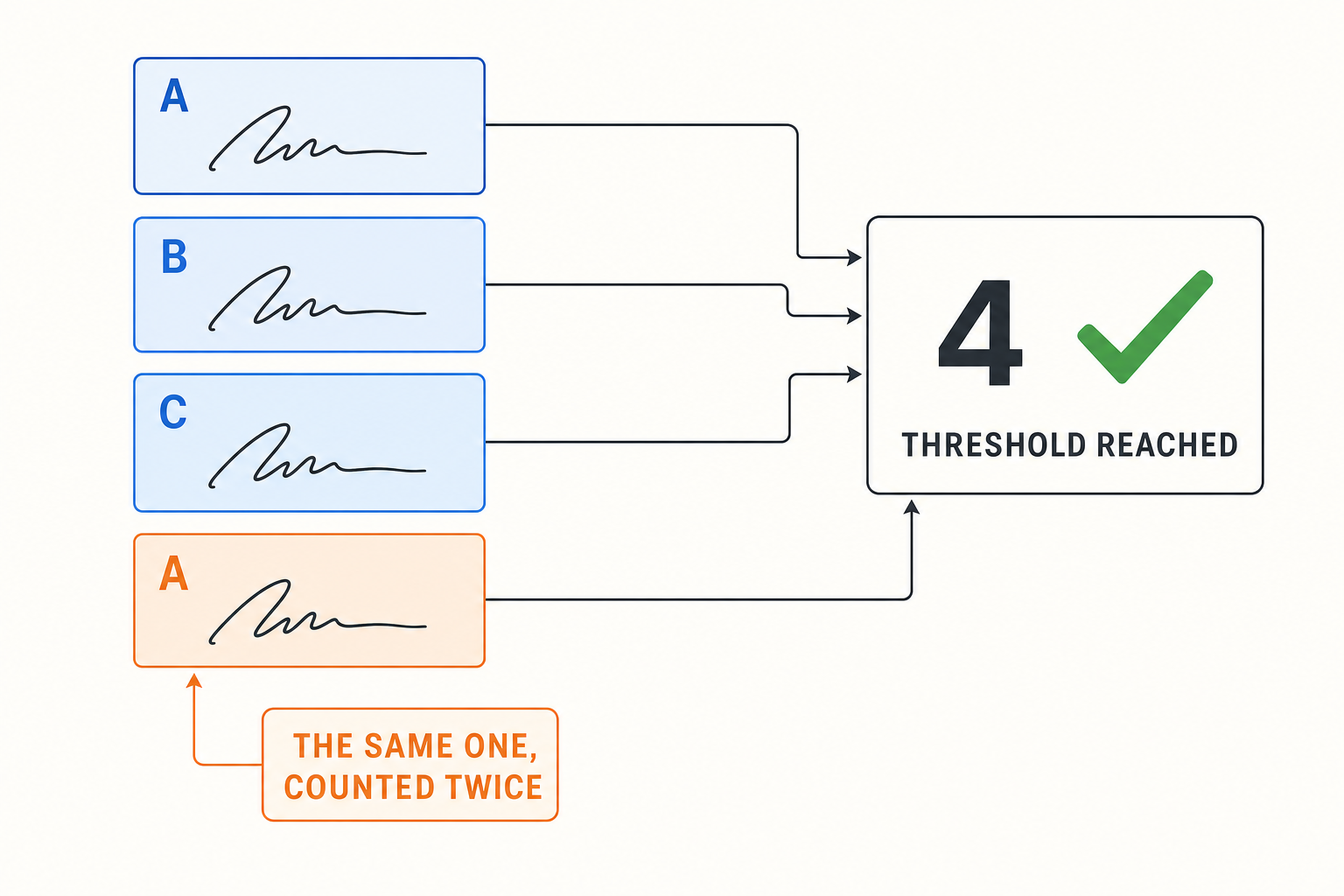
Three signatories, four ballots, decision adopted. Every crooked politician's dream.
Read that sentence again, it's worth it. It means that three residents could sign, put one of their papers through the photocopier, slip the copy into the ballot box, and the tally rose as if it were a fourth person. A small group could therefore create the appearance of a large majority that had never existed, and get a decision adopted on behalf of the entire building that the entire building would have rejected.
The fix fits in one sentence: duplicates are thrown out. A signature that's already been seen doesn't count a second time.
What blows my mind here is that this is the check you put into an end-of-banquet poll to stop Michel from voting twelve times for tiramisu. Nothing sophisticated, nothing brilliant, you learn it in your first term. And it was missing from a thing that moves billions.
Second hole: the guard's badge
Second bug, same family.
Every now and then, a resident changes their signature. That's normal, it's even recommended, exactly like changing a password or like a company taking back the badge of an employee who's leaving. The old signature retires, the new one takes over.
Except the old one kept opening the doors.
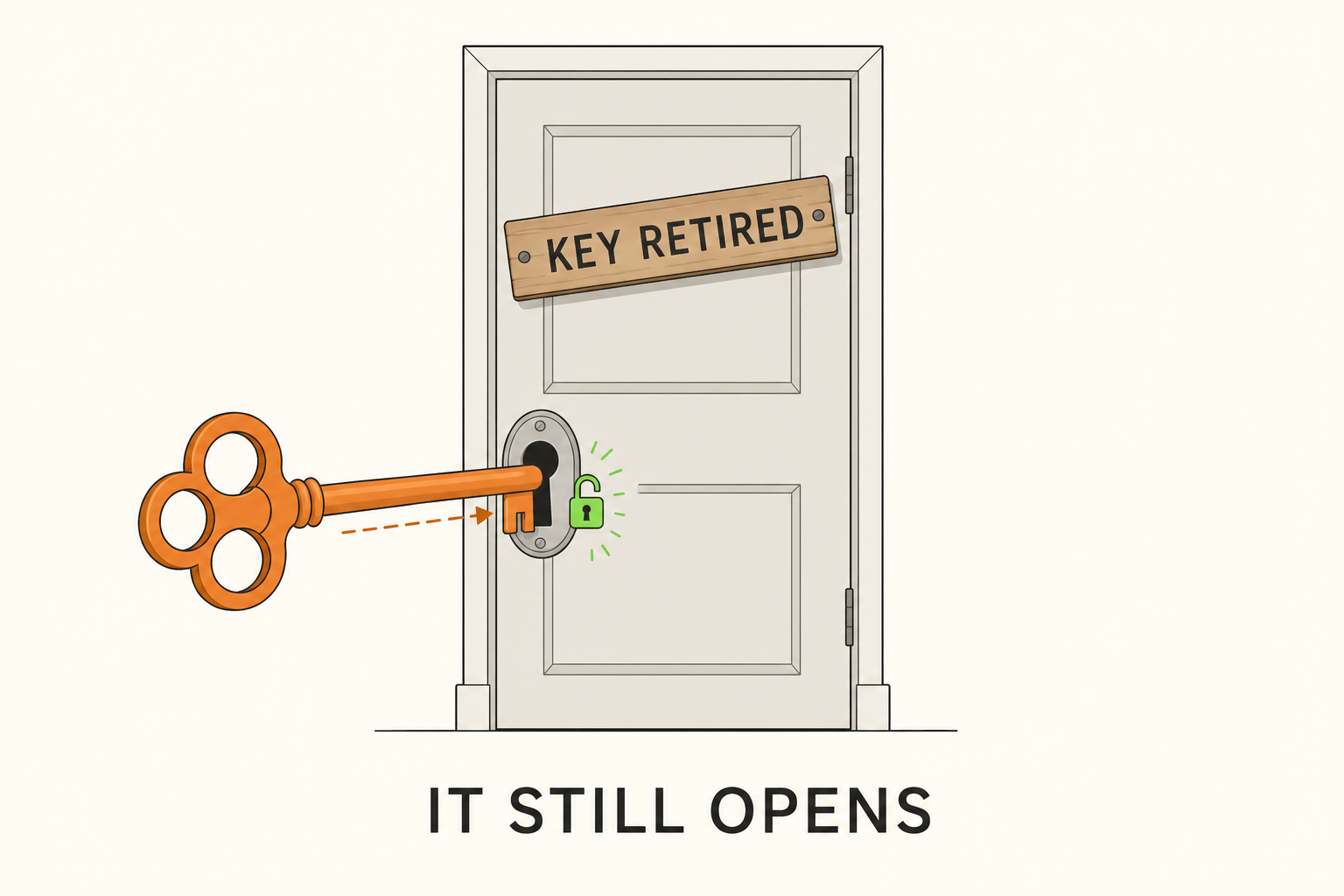
The sign says retired. The lock didn't read the sign.
And there was worse, a detail that made me laugh bitterly. When a resident was about to get a fine for misconduct, all they had to do was change their signature so the fine could no longer find them: it stayed attached to the old one, which no longer belonged to anyone. You change your name, your driving points stay with the ghost.
Since this morning, a retired signature is worth absolutely nothing, and pending punishments follow the resident to their new signature. They no longer get forgotten along the way.
Third piece: the checkout line
The last bit fixes nothing, it speeds things up.
Until now, all the work happened at the worst possible moment, the one when the line is waiting. Imagine a cashier who would scan your items, take your payment, print the receipt, put the bags away and check the till in the same movement, while fifteen people huff behind you. Now, part of the work is prepared in advance and the verification happens afterward, once you have left the store.
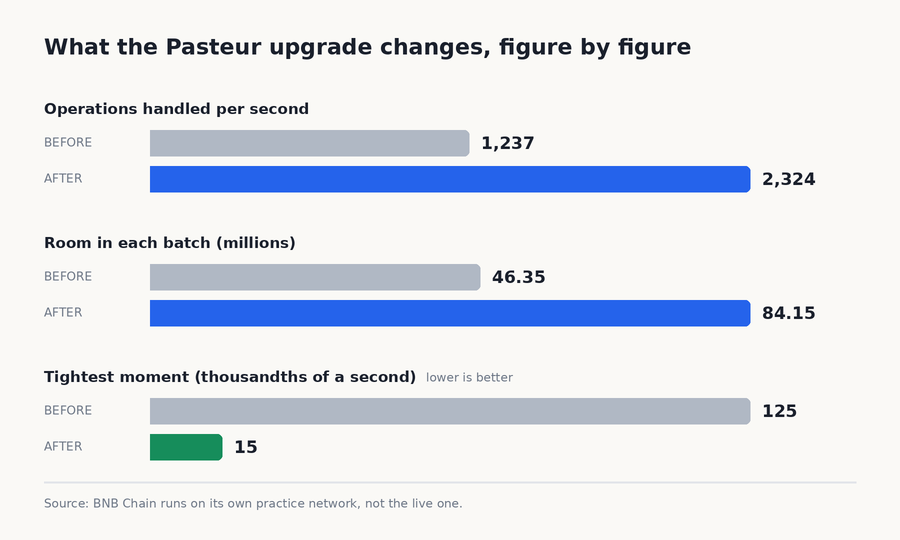
Three measurements, three different scales. Putting them on the same axis would have been a pretty lie.
The announced figures: the number of operations processed each second goes from 1,237 to 2,324, the available space in each batch of operations climbs from 46 to 84 million, and the tightest moment drops from 125 to 15 thousandths of a second.
Now for the precaution, and it matters at least as much as the figures: these three numbers come from tests carried out by BNB Chain on its own training network, that is, a place where the machines are neatly arranged, where the load is the one they decided to send, where nobody launches a monkey picture auction at three in the morning, and where, strangely enough, everything always goes better than outside. A laboratory figure announced by the company selling the product is read as a promise, not as a result. We will see in a few weeks what it gives with real people inside.
Concretely, what does this change for you?
If you have BNB tokens stored somewhere, you have nothing to do. Nothing at all. What changed tonight concerns the machines that run the network, not what you have in your wallet: no button to click, no update to install, no operation to perform.
What changes is what can no longer happen. The first hole allowed a handful of people to make a decision in everyone's name, and that kind of flaw, when someone eventually uses it, always ends the same way: an embarrassed press release, a network brought to a halt, and users watching their money disappear live. That's exactly what I was telling you about two days ago, with 49 million tokens created out of nothing.
And if you don't own a cent of crypto, there is still something to take away from it, because the two stupidities from this morning are not crypto stupidities. Counting votes without checking that they come from different people, removing a badge on one side while forgetting that it still opens something on the other: that lives in your bank's software, in your health insurance provider's software and in your school's portal. The difference is that here everything is public. Anyone can read the code, see what was fixed, and at exactly what time. Your phone operator will never tell you what it patched up last night.
If you are a developer
What follows is for you. If you're not in the trade, skip to the end, you won't have missed anything.
Pasteur is a hard fork, activated at 02:30 UTC on the mainnet, client 1.7.7 mandatory beforehand. A node left on the old version does not crash, it calmly continues under rules that nobody applies anymore, which is the worst way to go down. If you haven't done it yet, go check now.
The two fixes in plain English:
- Deduplication of signatures during supermajority verification, on the bridge side. Duplicate entries were counted, so the threshold could be reached without a real quorum of distinct validators. The fix rejects duplicates before counting.
- Effective revocation of a validator key after rotation. The old key kept its authority, and a pending sanction did not follow the validator to its new key, which made rotation an escape hatch from slashing. By the way, blacklisted addresses no longer bypass governance rules.
Both are absolute classics, and that's exactly what stings. The first is counting without a unique key, the fault of the voting form written on a Monday morning. The second is authorization revocation applied in one place and not the other, the one we all run into once in our careers because we disabled the account in the users table while forgetting that the authentication token itself lives elsewhere, in a cache, with its own expiration date, and that it will keep cheerfully opening the doors for the next twenty-four hours while waiting for a client to call and report that their former intern is still reading the invoices. That stings.
On the performance side, the gain comes from moving execution out of the critical path: the block can be executed in advance and verified afterward, instead of doing everything in the production and propagation window. Hence the critical path dropping from 125 to 15 ms, the gas per block going from 46.35 to 84.15 million and the announced throughput at 2,324 transactions per second. Controlled test network figures, as always: to be checked against the mainnet in a few weeks.
What I like, for once
I've spent the week writing about stuff that breaks, and the fix always came afterward. After the theft, after the shutdown, after the press release.
This morning, it's the other way around. Two flaws that made it possible to rig a vote and keep the house keys after handing back your badge, plugged without having to first tell the story of the guy who took advantage of them. It's not spectacular, it won't make any front page, and that's precisely why it's worth talking about.
The others are getting into it too, each on their own turf. Solana was cleaning house last week among operations that are of no use to anyone. There's a real race going on right now, and for once it's not being fought over announcements but over plumbing.
There's still the thing nagging at me. These two bugs are completely ordinary, they were in a network that had been reviewed and audited, with bounties for those who find flaws, and they sat there quietly for months. So how many are left elsewhere, in all the others, counting the same ballot twice? We'll eventually find out, mind you: there are now programs that reread code all day long without ever getting tired, and they turn up things nobody had seen in three years. It's crazy what they find!
Sources
- BNB Chain, Pasteur update activated at 02:30 UTC on August 25, 2026 on the mainnet
- crypto.news : BNB Chain Pasteur hard fork goes live Aug. 25, August 24, 2026, details of proposals BEP-682, BEP-695 and BEP-675
- Crypto Briefing : Pasteur hardfork scheduled for BSC mainnet, required client version
Join the conversation
You need an account to comment on this article. Creating one is free and takes under a minute.
No comments yet.