Crypto: Solana, more than one operation out of two serves nobody. Time to clean house.
Crypto: Solana, more than one operation out of two serves no purpose. It's time to clean house.
Since yesterday, the new features from the Agave 4.2 update have been activating one by one on Solana, one of the biggest cryptocurrency networks on the planet, near the top behind Bitcoin and Ethereum. Nothing spectacular on screen. But there's a figure in there that I read twice to make sure I hadn't looked at the wrong line.
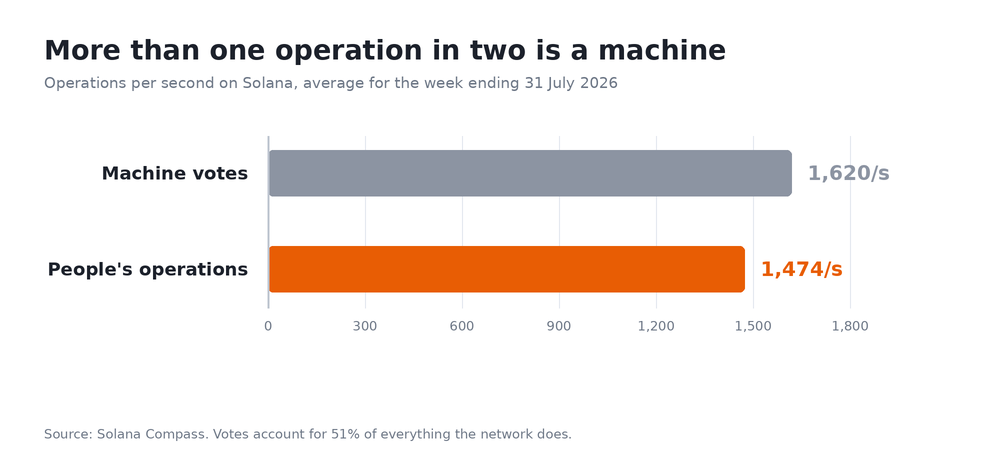
During the week that ended on July 31, 51% of the operations carried out on this network were machines telling each other that they agreed. Not people sending money to each other. Just computers voting.
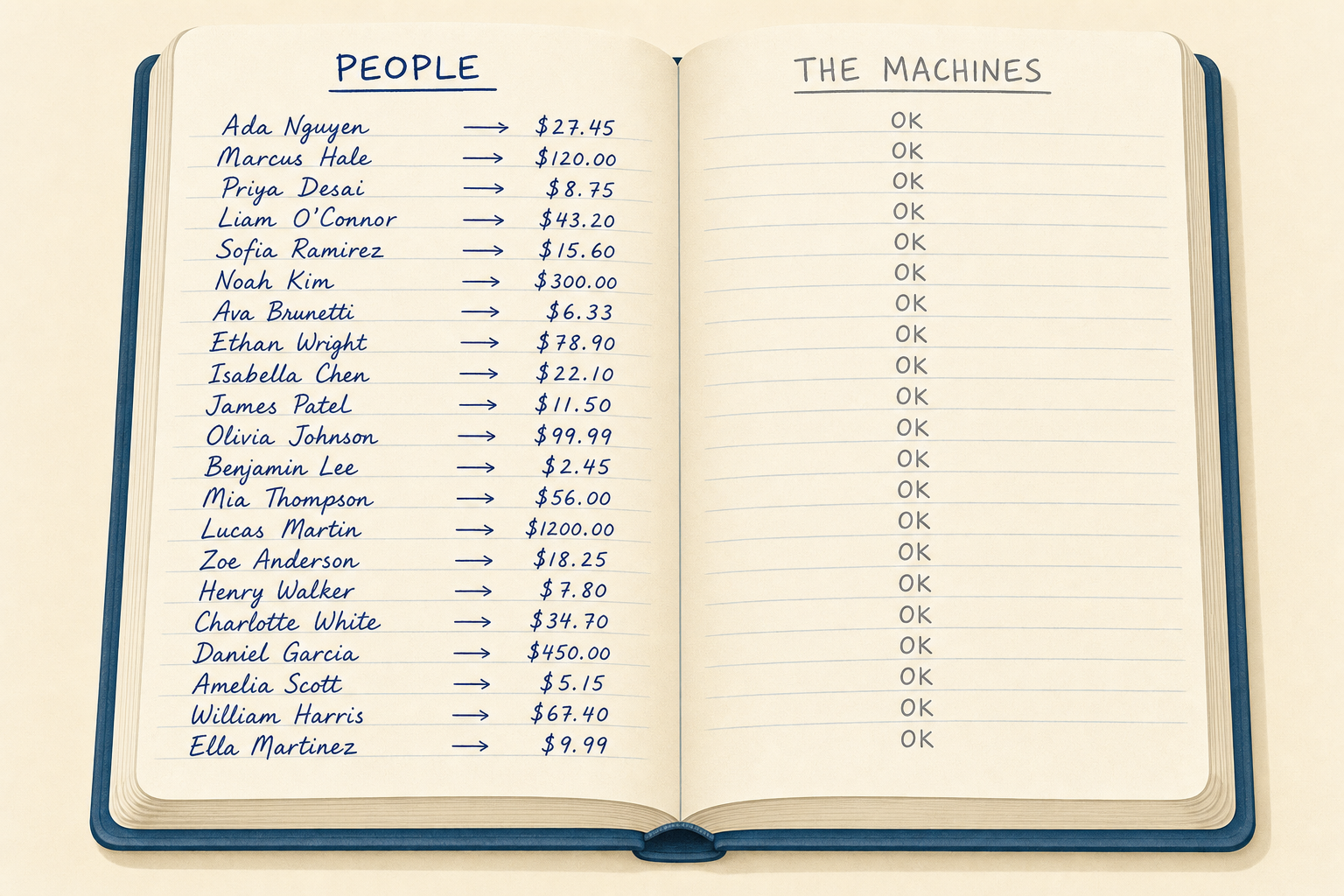
On the left, what people do. On the right, what the machines write. Same notebook, same fees.
One operation out of two is a machine raising its hand
Two minutes of explanation, and after that everything else falls into place by itself.
A network like Solana looks like a big shared notebook. It records who sent what to whom. This notebook belongs to no one: it is copied identically onto thousands of computers spread around the world, which are called validators. Their job is simple to state and painful to do: constantly agree on the exact order of the lines. Because if two machines write a different opinion, the transaction is considered false, malformed or void. This protects the Solana network from fake transactions.
The problem comes from the way these agreements are recorded today. Every vote from every validator is added to the notebook like an ordinary operation. It takes up space and it brings fees with it. The notebook therefore ends up half-filled with “ok”, “ok”, “agreed”, “ok”.
On the left, the people. On the right, the machines congratulating each other. The network pays for both.
The figures, measured over the last week of July: 1,620 votes per second, versus 1,474 operations from real users. The machines talk more than the customers. Imagine a supermarket checkout where one employee out of two does nothing but loudly confirm that the previous one did scan the item correctly. It works, nobody makes a mistake, but you'll never get more people into the store.
What really changed yesterday
The version that has been activating since August 17 doesn't solve this problem yet. It does three other things, and they are very concrete.
The network's pace goes from 400 to 200 milliseconds. This duration corresponds to the slot during which a machine can write in the notebook before handing over. It will be cut in half, but gradually: four stages of 50 milliseconds, with a safety mechanism that interrupts the descent if too many slots start being missed. Now that's engineering caution, and it's good to see.
The cost of storage drops by 90%. Keeping data in the notebook costs money, because it takes up space at everyone's place, forever. The value that sets this rate goes from 6,960 to 696. In real money, the small account used to hold a token goes from about 16 cents to about 1.6 cents. Ten times cheaper to open the door.
And operations can be three times bigger: 4,096 bytes instead of 1,232. A byte is roughly one character. So we go from an SMS to a page of text. The old formats continue to work, nobody breaks anything.
The biggest change is in a box
Here's the real subject. This version carries Alpenglow's code, the biggest change ever attempted on this network, and this code is delivered switched off.
Alpenglow addresses the 51% problem. The idea fits into one sentence: instead of recording their votes in the notebook, the validators vote directly among themselves, by message, and a single compact signature sums up thousands of votes at once. The notebook no longer sees anything go by. About 75% of the space is freed up, and that space goes back to the people, to their transactions.
The other effect is even more impressive. A transaction now takes around 12.8 seconds to become irreversible, meaning impossible to cancel. That delay would drop to around 150 milliseconds. Eighty-five times faster. The system was proposed by the Anza team with researchers from the Swiss Federal Institute of Technology in Zurich, it was approved by validators at 98.27% in September 2025, and it has been running on a test network since May 11.
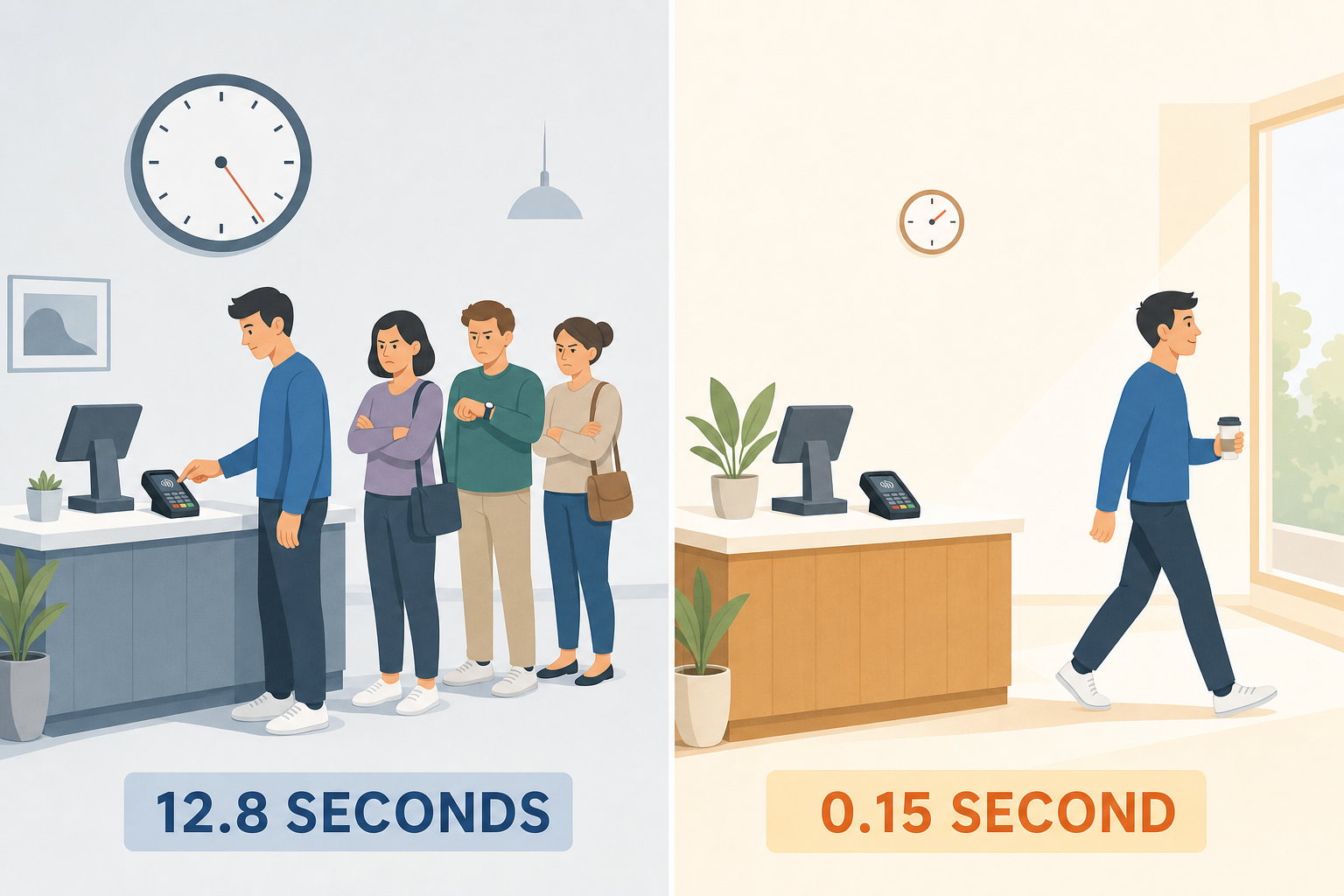
Twelve seconds and eight tenths, that's how long it takes to read this caption. Twice.
A small detail that says a lot about the developers' fear level: since August 5, a bounty of up to 50,000 SOL has been offered to whoever finds a vulnerability in the four parts of the code concerned. The window closes tomorrow, on August 19. When you put that kind of money on the table to have your own work broken, you are perfectly aware of what you're touching.
It's a bit like fixing an airplane engine in mid-flight!
Concretely, what does it change for you
If you've never bought cryptocurrency in your life and have no desire to, you can turn the page here, but for me this is the future. If you're an investor and the Solana blockchain is batting its eyelashes at you, I think this change will polish its image even more.
What changes: the patience threshold. Twelve seconds and eight tenths is a very long time when you're standing at a checkout with thirty people behind you. This delay blocks almost every everyday use. No one will pay for their bread with a system that forces them to stare at their shoes for thirteen seconds. At 150 milliseconds, the wait becomes invisible: it's the time it takes to blink, exactly the feeling of a contactless payment.
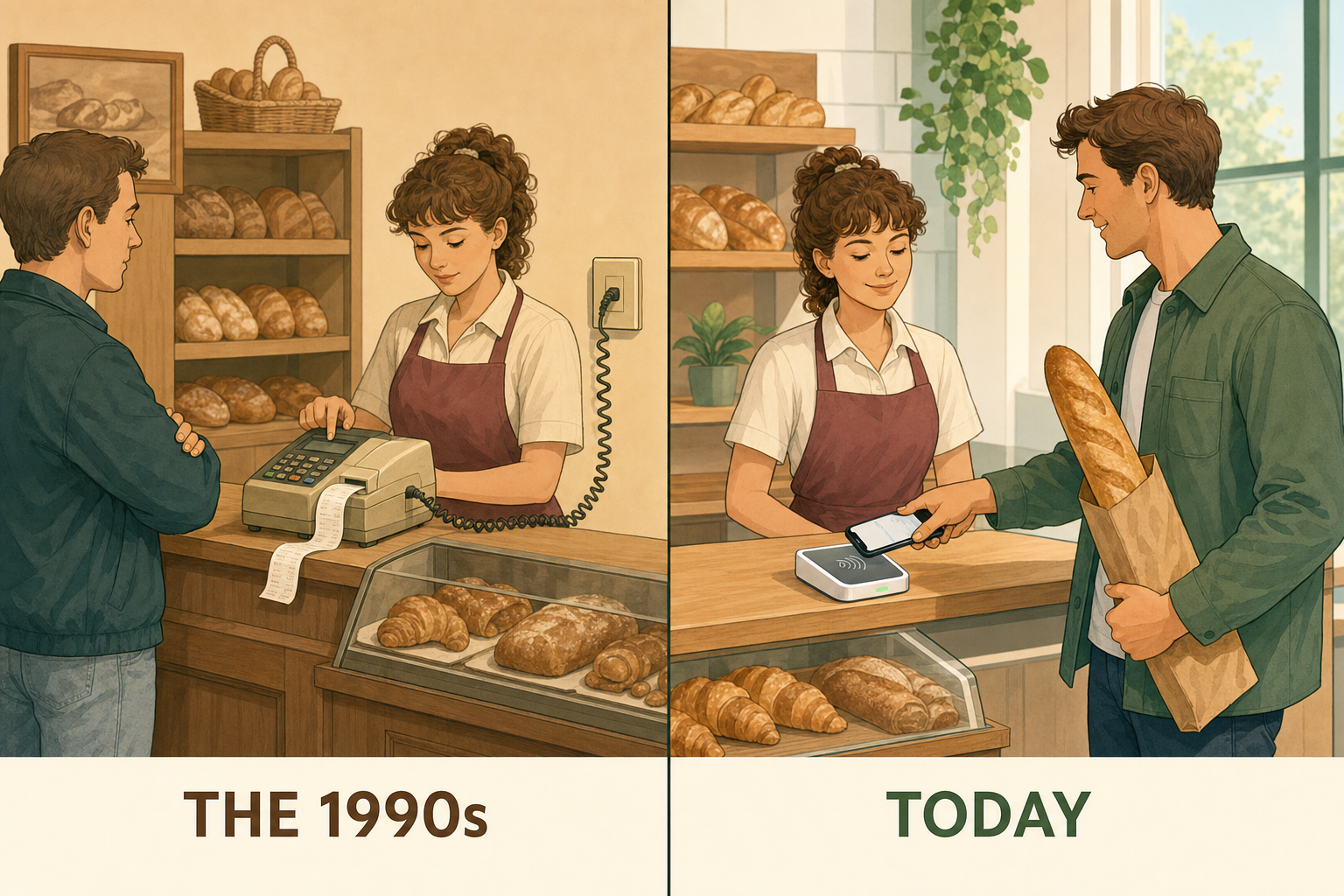
The terminal that dialed a phone number. Your grandmother remembers the sound very well.
The precedent exists, by the way, and it's telling. In the 1990s, paying by card at the baker's meant a terminal that dialed a phone number, a little modem tune, and thirty seconds of silence at the counter. Result: you only took out your card for large amounts, and the baker rolled his eyes. The card hasn't changed its nature since. It's the wait that disappeared, and that's it, only that, which means that today you pay for your baguette by placing your phone on a device.
Second concrete thing: the cost. When the price of storage is divided by ten, the fees for small transactions go down. Sending three euros while paying one euro in fees is a joke, and that's what killed most everyday uses on these blockchains.
And what it doesn't change, I prefer to write it in black and white: it doesn't make these currencies more stable, it says nothing about what they're worth, and it doesn't turn them into a payment method accepted by your butcher. It removes a technical obstacle and adds some serious advantages.
The promise is serious, the reservations are too
The 150 milliseconds remain an announced target. This delay was measured in a lab and on a test network, not on the real network under full load, on a day when everyone rushes to the same place. It's exactly the difference between a car on a test bench and the same car in a traffic jam in Brussels on a Friday evening.
Next, the date. The target is October, with the next version. A target isn't a date, and on this kind of project targets move. If it slips to December or March, that won't mean the project is dead, it will mean that someone did their job properly and preferred to delay it.
Finally, the real risk. Changing the way thousands of machines reach agreement is the most delicate operation one can attempt on a network of this kind. It's the sort of surgery that, when it goes wrong, doesn't make the service sluggish: it stops it. Solana knows a thing or two about that, the network has already experienced several complete outages in the past. Hence the 50-millisecond stages, hence the automatic safeguard, hence the 50,000 SOL offered to the breakers. The whole setup says the same thing: we know perfectly well where we're stepping.
What I think about it
There’s no promise of returns, no fashionable new token, no press release announcing the end of the banking system. There are people who looked at their own network, realized that half the work consisted of congratulating itself, and decided to ditch that. It’s plumbing. It’s even exactly the definition of plumbing.
And to be honest, I like that 51% figure mostly because it’s embarrassing. For years, the official narrative around this network emphasized its speed and its number of operations per second, like you wave a record around. Except that one operation out of two in that record was the counter measuring itself. It takes a certain amount of courage to publish the figure that shows you’ve been telling yourself a few stories.
Now, we’ll see in October. Or in December. Or next year, for that matter. But there’s no denying it, if Solana keeps improving its blockchain like this, it’s going to start becoming unavoidable.
Join the conversation
You need an account to comment on this article. Creating one is free and takes under a minute.
No comments yet.