Seven billion dollars for a button. The one that lets you switch AI without rewriting anything.
Seven billion dollars for an AI "button"?
On Sunday evening, Bloomberg breaks the news: Stripe, the company that collects payments from half the sites where you've put your card, is preparing to buy OpenRouter for more than seven billion dollars.
Seven billion. For a three-year-old company that you've probably never heard of.
And the funniest thing is that in May, the same company was worth 1.3 billion. Three months. Multiplied by more than five. There are people who signed a check in May and woke up with a capital gain they wouldn't dare tell anyone about.
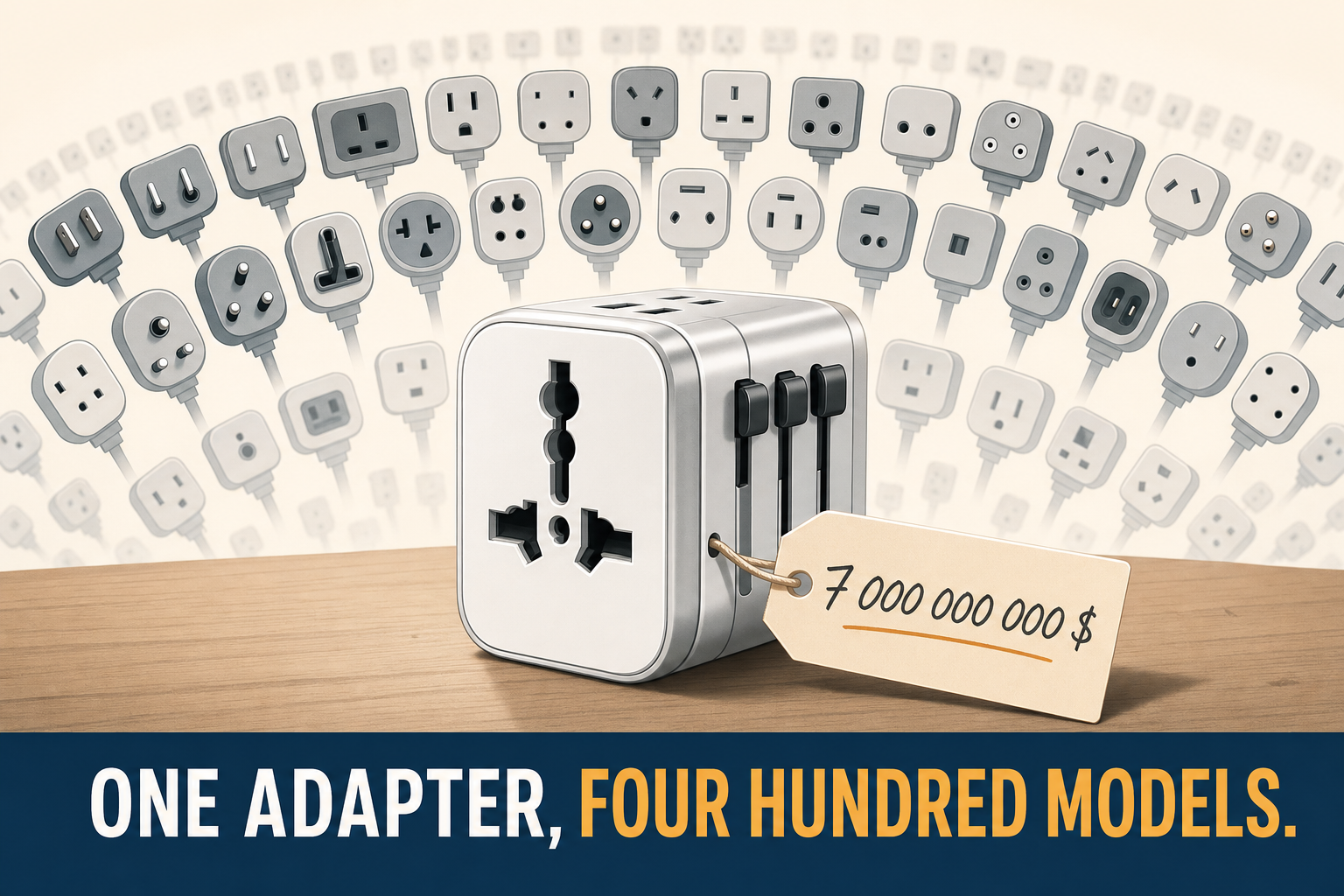
The thing in question doesn't make any AI. That's the whole point.
What is OpenRouter, for those who've never heard of it
Imagine you want to integrate artificial intelligence into your application. A chatbot, a tool that summarizes documents, whatever you want.
Generally, you choose a provider. OpenAI, for example. You create an account and get a key, a long string of characters that proves the call really comes from you and, above all, indicates where to send the bill. Then you adapt your code to the provider's method and pay it directly. The day you want to try a competing model because it costs half as much, you start all over again. Another account, another key, another method, another bill.
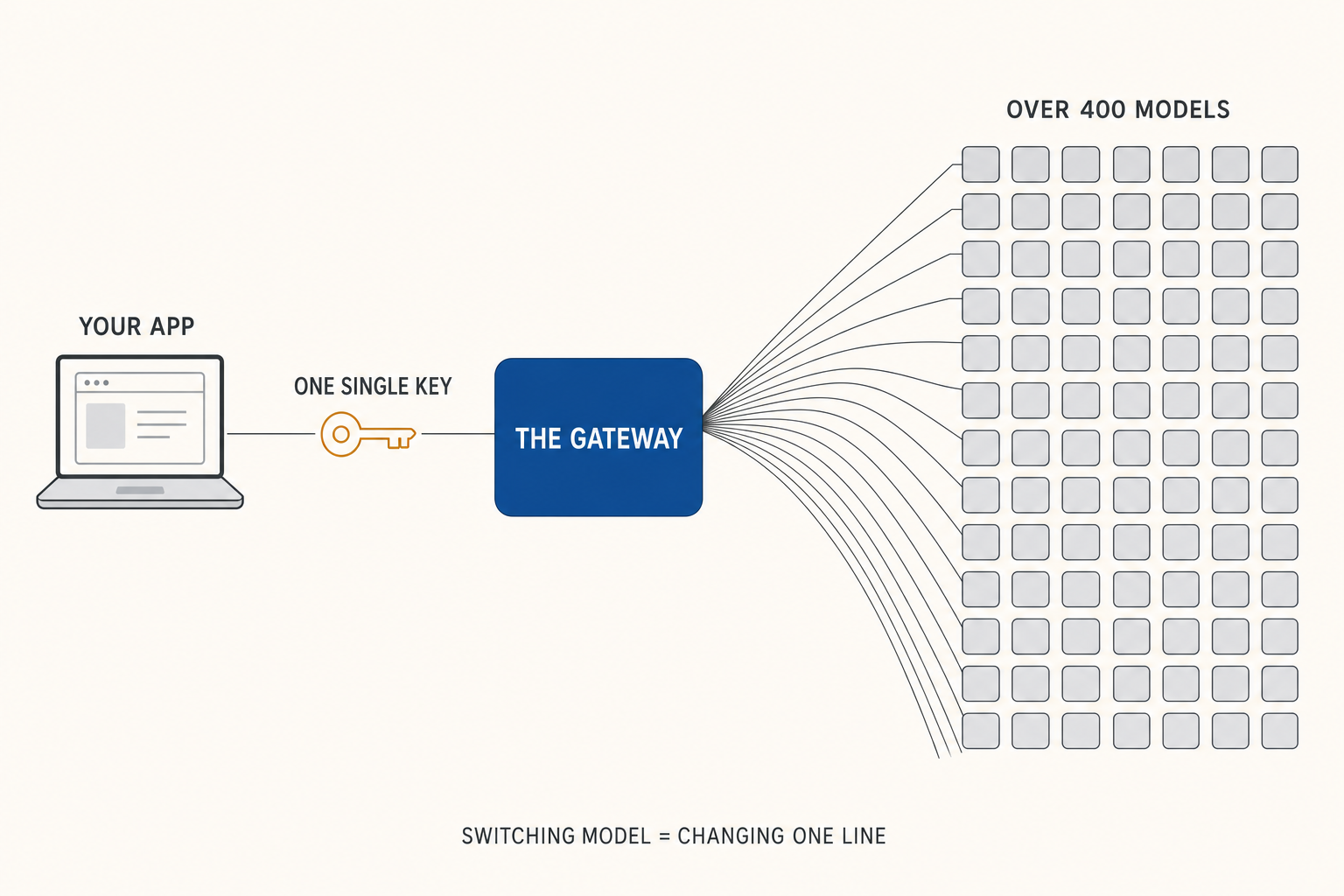
OpenRouter slipped right into that spot. You use one key, one bill and one way of writing your code. Behind it, you get access to more than four hundred models: those from Anthropic, those from OpenAI, Google, xAI, DeepSeek and a long list of others. You want to change brains? You modify one line. Not an account, not a contract, one line.
One plug, four hundred devices. The dream of every guy who's ever traveled with a charger.
Eight million people use it. About one hundred trillion tokens go through it every month. A token is a small piece of a word used by these models to measure consumption and bill for it. Roughly speaking, that represents three quarters of a French word. Six months earlier, the volume was five times lower. That's the curve that put seven billion on the table.
Why it's worth seven billion, and not seven hundred million
So we're going to talk about the commission, because that's where everything happens and it's funny.
OpenRouter doesn't add a margin to the models' price. You pay the price displayed by OpenAI as is. On the other hand, when you top up your account, the house takes 5.5% along the way. You put in $100, and 94.50 remains for you to spend on AI.
Now look at what Stripe takes from its core business. For a European bank card, the price displayed on its own website is 1.5%, plus 25 cents.
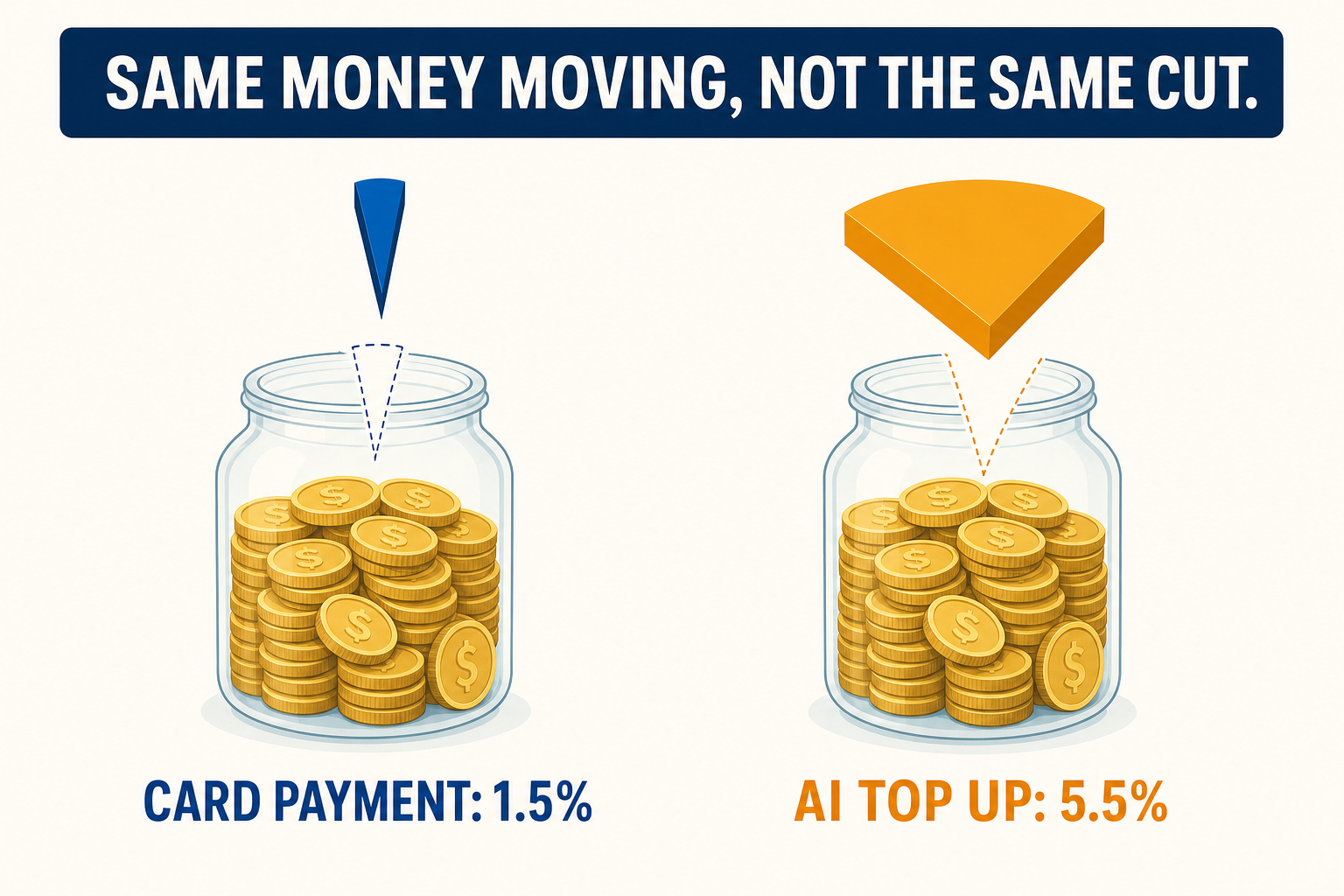
Same gesture, same second, same money passing through. Not the same share.
You read that right. Stripe has just paid seven billion to buy a business whose commission is about three and a half times higher than its own. In a market that didn't exist in 2022. Seen that way, this is no longer an acquisition. It's a move. Stripe is leaving the room where it charges 1.5% to move into the one where they charge 5.5%.
And the ironic thing is that Stripe was already processing OpenRouter's payments. So they had been watching the volumes go by for months, live, on their own dashboard. It's hard to find a better market study: "hang on, this customer is growing weirdly fast, maybe we should buy it."
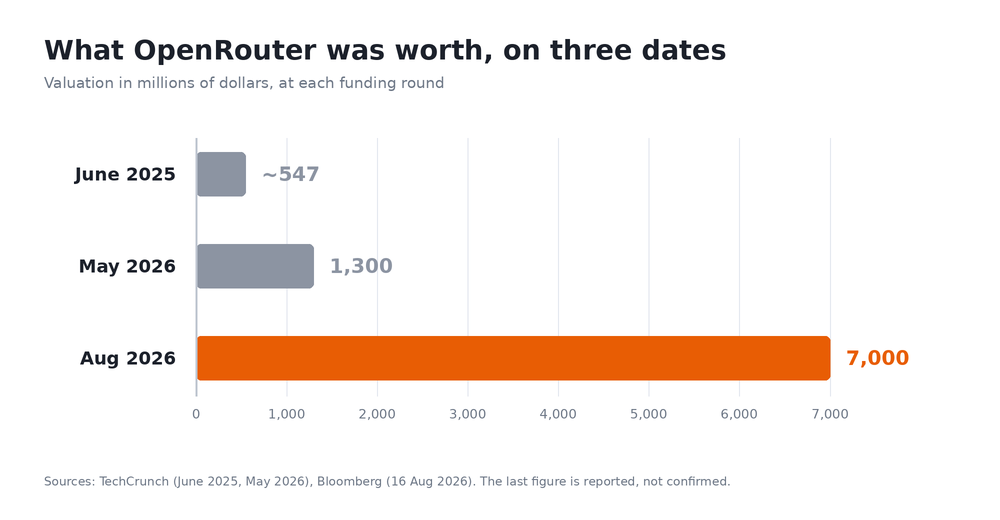
Three points on a graph. The third one arrived this week.
The real news is that nobody won
What interests me is what this amount says. For three years, they've been selling us the model war as a final: there will be one winner, just one, and the rest of the world will go work for it. Except the company that just sold for seven billion doesn't make any models. It sells exactly the opposite: the freedom not to choose.
Its boss, Alex Atallah (yes, the one from OpenSea, he changed careers and he was right to do it), summed up the situation in May in one sentence: the multi-model future is already here. The market has just proved him right with a ten-figure check.
In other words, what is worth the most today in AI isn't having the best model. It's being the door through which you can leave for somewhere else.
And personally, I think that's excellent. An easy exit is the only thing stopping a provider from raising its prices once it has become indispensable. Ask anyone who has already tried to leave their mobile operator in 2005.
You also have to admit that what Stripe sees is the future (as the young people say: the "future"). Stripe, which already offers merchants on the Web multi card, multi currency payment services, is adding to its tools (and it's already underway) payments by AI agents without human intervention and now, on top of that, we'll be able to choose several AIs so that all this runs nonstop and without outages at lower cost. Because if I want to create a simple transaction and ask an AI to check that transaction, I don't need to pay for Claude by Anthropic (one of the most expensive).
Concretely, what does this change for you
If you don't code, you might tell yourself that all this is happening very far from your kitchen. Not that far.
First, you're already using it without knowing it. A good part of the little AI apps you come across don't talk directly to OpenAI: your accounting software's assistant, the thing that summarizes articles in your browser, the one that corrects your emails. They all go through a gateway like this. You use this plumbing every day, just as you use the electrical grid without ever thinking about the transformer at the end of the street.
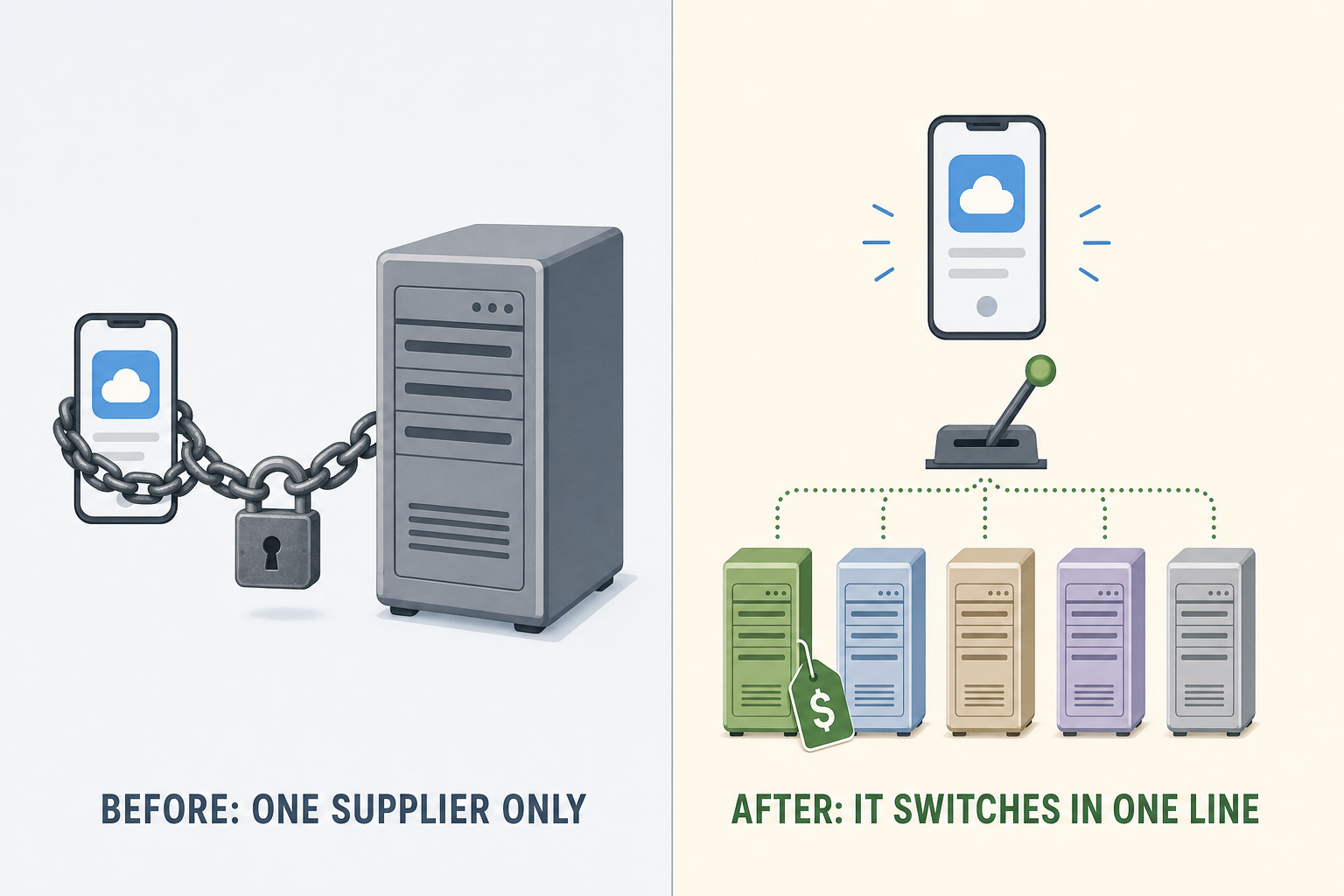
On the left, when your app is married to a single provider. On the right, when it can get divorced in one line.
Second, and this is the real benefit, this competition pulls prices down. If the application you pay eleven euros a month for can change engines in one line because a competitor costs half as much, it does. It has no reason to stay faithful. The reduction can therefore reach your bill, instead of ending up in someone else's margin.
Third, this makes small publishers less fragile. If a provider raises its prices, removes a feature or goes down for six hours, the application switches somewhere else while it waits. You don't even notice the difference. That's new. Two years ago, an outage at a major provider brought thousands of services to their knees all at once.
The deadline, honestly? It’s already in place. This isn’t a lab promise: it runs, it’s measured, and it gets bought for seven billion.
The downside, because there is one
The neutral referee now belongs to someone.
The service that tells you “here are the four hundred models, pick whichever one you want” now belongs to a company that makes its living by taking a percentage of the flows. As long as the ranking stays honest, everything is fine. But if one model is ever favored for the wrong reasons, nobody on the outside will be able to prove it.
I’m not saying it will happen. Stripe has a pretty good reputation on that front, and burning itself over this would cost it more than it would bring in. I’m just saying that the question didn’t exist last week and it exists now.
And one important clarification: at the time I’m writing these lines, nobody has officially confirmed anything. The information comes from Bloomberg, which cites sources close to the matter, and it was then picked up everywhere. Asked, Stripe says it doesn’t comment on rumors. The final price can still change.
What I think about it
There’s something I like about this story, and it isn’t the check.
It’s that seven billion is being paid to some guys who just created a simple service, a button, a plug, an adaptation layer. Something that creates nothing, thinks nothing, and just translates. All of computing is made up of things like that and they’ve never received the slightest bit of glory. The printer driver, the plug adapter, the format converter. Nobody writes articles about them.
Except that when an entire industry starts changing suppliers every six weeks, the adapter becomes the most strategic place in the room. It isn’t the first time. The same scenario repeats whenever a market has too many suppliers and no standard: the guy who sells the universal extension cord earns more than those who make the devices.
If the 7 billion transaction goes through, hats off to the people in charge of OpenRouter and have a good trip to the Maldives.
Join the conversation
You need an account to comment on this article. Creating one is free and takes under a minute.
No comments yet.