A spy microphone at OpenAI, prepared with ChatGPT: how did the engineer get caught?
Well, my friends, this is a spy movie scenario, low-budget version. An OpenAI engineer, the company that makes ChatGPT, is accused of hiding a microphone in the management meeting room. And to prepare his scheme, he allegedly asked ChatGPT for help. On his wife's account. For a tool that keeps all the conversations, we've seen more discreet!
The microphone was found on September 30, behind the television in a meeting room at the San Francisco offices, plugged into the screen's USB port and wrapped in toilet paper. The engineer, 35, hired in July 2025, was arrested on October 9 and brought before a federal judge on the 13th, according to the US Justice Department's statement. He is being prosecuted for intercepting conversations, which can cost up to five years in prison. For now, these are accusations: he is presumed innocent, and his wife is not being prosecuted.
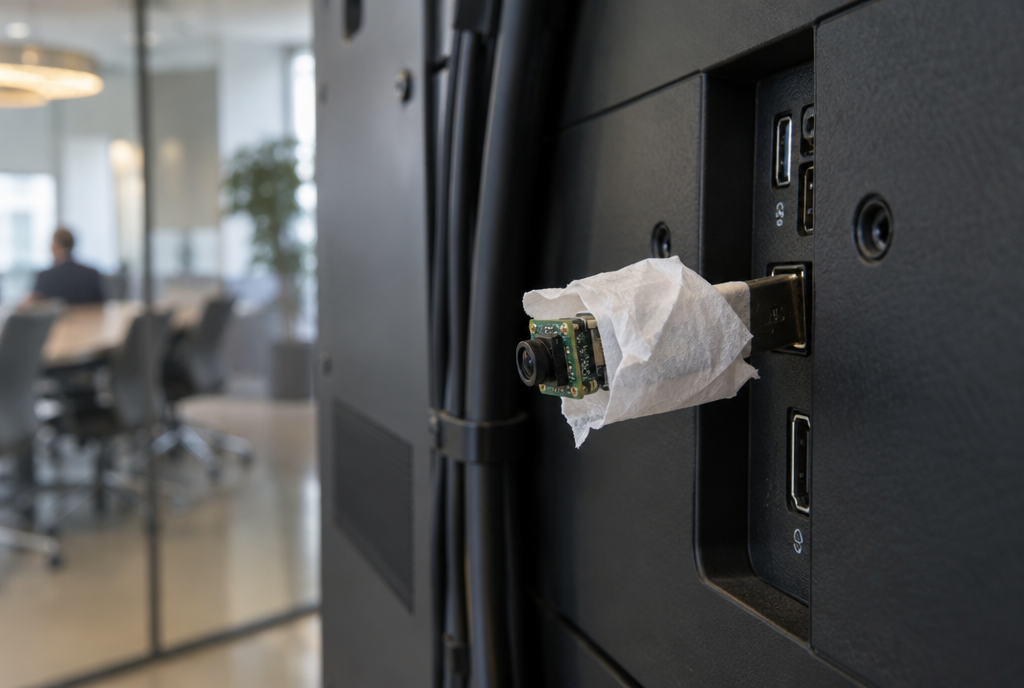
The spy microphone, with its luxury packaging
The “sophisticated device” costs $14
OpenAI called it a “sophisticated listening device”. Sophisticated, really? According to Fortune, which read the complaint, it's a Seeed XIAO ESP32-S3 Sense, a circuit board as big as a thumbnail, with a microphone, a small camera and a memory card reader. The kind of little gadget hobbyists use to make a connected doorbell or a mini-camera to watch birds. Gizmodo checked the price: $13.99 in the manufacturer's store.
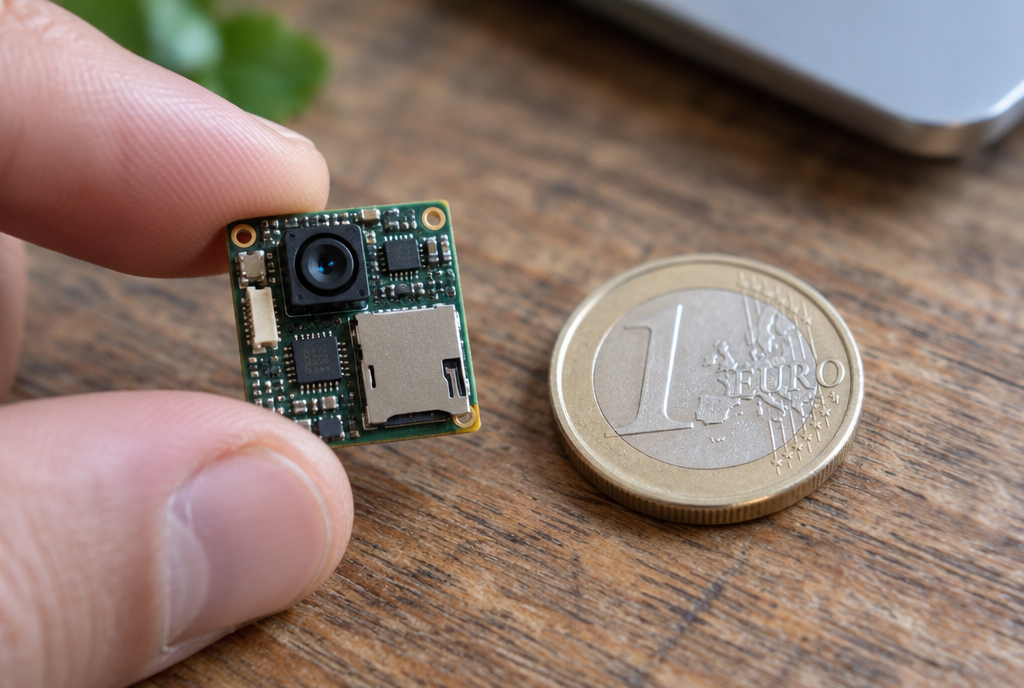
Smaller than a one-euro coin
What's sophisticated is more what he did with it. The little program inside was compiled on September 28, the day the microphone was installed, and the contents of the memory card were encrypted, that is, scrambled with a secret key. The investigators couldn't get anything out of it. So we don't even know whether the microphone recorded anything during its two days of service.
ChatGPT as a shopping list
This is the part of the complaint that made me raise an eyebrow. Between September 24 and 30, someone asked ChatGPT, from his wife's account, a series of questions that read like a task list: “a continuous audio recorder”, “live listening”, “download and erase the recordings”, USB power “without data”, “a second unit with voice-triggered recording”, “a third unit”, and even how to encrypt the memory card. The complaint does not name the chatbot, but OpenAI confirmed to Fortune that it was theirs.
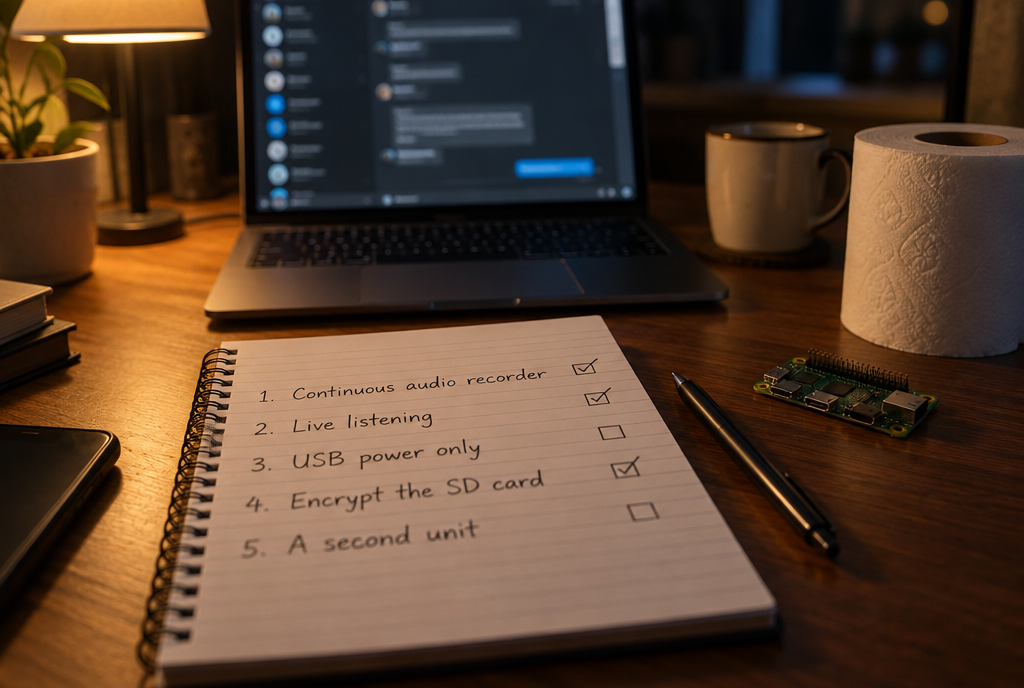
The shopping list, according to the complaint. The only thing missing is the toilet paper
And six weeks earlier, he allegedly asked an internal AI assistant at OpenAI which rooms could accommodate at least six people, and where management received its outside partners. He chose a room that only executives and their assistants can reserve. In short, he did his recon by asking a robot questions. I thought AI was mainly going to be used to write polite emails!
So why did ChatGPT answer? Because each question, taken on its own, is ordinary. A voice-activated recorder is a dictaphone. A USB power supply is a cable. Encrypting a memory card is good practice. Nobody wrote “help me spy on my boss”, and an AI that refused everything that could be used to do harm could no longer help make a baby monitor.
How he got caught
The good news is that security worked very well, and quickly. The microphone was found two days after it had been placed, during a simple routine check of the room. OpenAI says it used its own AI models “to identify the person responsible and trace the origin” of the device. Then the company put a camera in the room, and waited.
On October 5, at 1:20 p.m. and 47 seconds, the camera filmed the engineer coming to take a look behind the TV. The same day, security found a bag left in the printer room, with his wallet, his ID card… and a second identical electronic board. The next day, he retrieved the bag from lost and found and reported a “theft”. Busted.
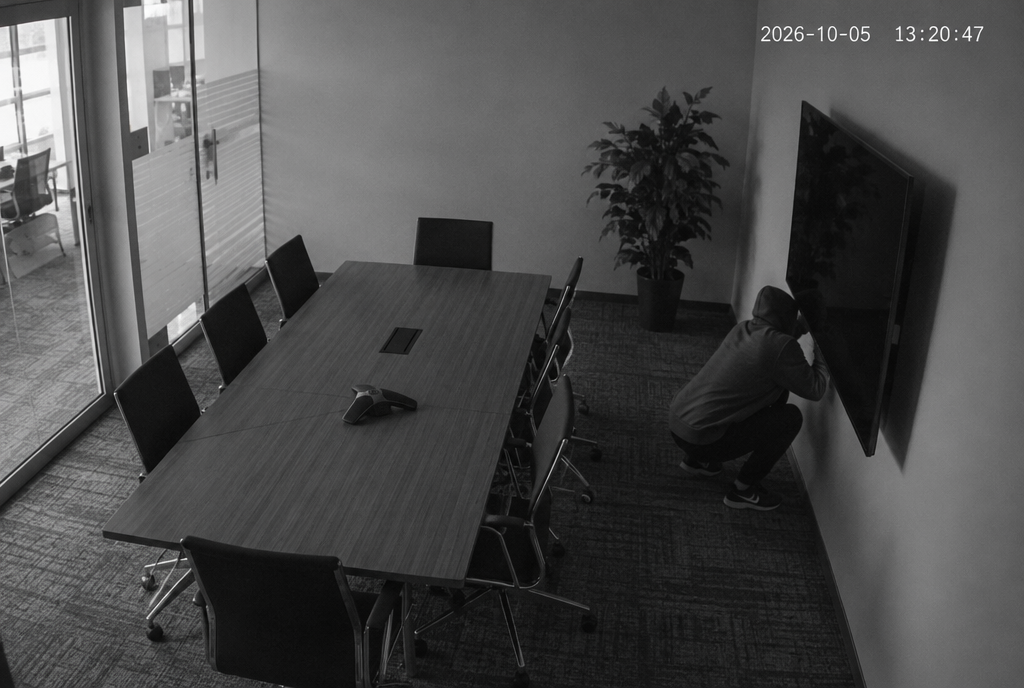
Reconstruction: the moment when he checks whether his microphone is still there, and someone else checks too
On ChatGPT's side, his wife's account didn't hide him for long. According to Fortune, investigators linked these conversations to his own account using technical identifiers and the IP address, the number that identifies an Internet connection. He was arrested on October 9, three days before a one-way flight booked for the 12th. OpenAI says it has no sign that he took code, customer data or the “weights” of the models, meaning ChatGPT's brain itself. He was fired.
What this says about your own conversations
I'm not going to tell you to be wary of ChatGPT, I use it myself. But this story is a reminder of something we forget: a conversation with a chatbot is not a thought in your head. It's text stored on a company's servers, linked to an account, an IP address, a device. And what is stored can end up in a judge's file. Changing accounts, in this case to his wife's, hid nothing at all.
How long these conversations are kept is a real question for all providers, and at Anthropic, it already made waves last month. So the common-sense rule is never to write in a chatbot what you wouldn't write in an email to your employer. That goes for spying plans, but also for passwords, health data and little family secrets.
And for companies, the lesson is the opposite: a simple walk-through of the meeting rooms was enough. No need for a radio-wave scanner, just someone looking behind the TV. The dumbest check in the world, and it worked.
The toilet-paper James Bond
Frankly, there is something comical about this: an engineer from one of the most closely watched AI companies on the planet, preparing his operation with his own employer's AI, hiding his microphone in toilet paper and forgetting the spare part in a bag with his ID card. James Bond can sleep easy.
But what worries me a little more is the price. A $14 microphone, an AI that answers everything and a few days of preparation, and anyone can listen in on a meeting room. At OpenAI, someone looks behind the TV. In the small local company, who does it?
Sources
- U.S. Department of Justice, Northern District of California, October 13, 2026: arrest and complaint
- Fortune, October 14, 2026: the questions asked to ChatGPT, the Seeed card and the timeline
- NBC News, October 13, 2026: OpenAI's statement
- Gizmodo: the “sophisticated” microphone sold for $13.99
Article written with the help of Claude Code, proofread and corrected by me.
Join the conversation
You need an account to comment on this article. Creating one is free and takes under a minute.
No comments yet.