Crypto: Europe wants to be able to shut down scam sites and freeze stolen money
Well, I couldn't help laughing. Among the 25 scam platforms that the FSMA, the Belgian watchdog of the financial markets, added to its blacklist on June 30, there's one called “X Trade Grok 8.1 Flex”. Another one is called “SwayHorizonAI”. Scammers have understood that two magic letters, AI, make people open their wallets faster than any argument. And while the FSMA adds names to its list, there's nothing forcing these sites to disappear for all that.
That's exactly what Europe wants to change. On September 30, the ESMA, the European authority that monitors the financial markets, published its wish list for the revision of MiCA. And in it, there's enough to give scammers a rough time.
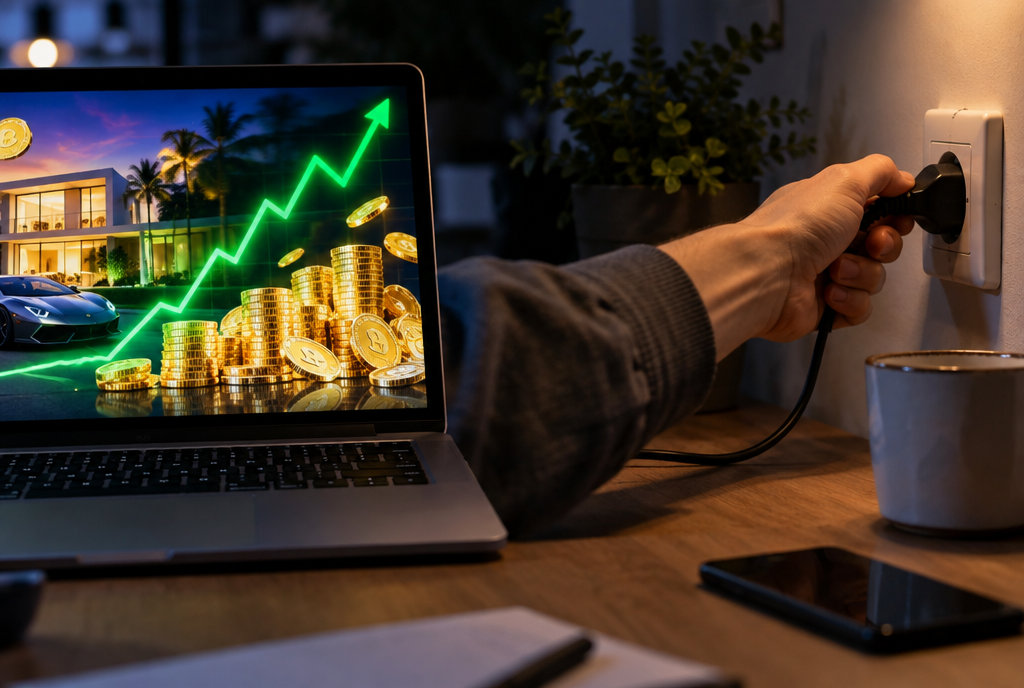
The most effective method against an online scam has existed since the invention of the power outlet
What is MiCA again?
MiCA is the European law on cryptocurrencies. It has applied to everyone since December 30, 2024, and since July 1, 2026, the grace period has ended : a platform that wants to sell or exchange crypto to Europeans must have a MiCA license, period. Without a license, it's breaking the law.
The text provides for taking stock of itself, and the European Commission asked everyone what needed improving. The ESMA has just handed in its paper, sixteen pages. This isn't a law, it's a list of proposals. But when it's the watchdog itself saying “I don't have enough power” (The Avengers ?), it's worth taking a closer look if you have crypto.
The new tools the watchdog is asking for
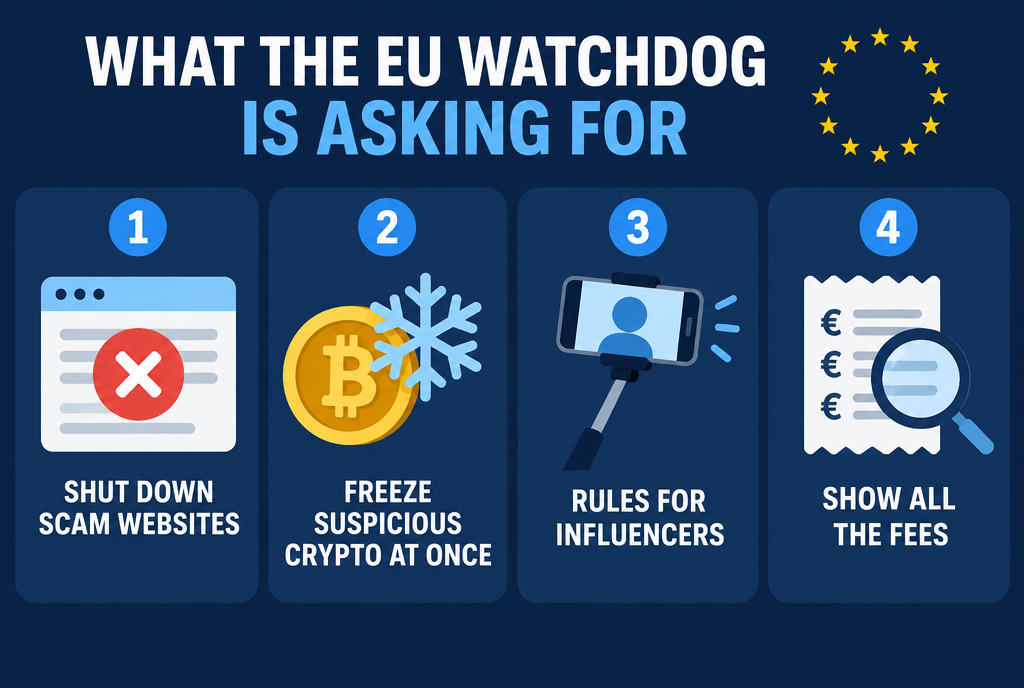
The toolbox the European watchdog would like to receive for Christmas
Shut down scam sites
The ESMA states it in black and white : fake sites are often registered, hosted and promoted outside Europe, where the victims aren't. It therefore proposes giving national watchdogs, the FSMA here, a clear power : ordering the removal of a scam site or an unauthorized platform. Not just putting it on a list that nobody checks before losing their savings. Yeah, right : they'll change their name or IP address (the number that identifies a server on the Internet), and watch out for blocking an IP address behind which several sites are hosted.
Freeze the money right away
This one is scary. Today, when investigators spot crypto linked to fraud or money laundering, the procedure for blocking it takes time. Far too much. The ESMA writes it without beating around the bush, I'll translate : “because of the length of the current procedures, when a request is made to freeze suspicious crypto, it's often too late and it has disappeared”. The ESMA would therefore like to be able to order a platform itself to immediately block these funds, while the police and the courts do their work. Anyone who has already seen loot move from wallet to wallet in a few minutes understands the point. On the other hand, if you have your crypto on Binance, which still isn't licensed but has had your trust for years (thanks MiCA, one of the best exchanges is still waiting for its green light), and your crypto gets frozen because they decided to do it, that hurts.
Rules for influencers
You know, the guy who films his video in front of a sports car rented for the afternoon and swears to you that a token will go up a hundredfold ? Today, MiCA simply doesn't apply to him. And as long as he sticks to “recommendations” or “predictions”, without lying about a specific fact, the watchdog has no leverage. The ESMA proposes imposing obligations on these influencers and on everyone who advertises on behalf of a platform, and even banning certain marketing techniques that have already done too much damage.

The car is rented until 6 p.m., but your savings won't be coming back
Platforms soliciting customers from abroad
Another, more discreet request: give the authorities the means to act against platforms based outside Europe that still solicit Europeans without authorisation. Binance is in the crosshairs, but for some scam exchanges, their favourite excuse today is: "we didn't go looking for them, the client came all by themselves". The ESMA wants this excuse to be interpreted as narrowly as possible. I was already talking about it a little over two weeks ago with Binance, and this is exactly the kind of situation being targeted.
The "zero commission" trap
The last tool on the list even concerns people who have never crossed paths with a scammer in their lives: displaying all fees. Have you ever walked past a bureau de change at the airport? Big sign: "0% commission". Great. Except that the rate displayed for buying your euros from you and the one for selling them back to you are not at all the same. The difference between the two is the "spread", and that's where the bureau makes its money. No commission, but you still leave with less.
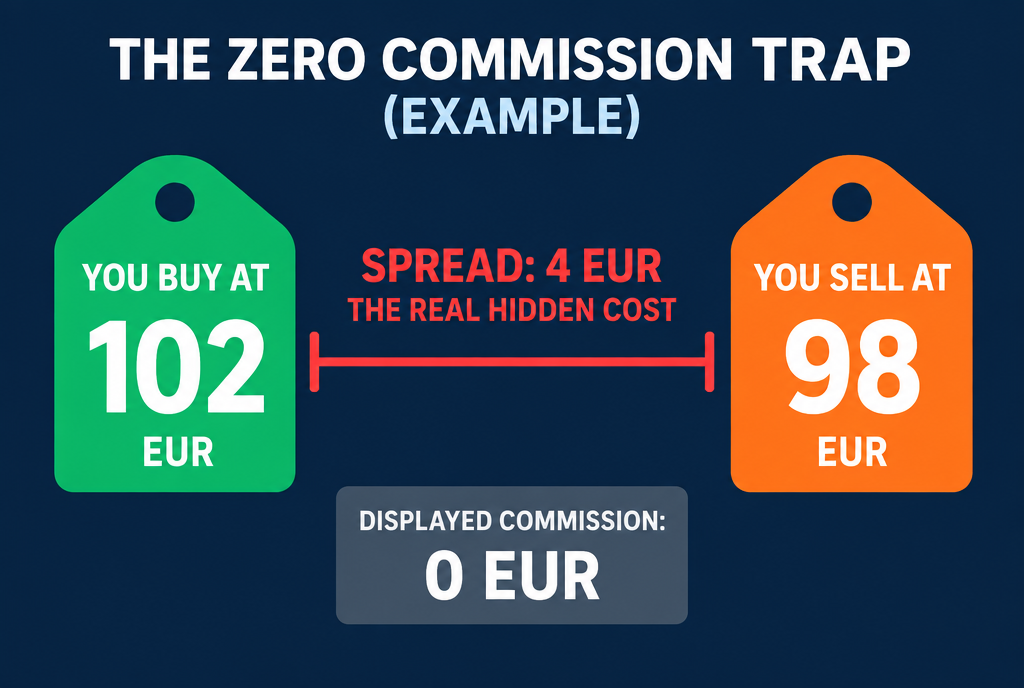
Zero commission, four euros less: the magic of the two columns
Some crypto platforms do exactly the same thing, and the ESMA says so: platforms display "zero commission" and "tight" spreads, even though the spread actually applied is wide enough to make up for the commission they don't charge, and even exceed it. The ESMA therefore proposes forcing platforms to give the full cost of every transaction, so that you can finally compare two platforms without being fooled by a sign.
And you can already check that yourself today, without waiting for a new law. On any app, look at the same time at the price at which it sells you a token and the price at which it buys it back from you. The difference between the two is what you pay, even when it says "free" in big letters. If the app only shows you one price, ask yourself why.
So, what does this change for you, and when?
Today, nothing. Let's be clear: these are proposals. The Commission must first take stock, then write a text, which the European Parliament and the states will then have to negotiate. To give you an idea, MiCA itself was proposed in September 2020 and only applied to everyone at the very end of 2024. More than four years. My opinion: these new powers won't be on the ground before 2028, and I would even be happy to be wrong.
In the meantime, the tools that already exist are free and take two minutes. Before entrusting one euro to a platform, search for its name on the FSMA warning page, and check that it appears in the European register of MiCA-authorised platforms, published by the ESMA. And if an ad promises you quick profits with a name that sounds like the latest AI, you now know that "X Trade Grok 8.1 Flex" isn't the latest version of Grok, X's AI!
And if you've already been scammed, the FSMA gives advice that I find essential: beware of anyone who contacts you afterwards to "recover your money" in exchange for a fee. It's a second scam, often run by the same people.
Frankly, I think it's good news, even though I find there is a certain injustice concerning Binance. For years, we let scammers run faster than the authorities. If one day the scam site disappears before your aunt has had time to click on the ad, it will be MiCA's greatest success. And I sign my name to that with both hands.
Sources
- ESMA, September 30, 2026: ESMA calls for changes to make MiCA clearer and safer
- ESMA: the complete response to the Commission's consultation on the review of MiCA (PDF, in English)
- FSMA, June 30, 2026: 25 new fraudulent platforms added to the list
- The Cryptonomist, September 30, 2026: ESMA calls for stronger enforcement powers
Article written with the help of Claude Code, proofread and corrected by me.
Join the conversation
You need an account to comment on this article. Creating one is free and takes under a minute.
No comments yet.