Why did 50 tons of Japanese books go to the United States?
Imagine a little Tokyo secondhand bookseller who usually moves his manga and novels one at a time, and who has been seeing orders for a hundred books a day come in since August, regular as clockwork, for books on philosophy, medicine, law or everyday life in the Edo period that no one had touched in years.
That is what the Japanese channel Nippon TV reported on September 22. Online secondhand booksellers saw their sales multiplied by five on certain days. Five times! And in the business, everyone suspects the same thing: these books are not going to a library. They are going to feed an artificial intelligence, and they are getting there in batches.
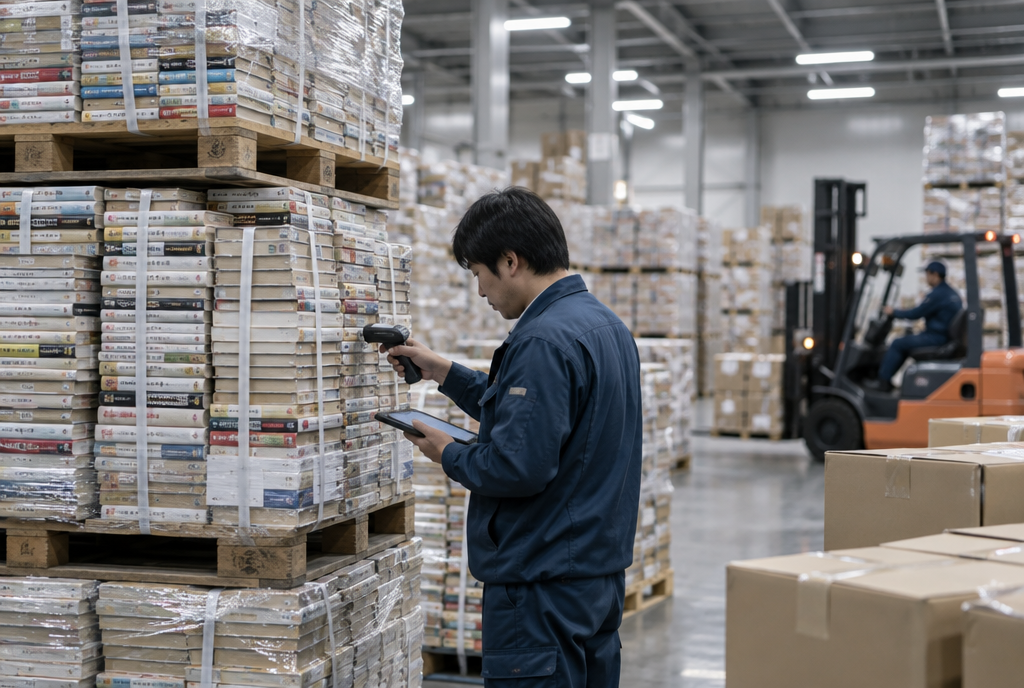
Books sold by the weight, like potatoes
Orders coming in like clockwork
The first weird thing is the regularity. A bookseller in the Tokyo area, in his fifties, who has sold more than a thousand books to these mystery customers, noticed that the orders arrived at perfectly regular intervals. His opinion: it is not a human clicking, it is a system buying all by itself.
Second weird thing, the books themselves. A Tokyo bookseller says there is “no logic” to it: philosophy, history, medicine, law, a book on life and culture in the Edo period, another on Japanese politics from thirty years ago. Whereas usually, it is novels and manga that keep the shop going. Here, they are buying him exactly the books that are sleeping at the back and that no one asks for anymore.
Third thing, the parcels. The orders come from several different accounts, at several different booksellers, but they all go to the same address: a logistics center in Okayama Prefecture, in western Japan. The company that runs it replied that it did not comment on individual transactions. And a bookseller in the west of the country even received an email from a foreign company asking him, with the utmost seriousness, whether he could sell it “several tens of thousands”.
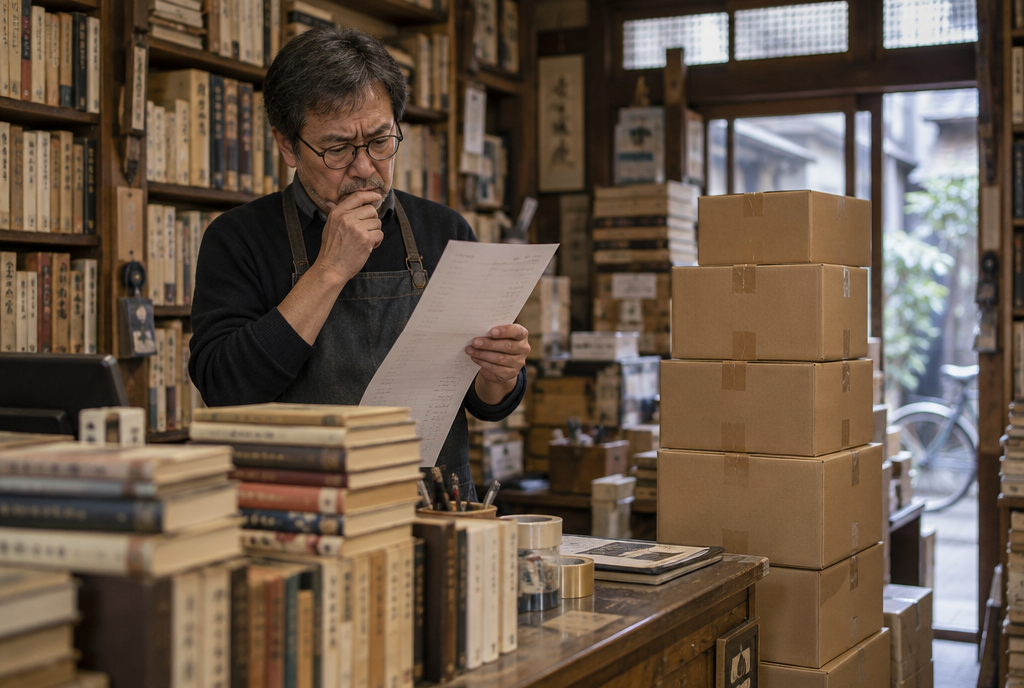
When your philosophy section sells better than your manga, you start asking questions
And then there is the figure that went all over the web. Nippon TV dug through export records with a tool that tracks commercial exchanges, and found more than 50 tonnes of parcels labeled “JAPANESE BOOKS” sent to the United States since last year, from a subsidiary of a major Japanese book distributor. If these are hardcover books of around 500 grams, that makes roughly 100,000 books. An entire public library taking the boat!
Let's be clear for two seconds: no one has yet proved who is buying, or why. The distributor swears that it has never knowingly sold anything for AI training. But when you look at what has been happening in the United States for the past year, the suspicion is not far-fetched.
Why does an AI need old books?
A chatbot like ChatGPT or Claude learns to write by reading. A lot. Billions of sentences. The problem is that the Internet is mostly comments, forums, copy-pasting and mistakes. A medical textbook from the 1970s, on the other hand, was written by someone who knew what they were talking about, proofread, corrected and printed. That is gold for a machine that wants to learn to write well.
And this is not a theory. In January, the Washington Post published the internal documents of Anthropic, the company that makes Claude, which came out of a lawsuit with authors. The project was called Panama, and the opening sentence does not beat around the bush: “Project Panama is our effort to destructively scan every book in the world.” Right below it: “We don't want this to become known.” Too late.
The goal, according to these documents, was to teach Claude to write well, instead of imitating the low-grade language of the Internet. Anthropic spent tens of millions of dollars buying from major online retailers, and cutting up perhaps millions of secondhand books. And the guy who ran the project had previously set up Google Books partnerships. You do not hire a book-scanning specialist by accident.
When I read that, I thought to myself: “Wait, the Claude that reviews my code every day learned its good manners from books that went through the guillotine?” Well, yes.
And is it legal, at least in the United States. In June 2025, Judge William Alsup ruled: buying a book, scanning it and using it to train an AI is “fair use”, the exception in American law that allows certain uses without asking the author’s permission, even if the paper ends up in the dumpster. On the other hand, the pirated books that Anthropic had also downloaded did not pass: in September 2025, the company agreed to pay the authors $1.5 billion to settle the lawsuit. In other words, for the judge: buy your books, and you have the right to scan them.
The paper cutter, AI’s best friend
Why destroy the book? Because turning pages is slow. A scanner that photographs an open book has to wait for a robot or a human to turn each page, and near the binding the paper curves and the image is distorted. So you take a hydraulic paper cutter (a big paper guillotine), cut off the spine of the book, and end up with a pile of loose sheets. These sheets go through a sheet-fed scanner, the same principle as the office photocopier that swallows a stack, at several dozen pages per minute. The paper goes to recycling. The book dies, its text survives in a file.
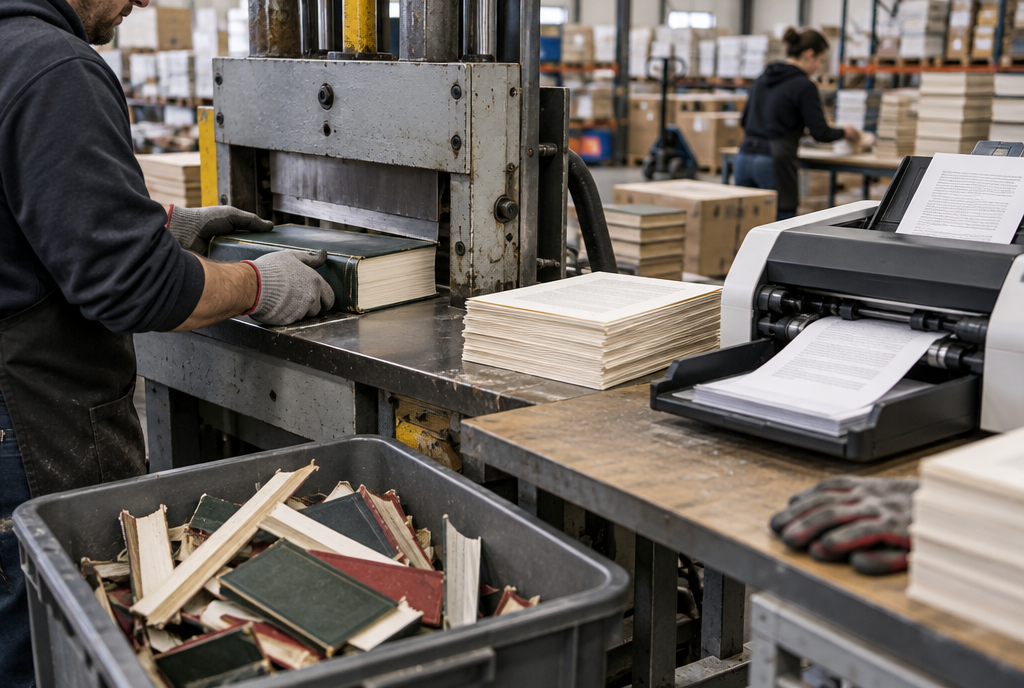
You slide the book in, move your fingers out of the way, press the button, and that’s it for the book
Google had done the opposite. Since 2004, Google Books has been photographing books without damaging them, with cameras above the pages, and Google announced in 2019 that more than 40 million books had been digitized. It takes longer, costs more, but the libraries get their books back intact. Twenty years later, the AI race has chosen the brute-force method.
And Anthropic isn’t alone. In August, the investigative site 404 Media told the story of a bookseller who had received an anonymous order for 1,000 books and was wondering where they were going. His solution? He slipped an AirTag, Apple’s little tracker, between the pages of one of the books. The book ended up in an Amazon warehouse in Las Vegas, nicknamed VGT3, whose team’s logo is a dinosaur baring its teeth while holding a book. I’m not making this up. An employee summed it up on a forum: “All we do here is scan books.” Amazon confirmed that it buys books “to improve its customers’ products and services.”
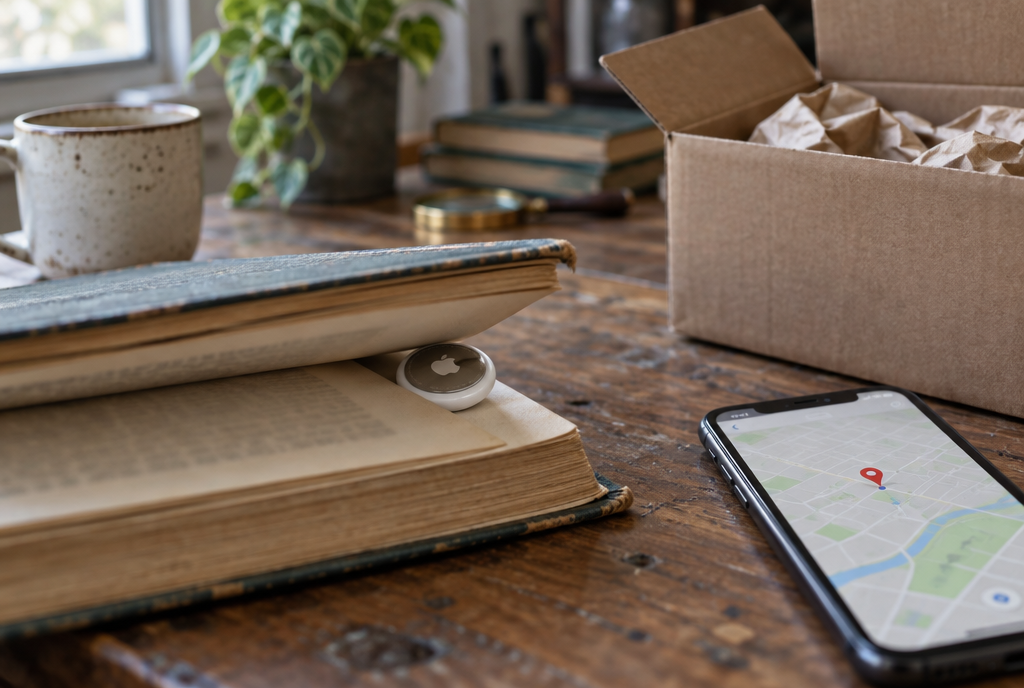
The bookseller played detective, and the package led him straight to Amazon
So, what does this actually change for you?
Let’s start with the good side, because it exists. That old book on eighteenth-century Japanese medicine, it was read by three people a year, at the back of a shop in Tokyo. Once swallowed by an AI, anyone can ask it a question about the book from their phone, in French, at two in the morning. Everything that has never been put online, the legal manuals from thirty years ago, the accounts of everyday life under the shoguns, becomes accessible to millions of people who would never have pushed open the door of that bookshop.
And the day you ask your chatbot to write you a letter to your insurance company or your sister’s wedding speech, if it writes proper French rather than forum gibberish, that is partly thanks to these chopped-up books.
Now, the downside. A book that is scanned and then pulped is one fewer paper copy on the planet. For a bestseller printed in a million copies, nobody cares. For a book of which only a few copies remain, it’s another matter, and that is precisely what Japanese booksellers fear: that rare books will leave Japan forever. Anthropic says that none of its programs buys or destroys “rare” or “old” books. As for the other buyers, we have no idea, since we don’t even know who they are.
And secondhand booksellers are stuck. Today, their sales are booming. Tomorrow, there will be fewer old books in circulation, so less stock to buy back, and at a higher price. Legally, Japan is fairly accommodating: its copyright law allows a work to be analyzed by a machine without asking permission, as long as it does not cause unreasonable harm to the author. And the author, on a secondhand sale, doesn’t get anything anyway.
Personally, I'm torn. I pay for Claude every day and I appreciate that it writes properly, so I would be in no position to act offended. But there's still something that nags at me: in fifty years, will we have to ask an AI what a book was about that we can no longer open, because its last copy went up in confetti in a warehouse in Las Vegas with a dinosaur on the logo?
Sources
- Nippon TV (NNN), September 22, 2026: the massive orders from used booksellers and the 50 tonnes exported
- The Washington Post, January 27, 2026: Anthropic's Panama project
- 404 Media, August 17, 2026: the AirTag and Amazon's warehouse in Las Vegas
- Gadget Review, September 24, 2026: what has been established and what remains a suspicion
Join the conversation
You need an account to comment on this article. Creating one is free and takes under a minute.
No comments yet.